
Rare Plus Size Antique 1920s Dark Brown Drop Waist Dress | Art Deco Embroidered Wrap Dress | Flapper Era Tubular Day Dress XL 1X
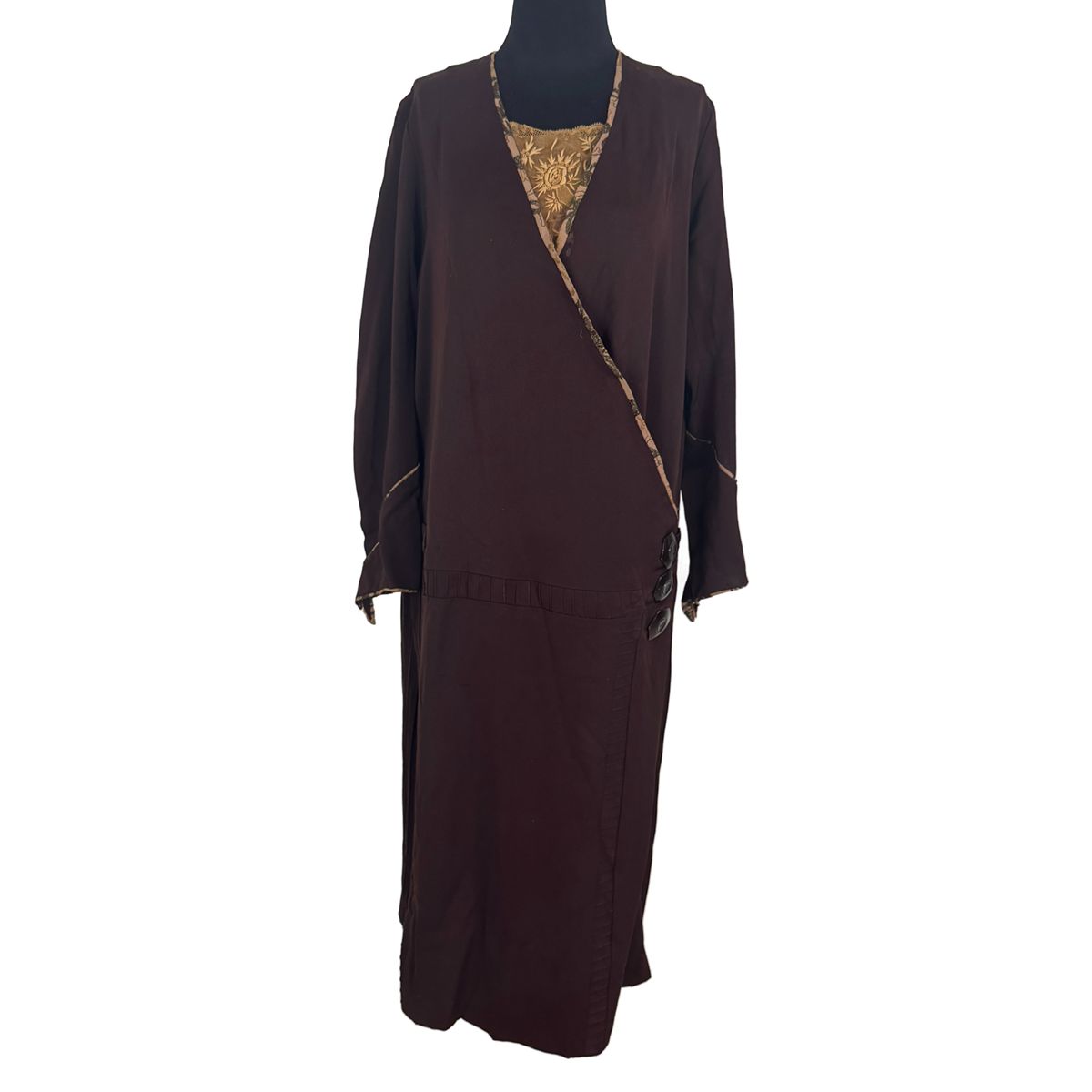
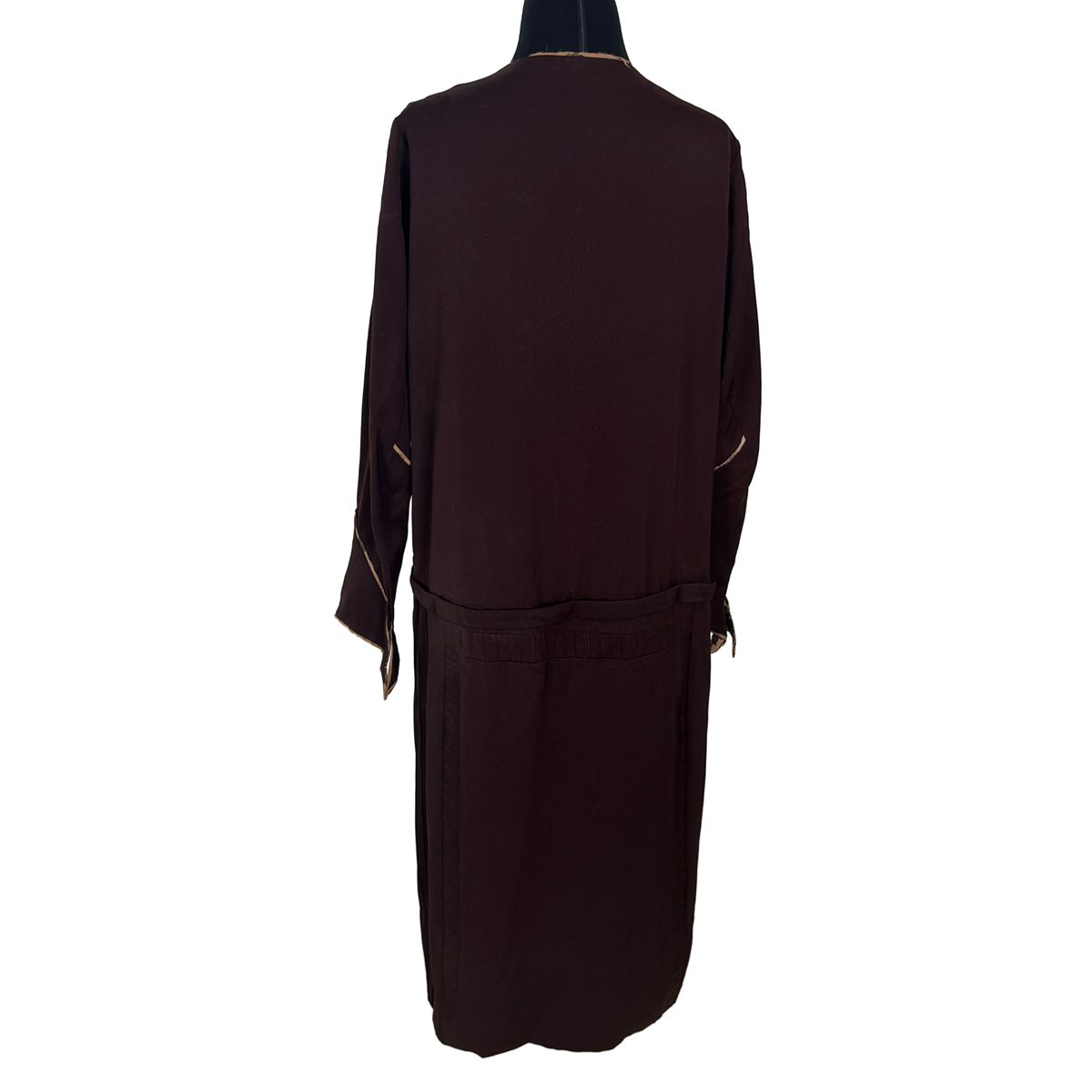
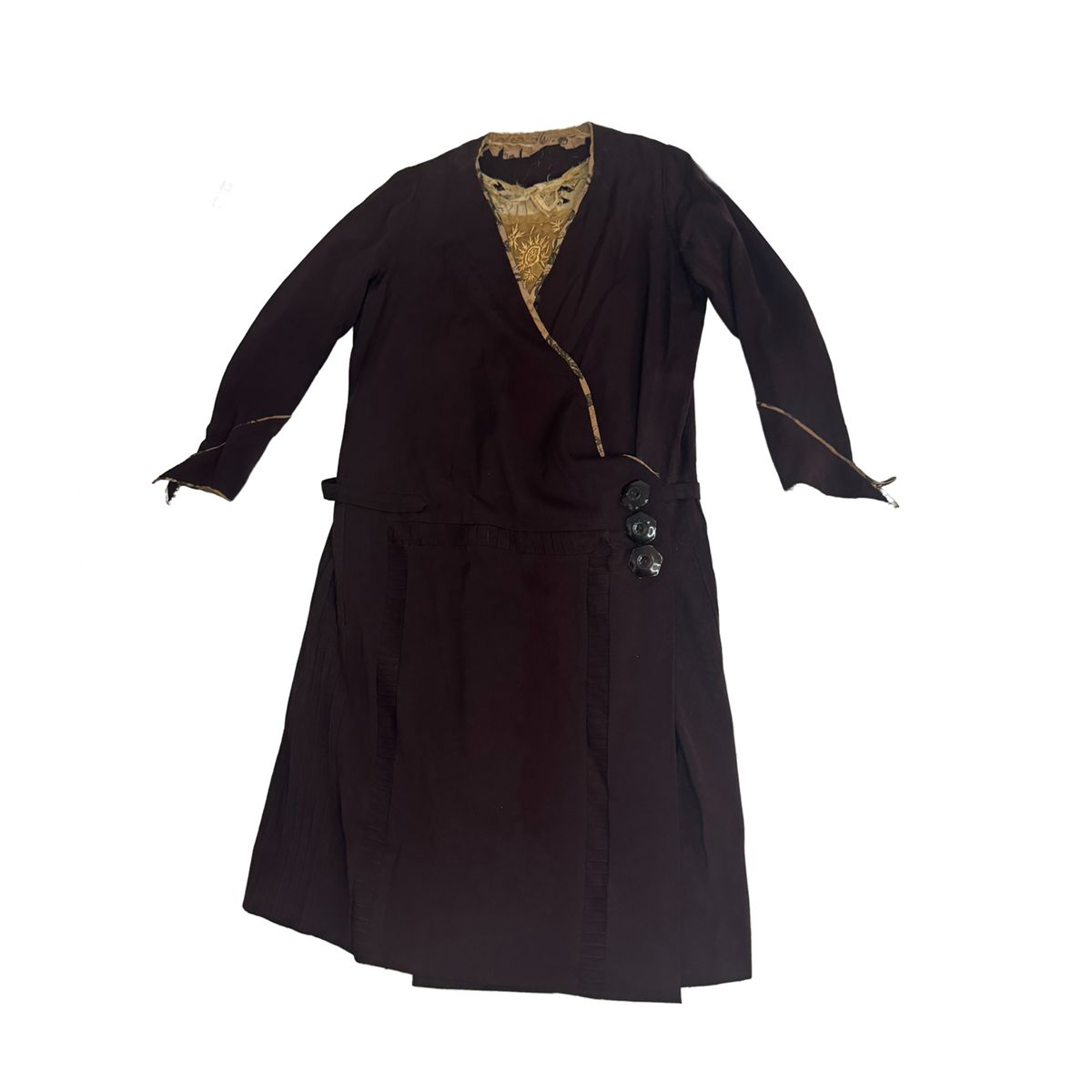
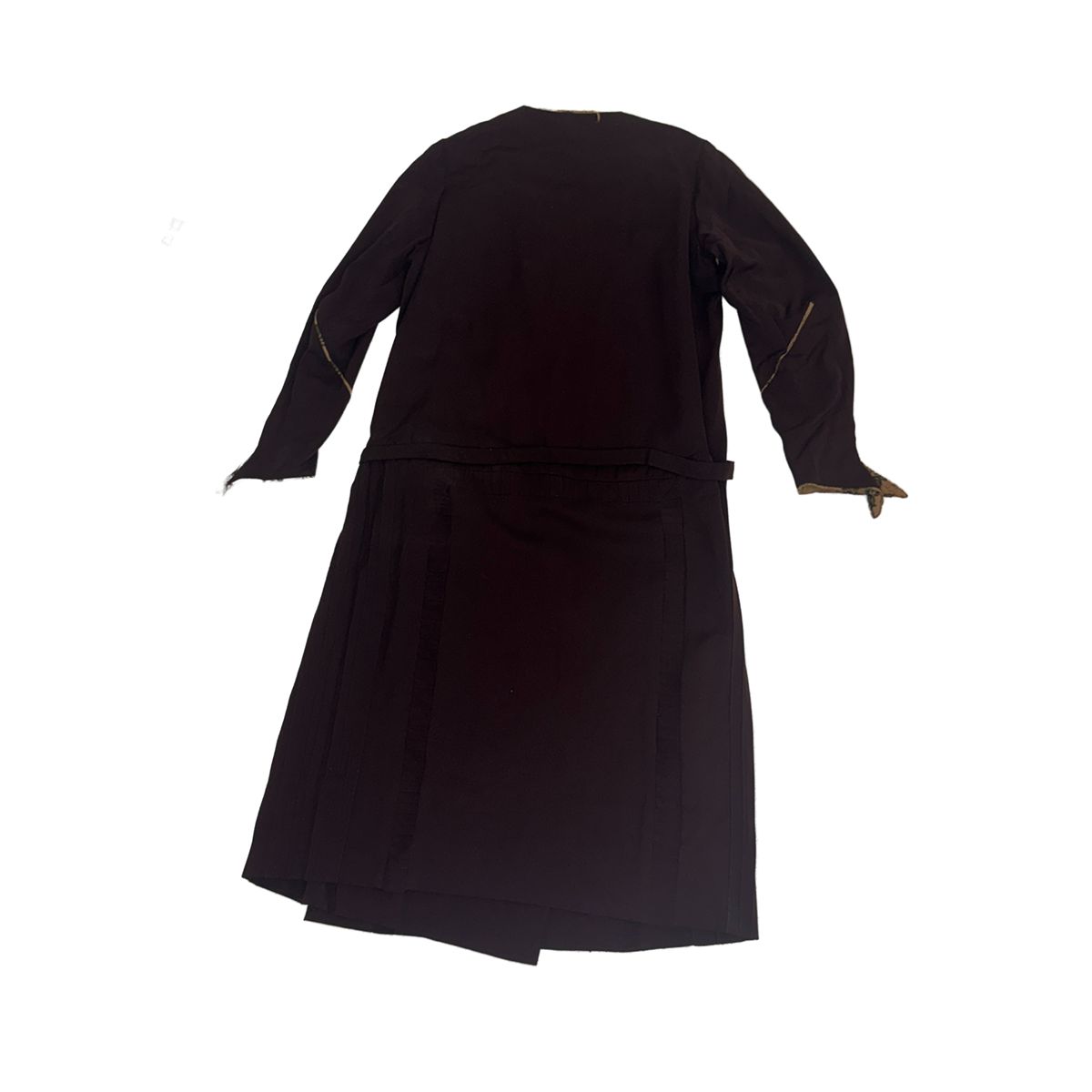
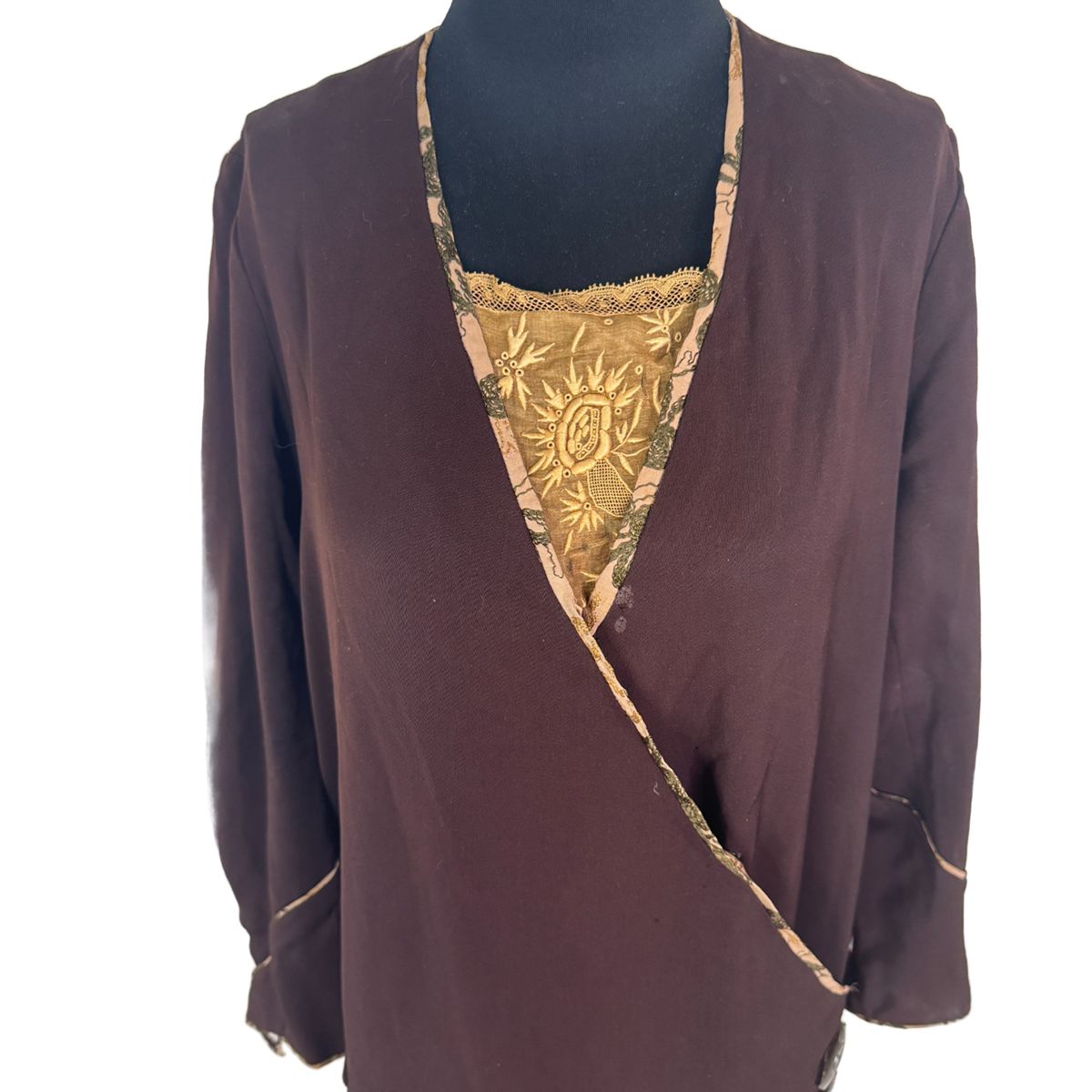
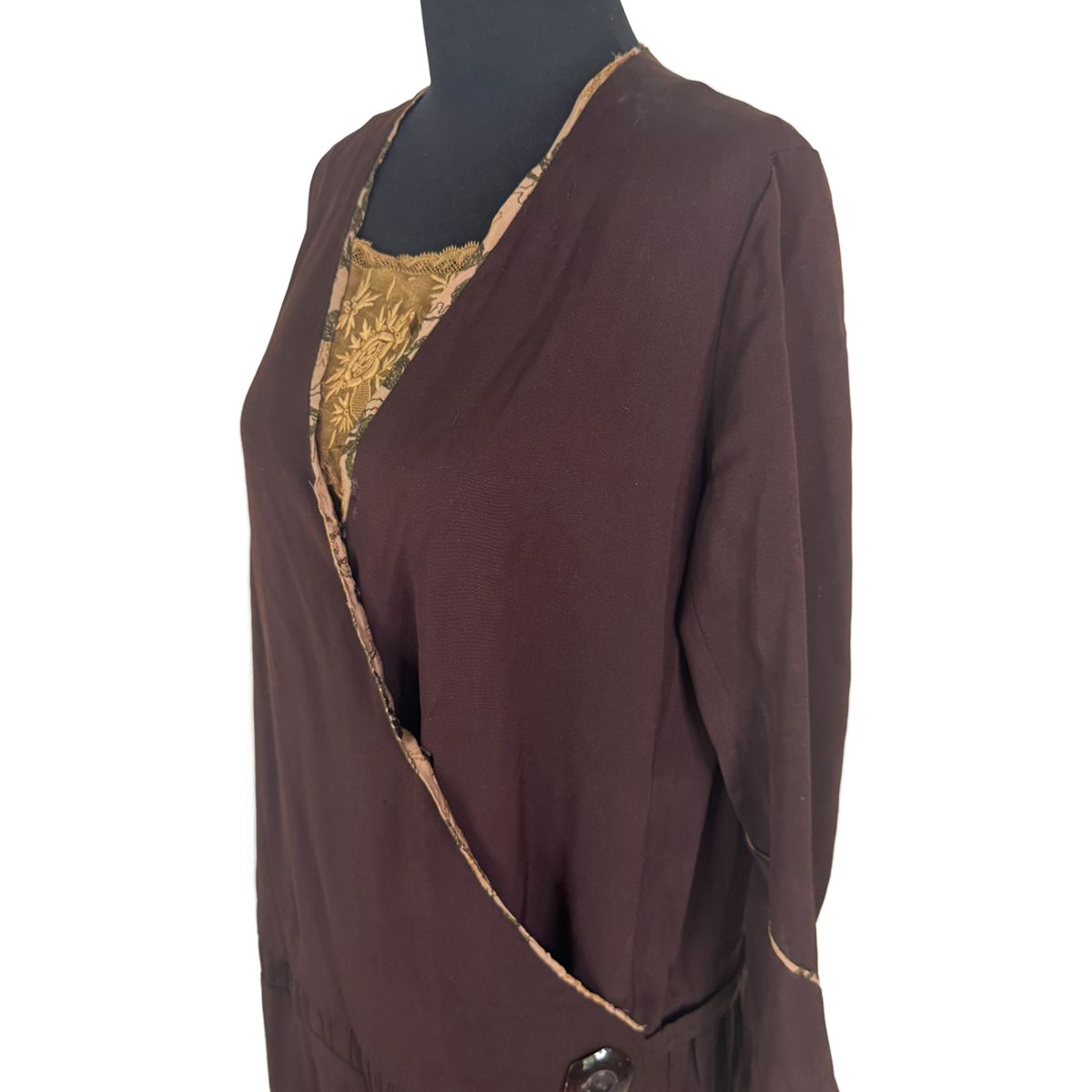
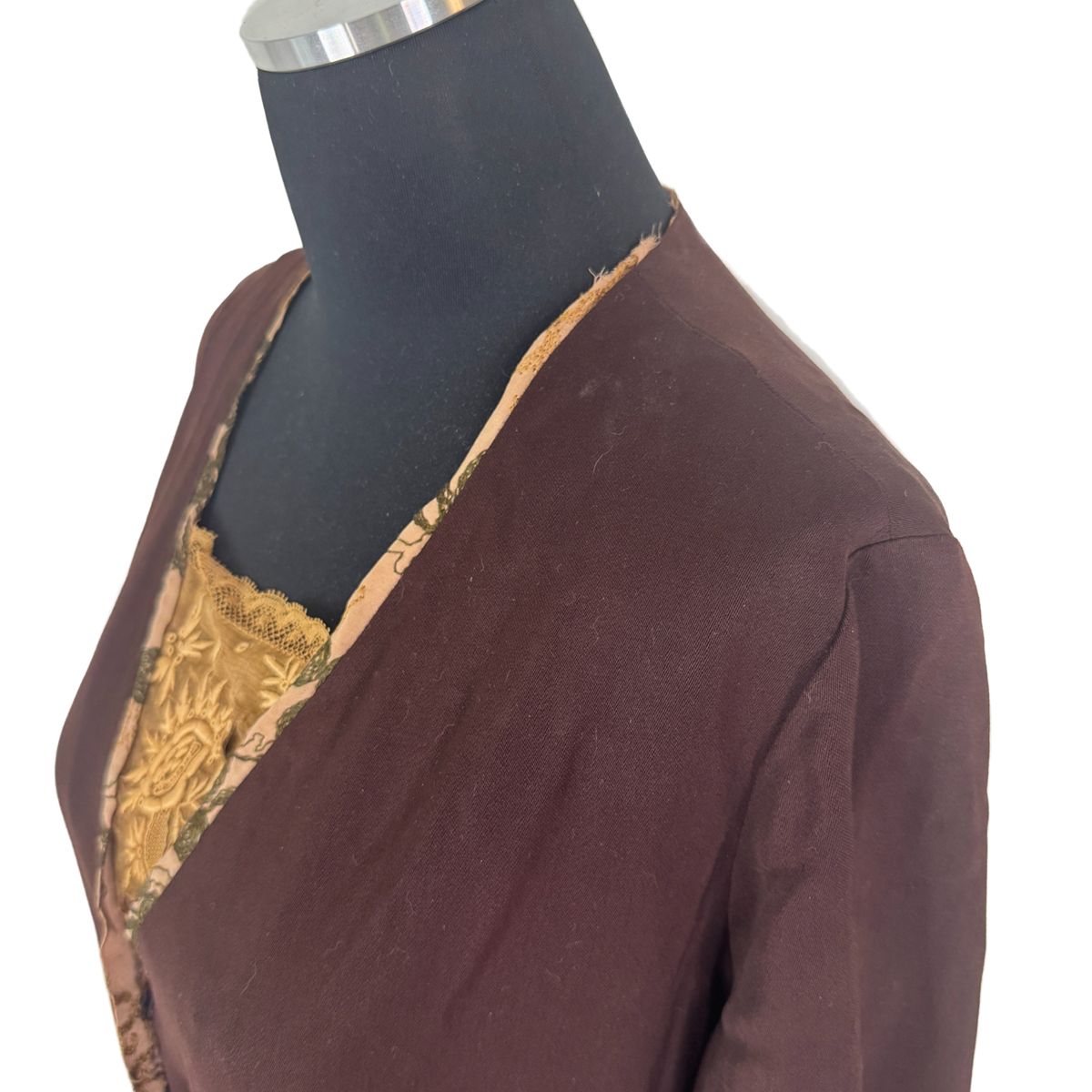
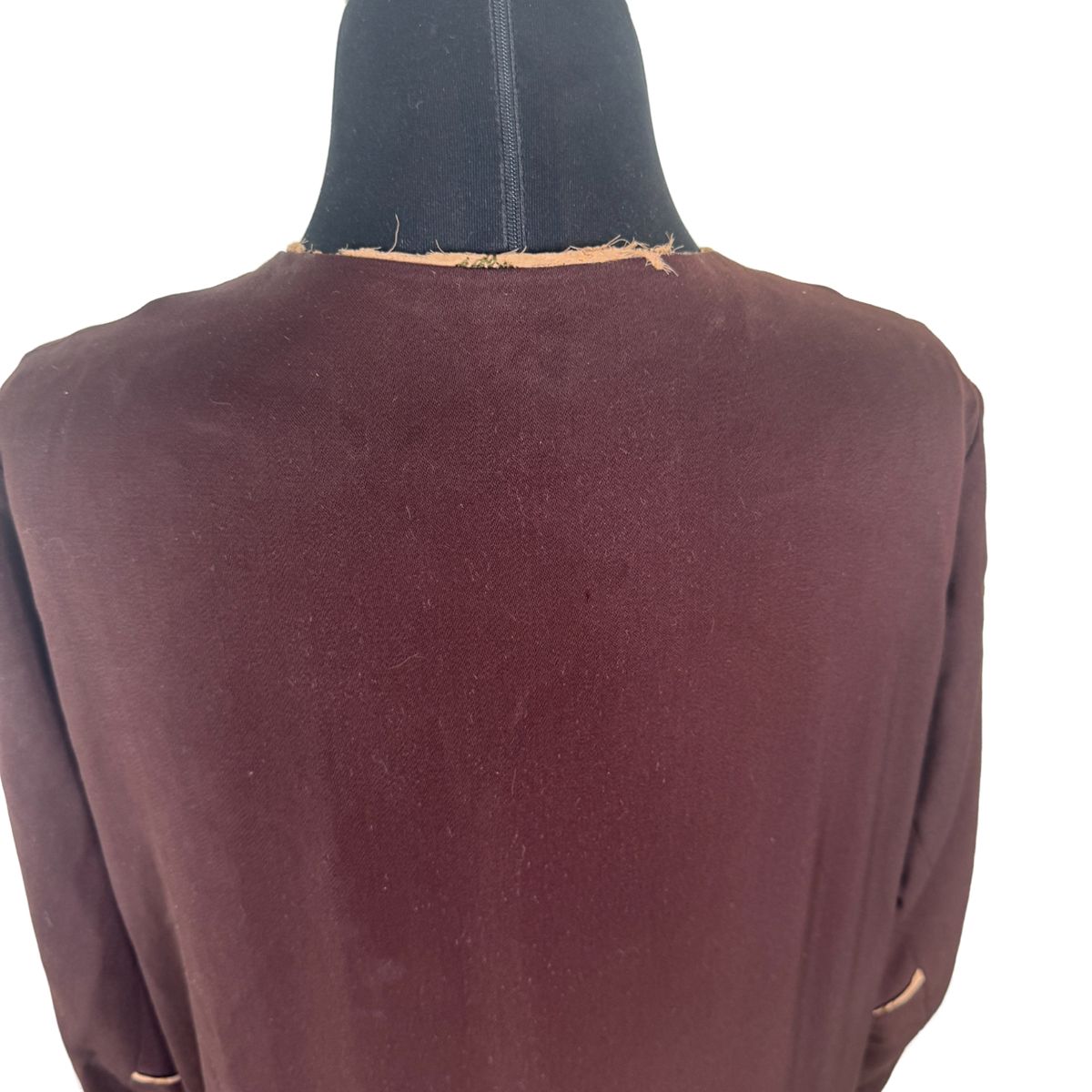
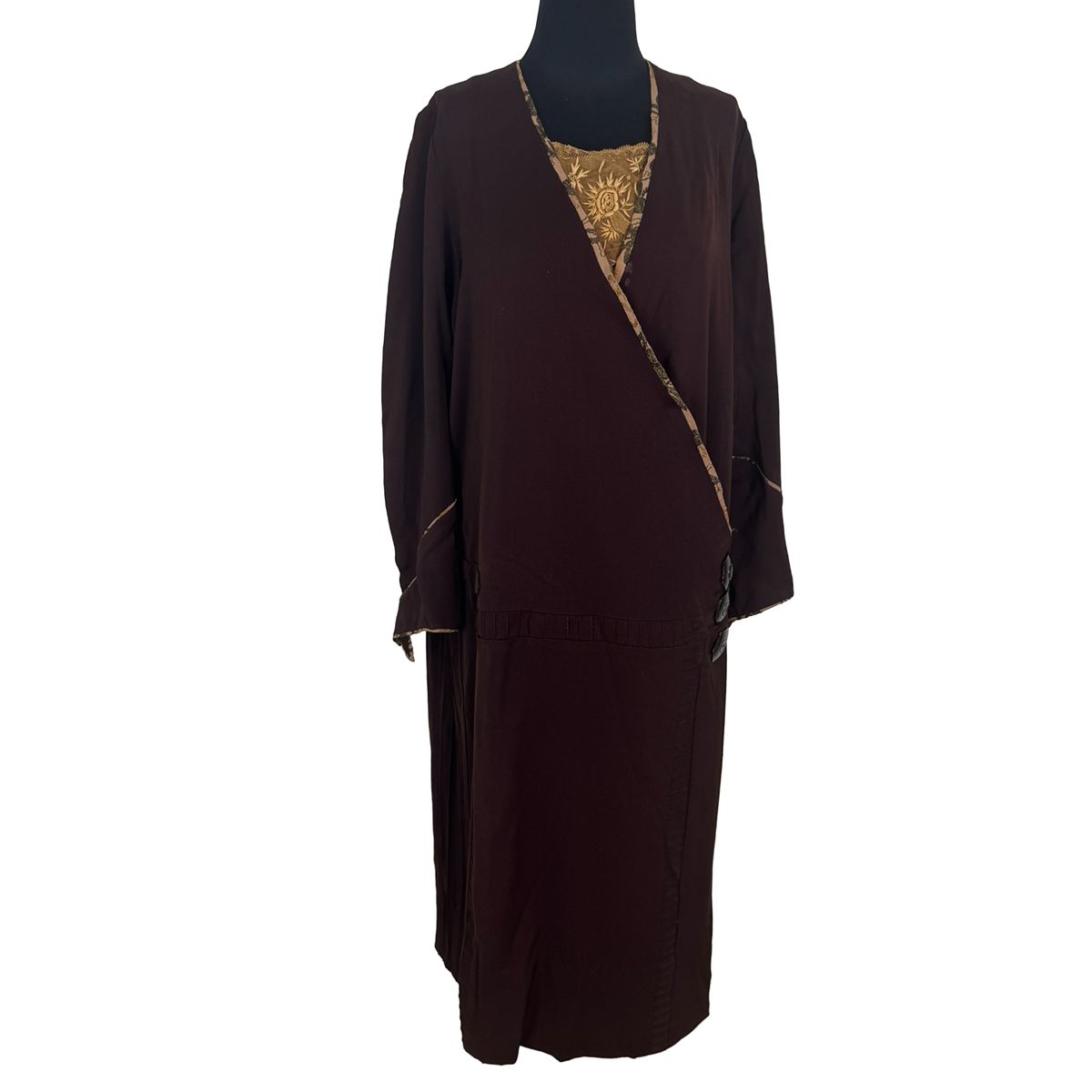
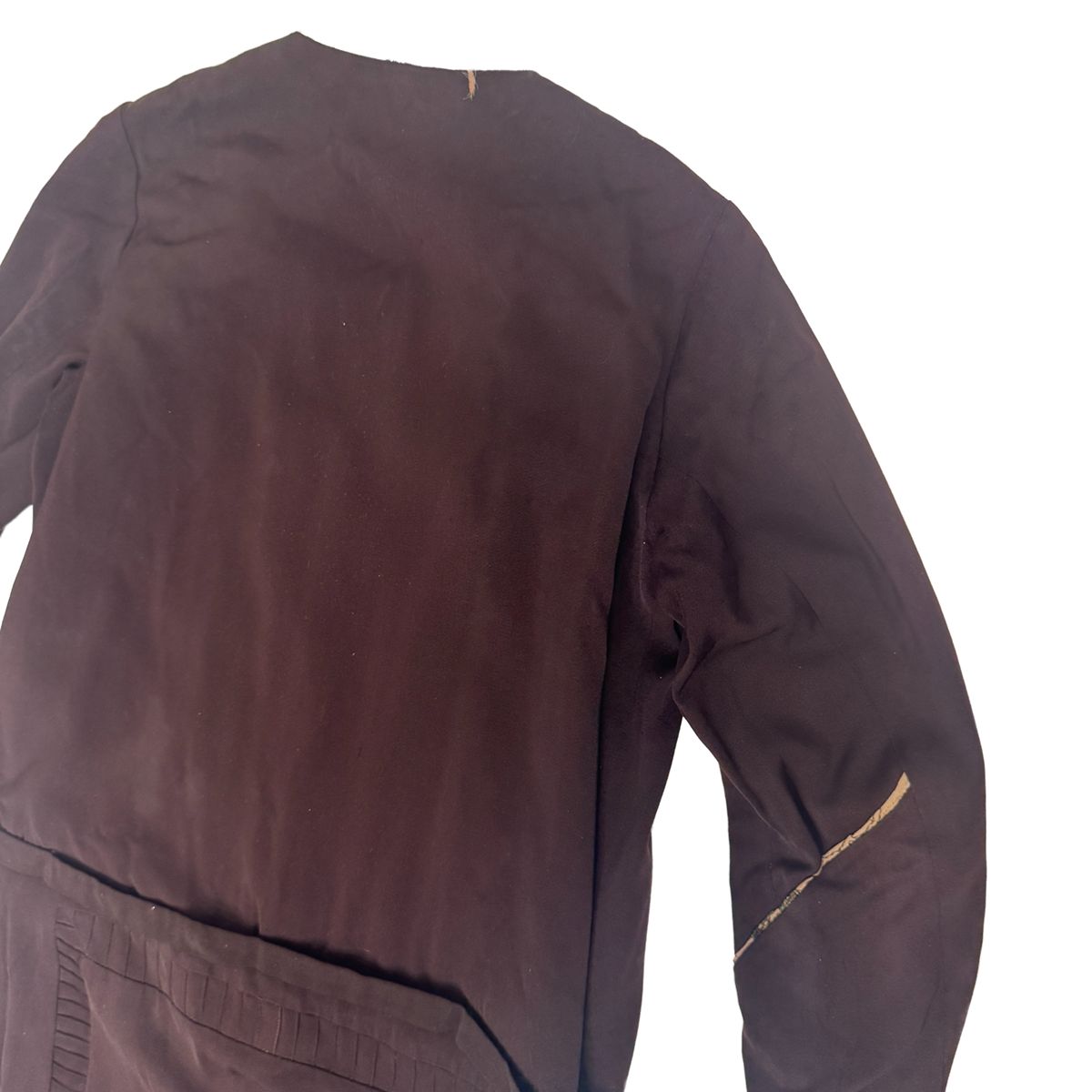
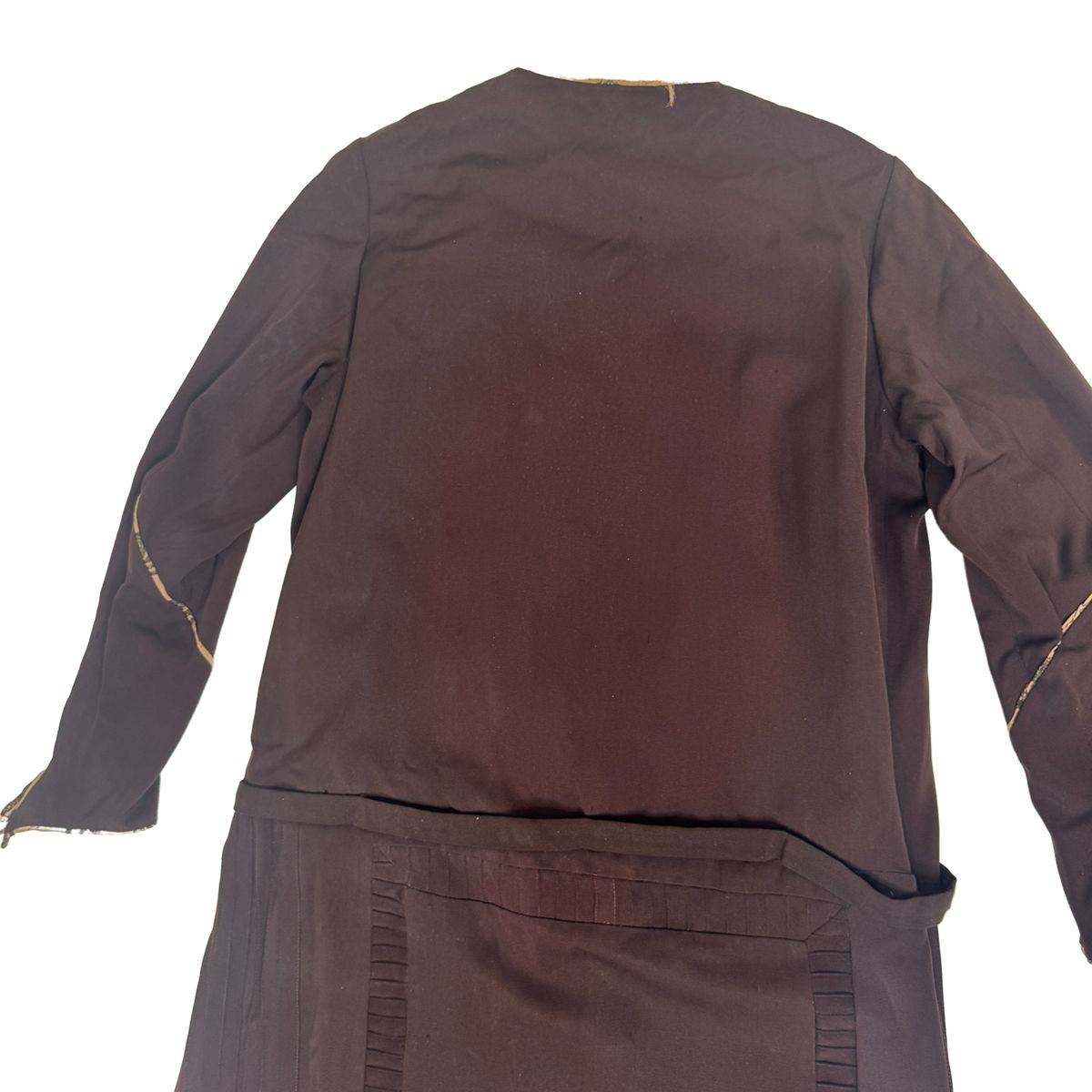
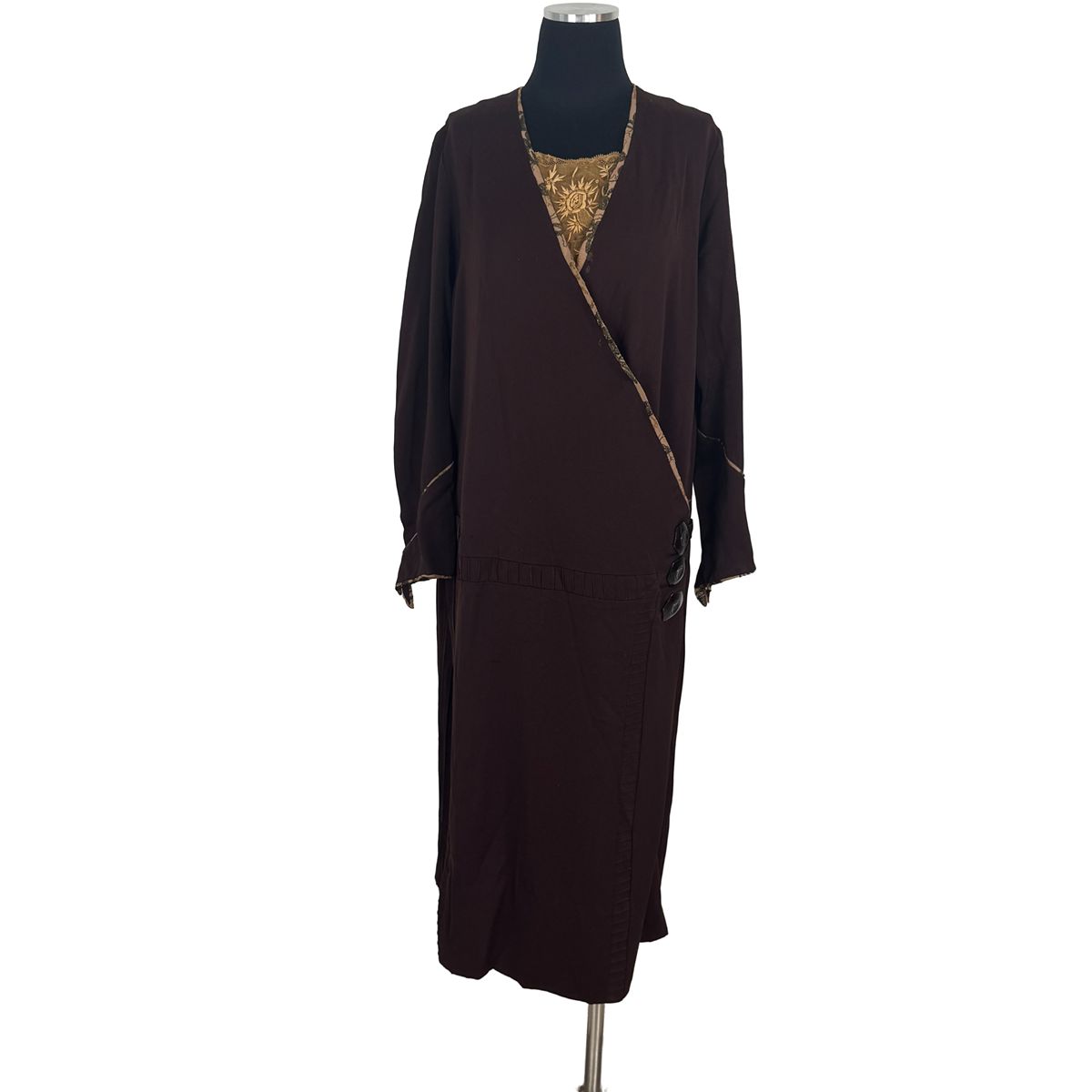
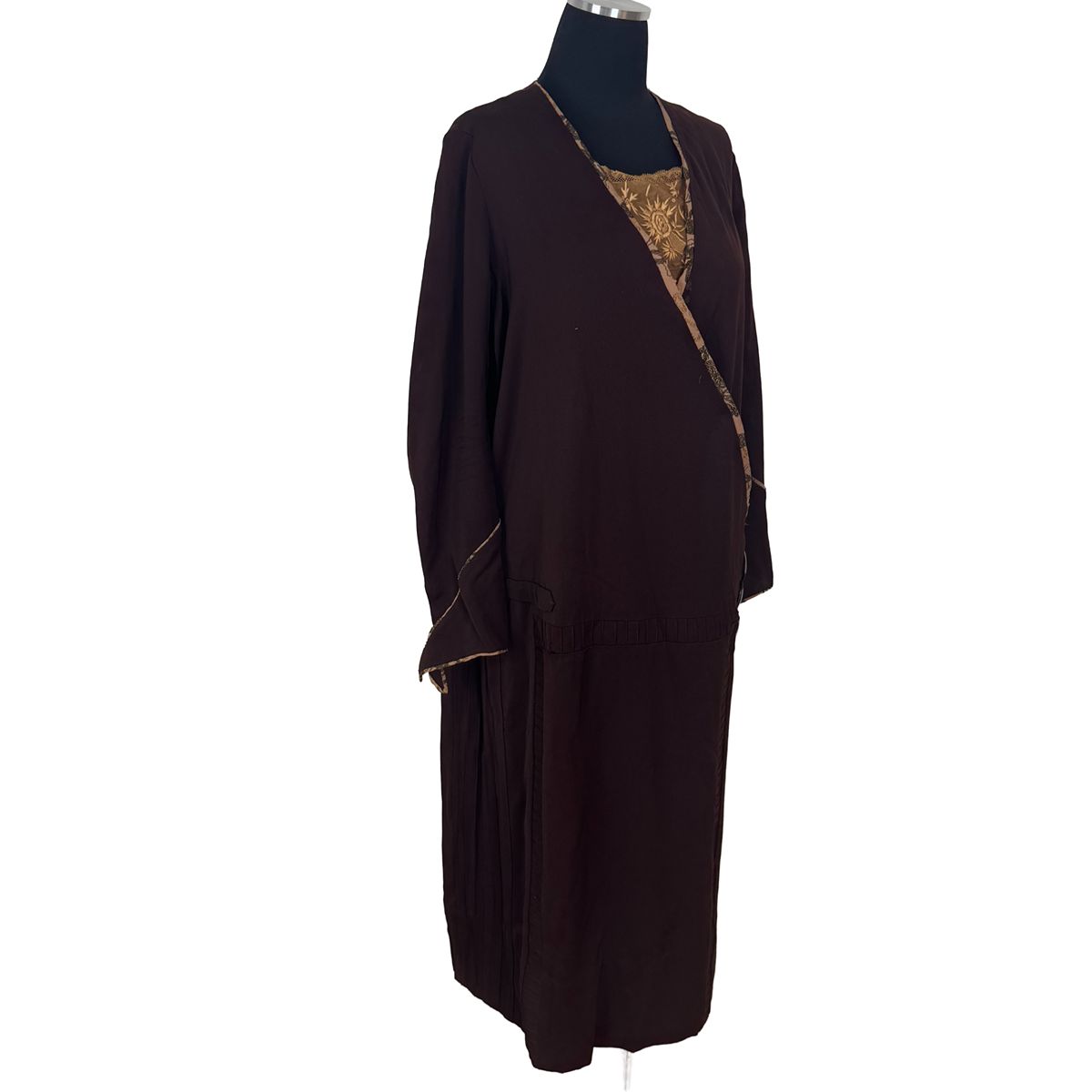
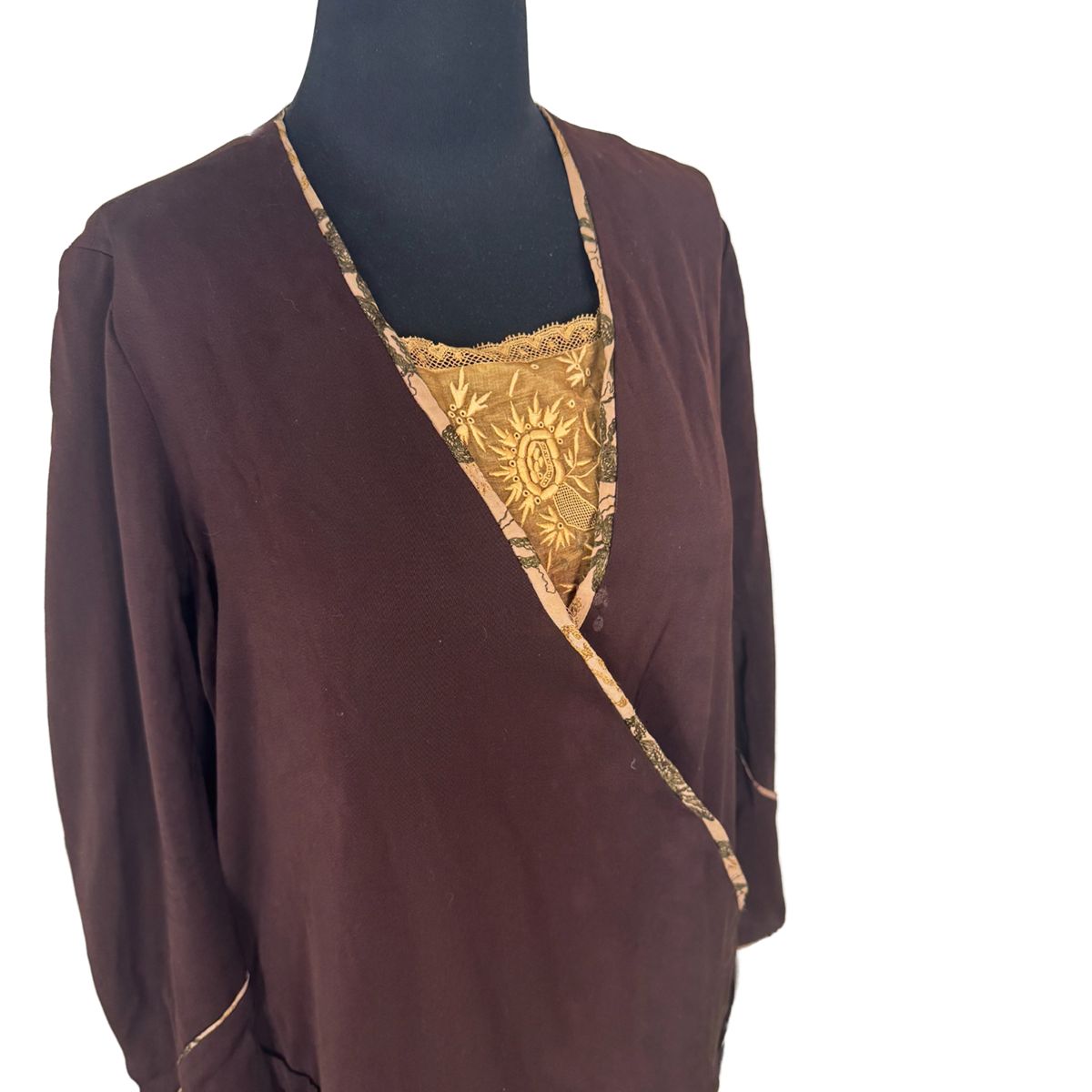
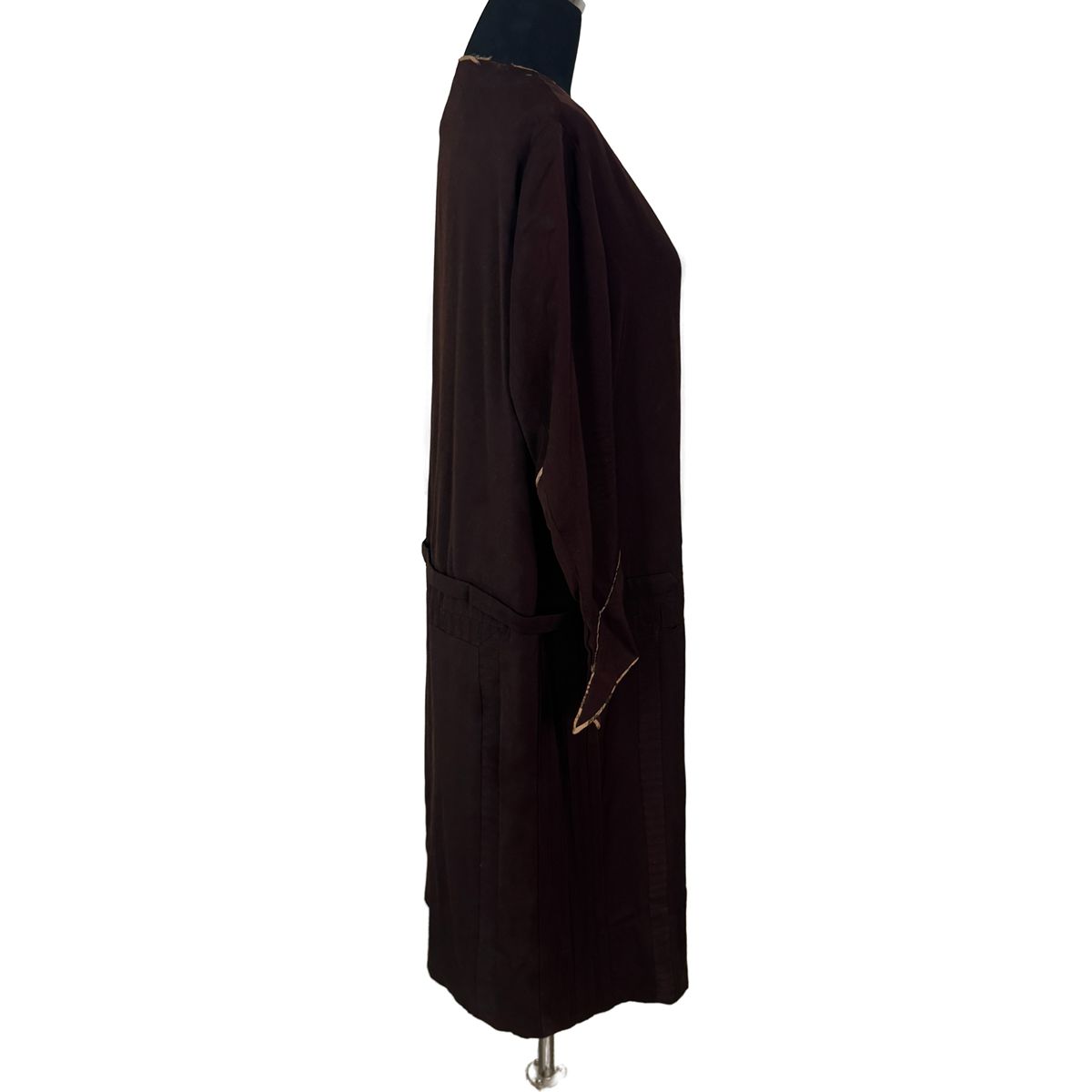
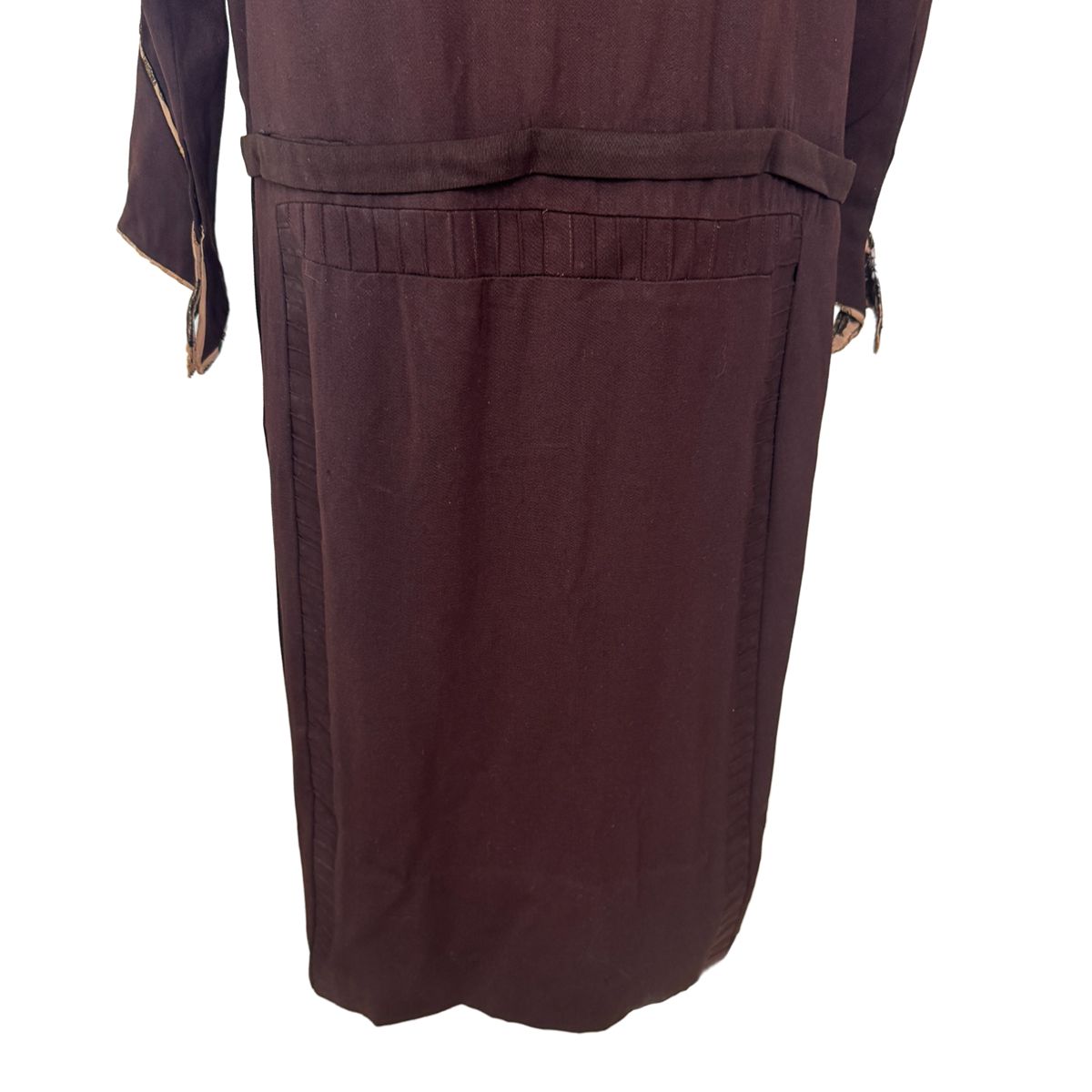
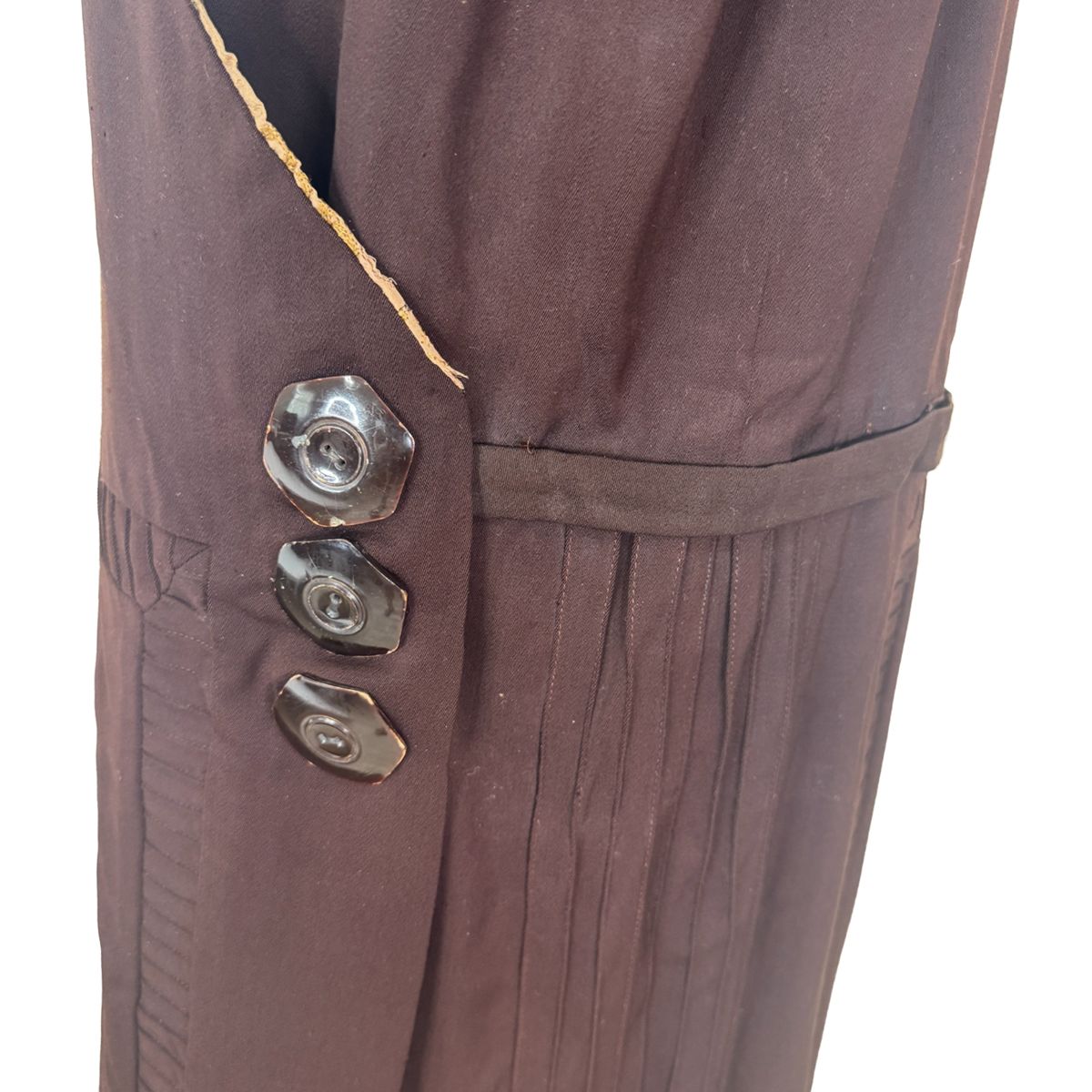
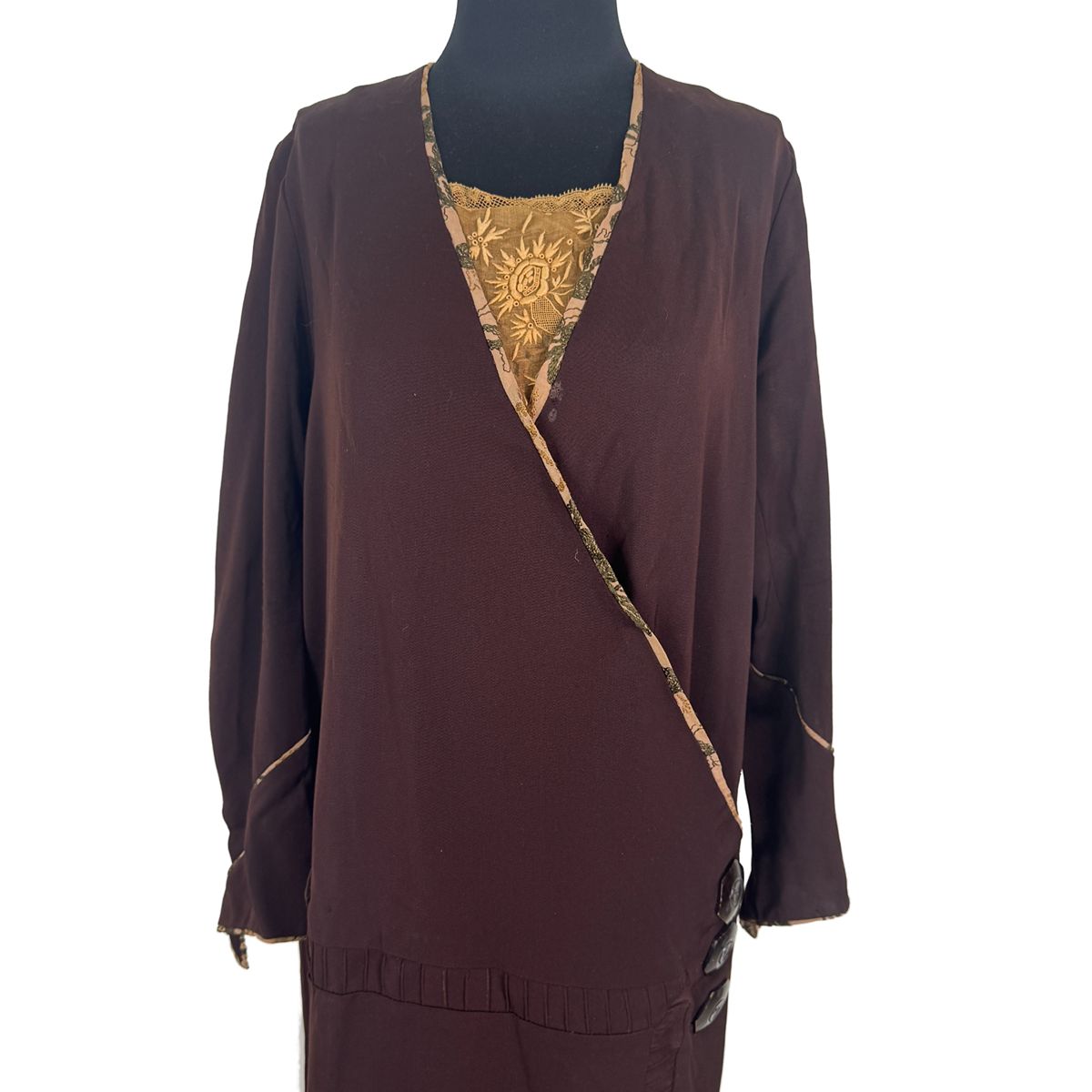
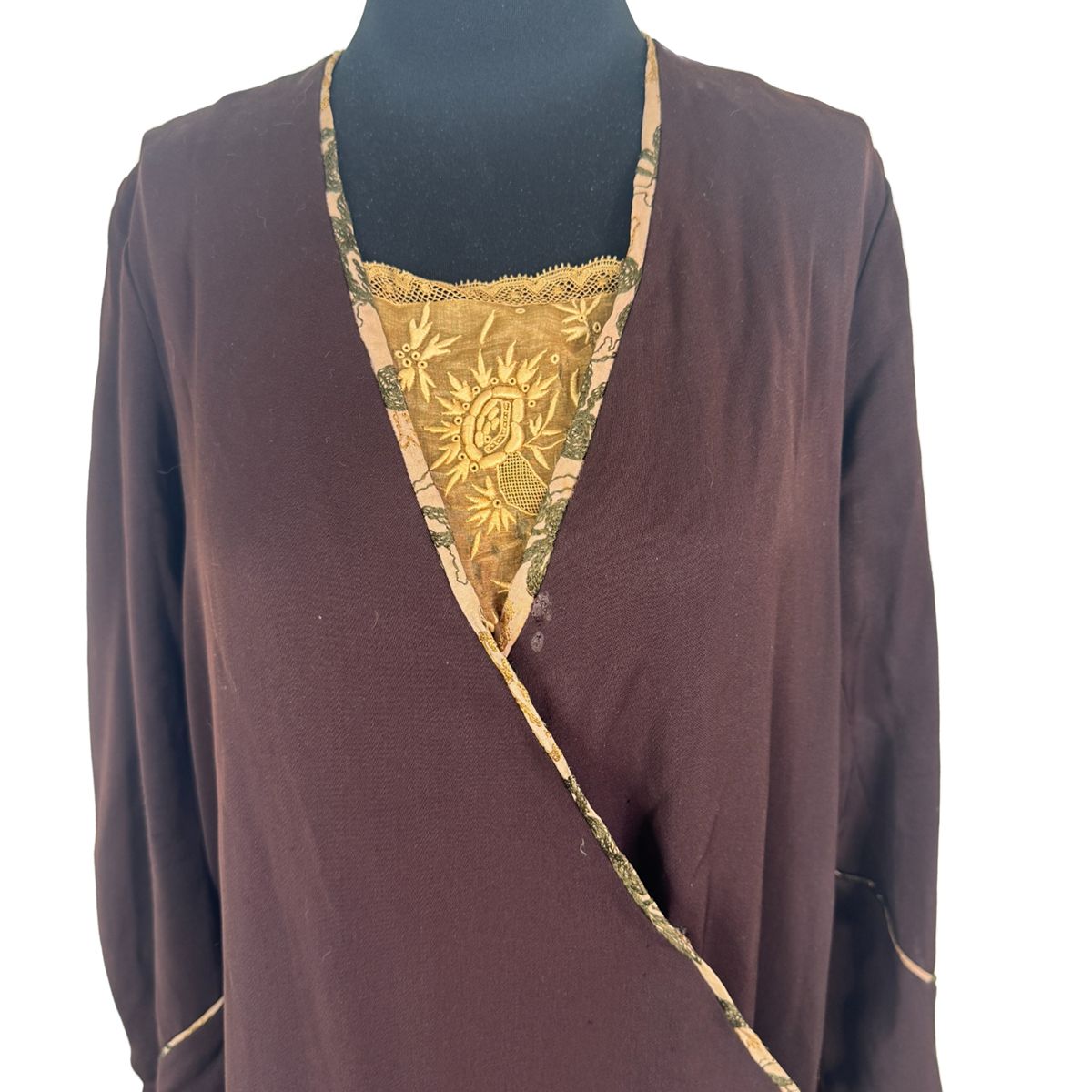
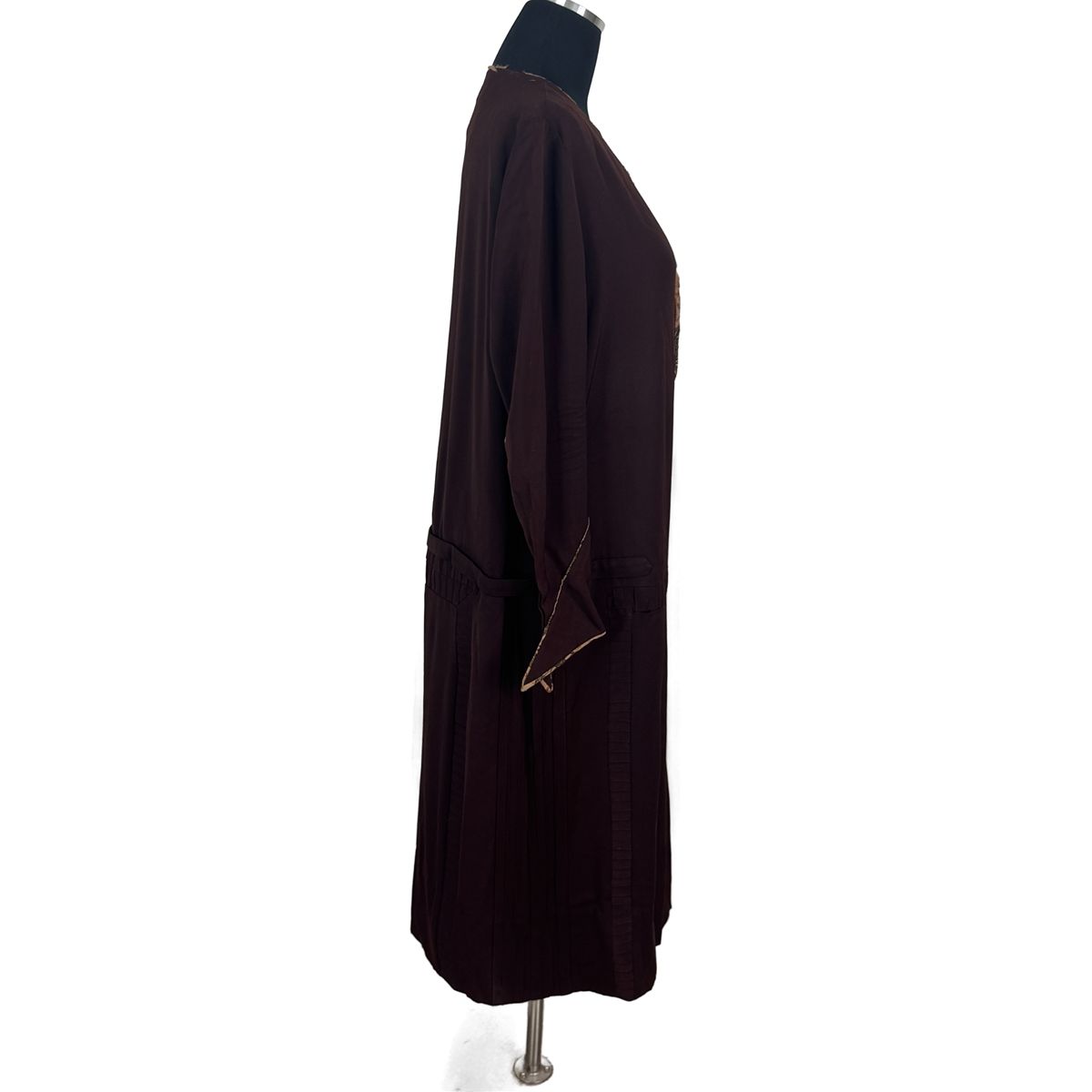
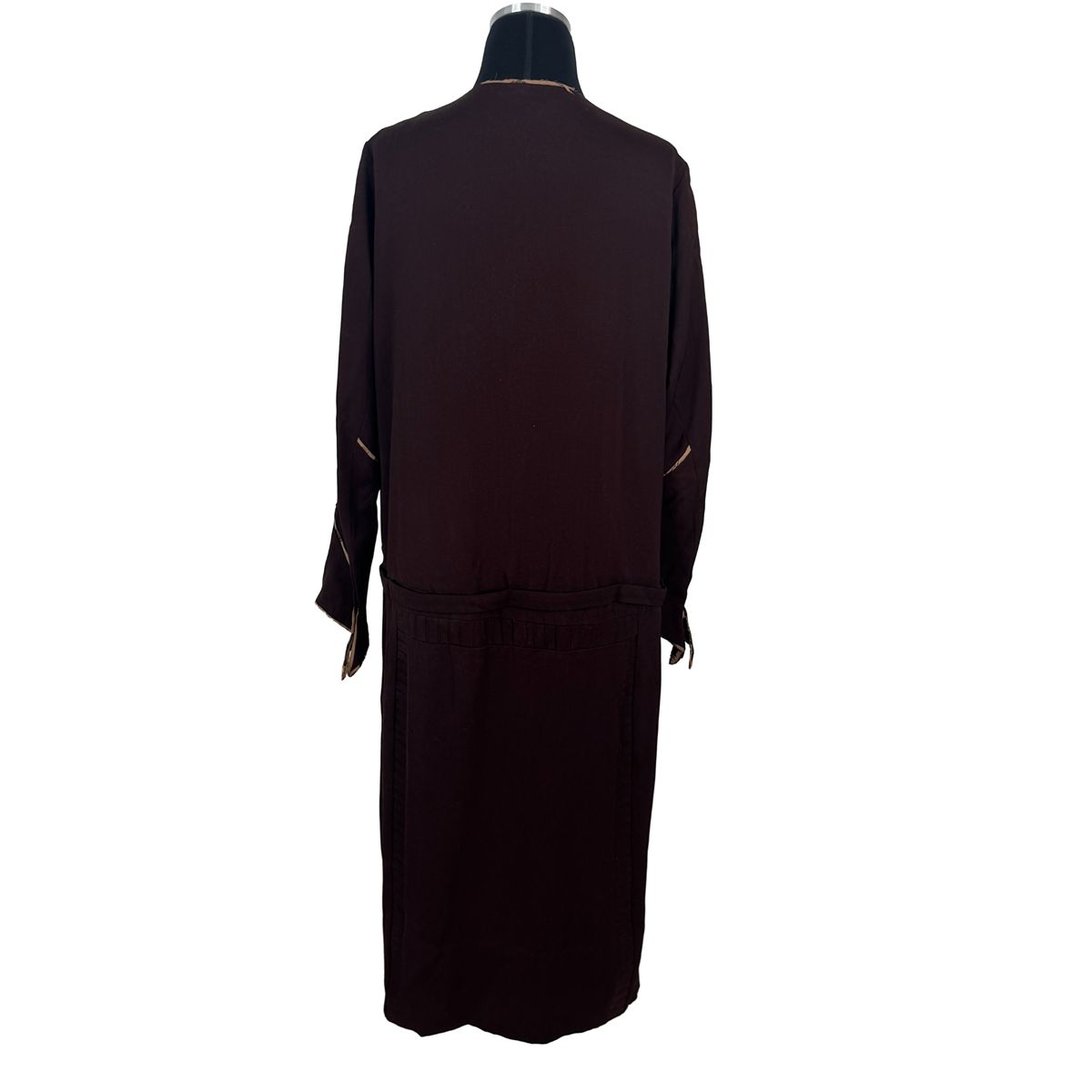
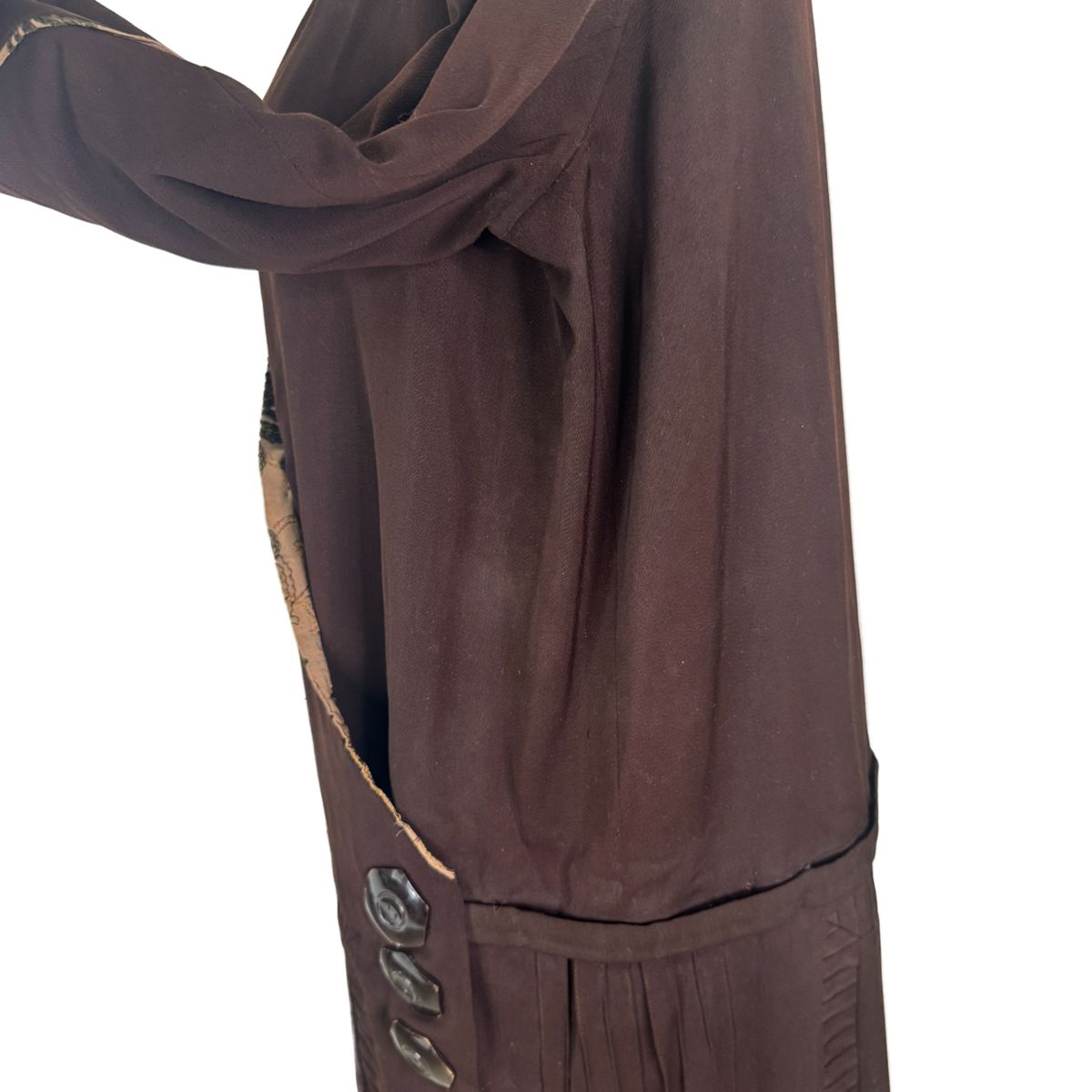
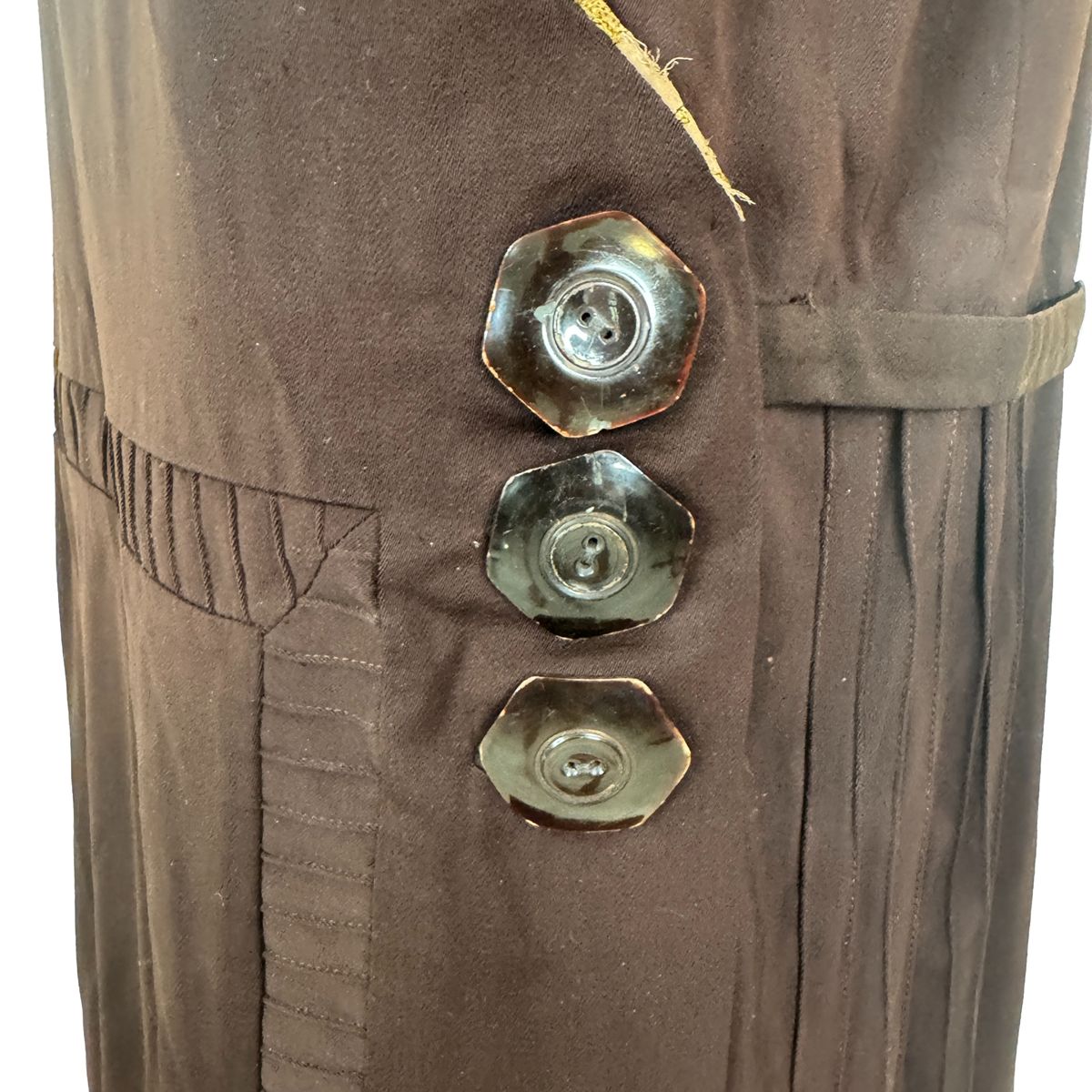
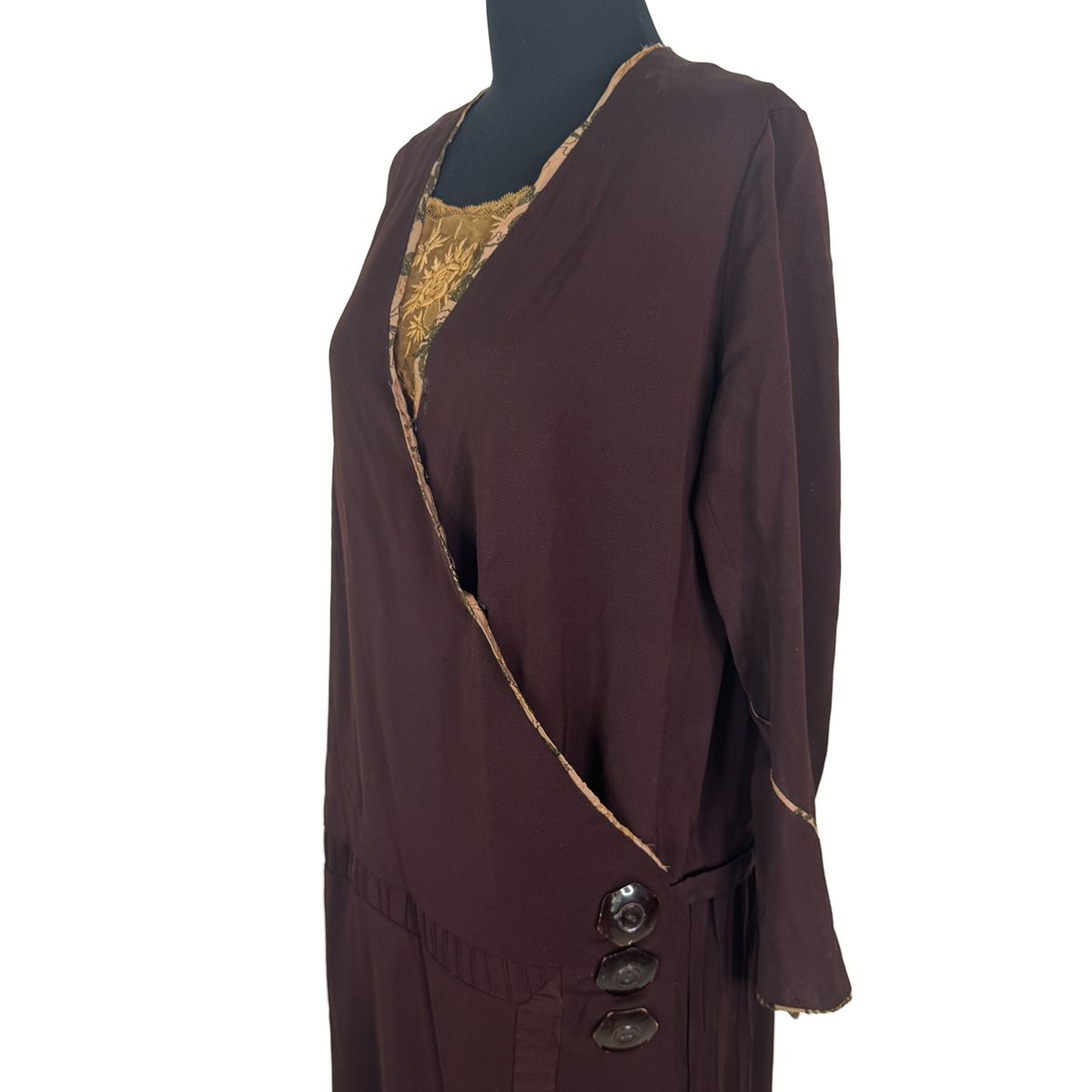
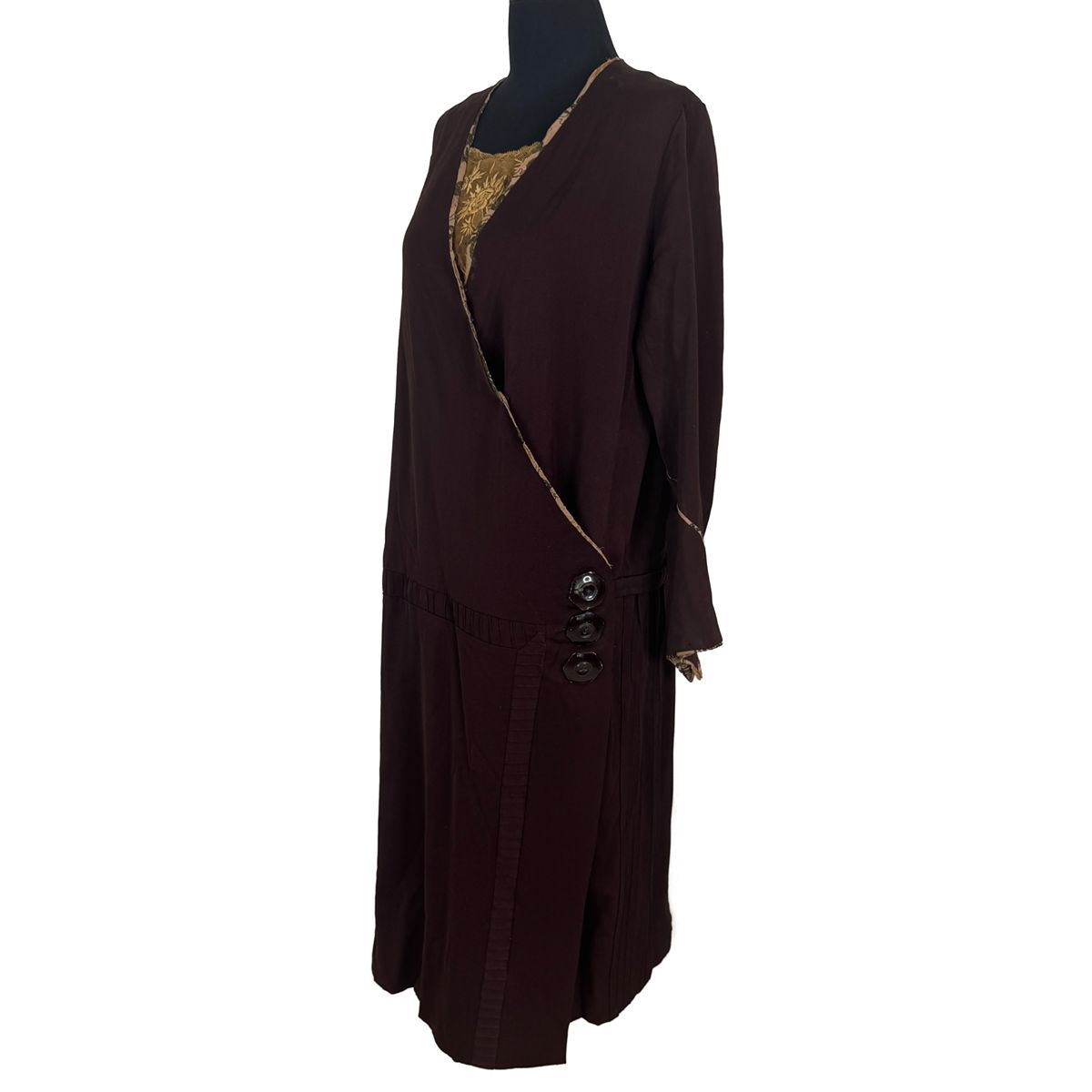
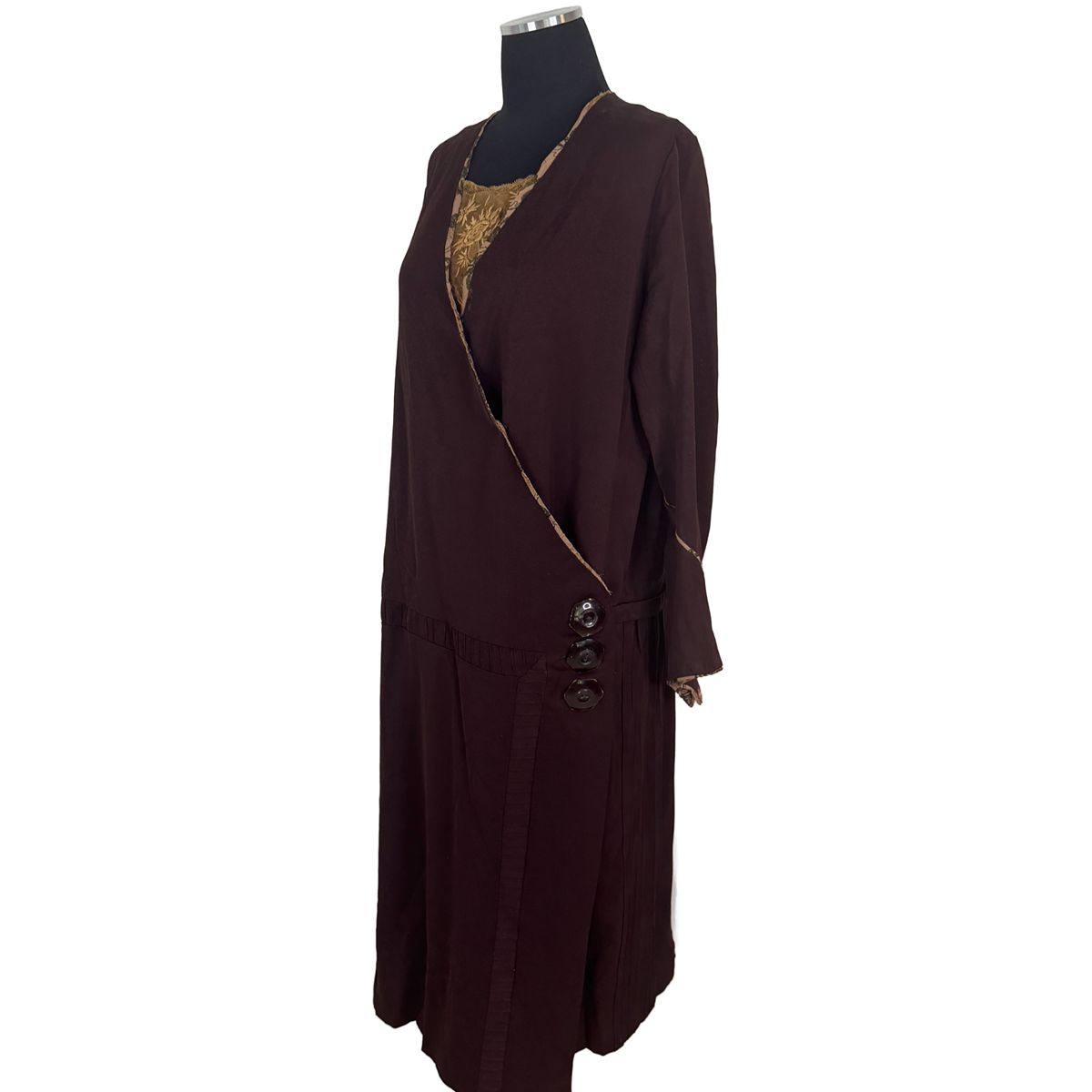
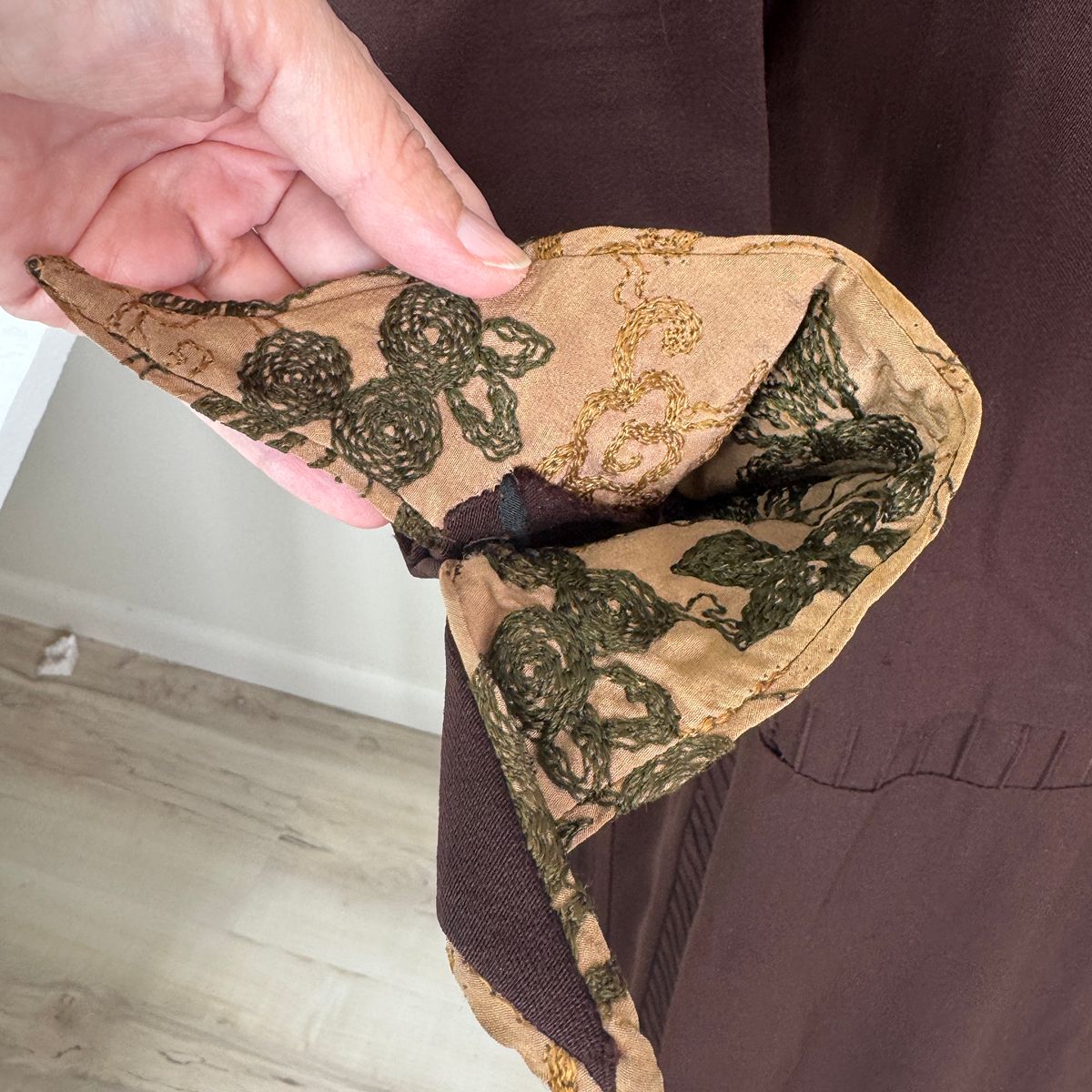
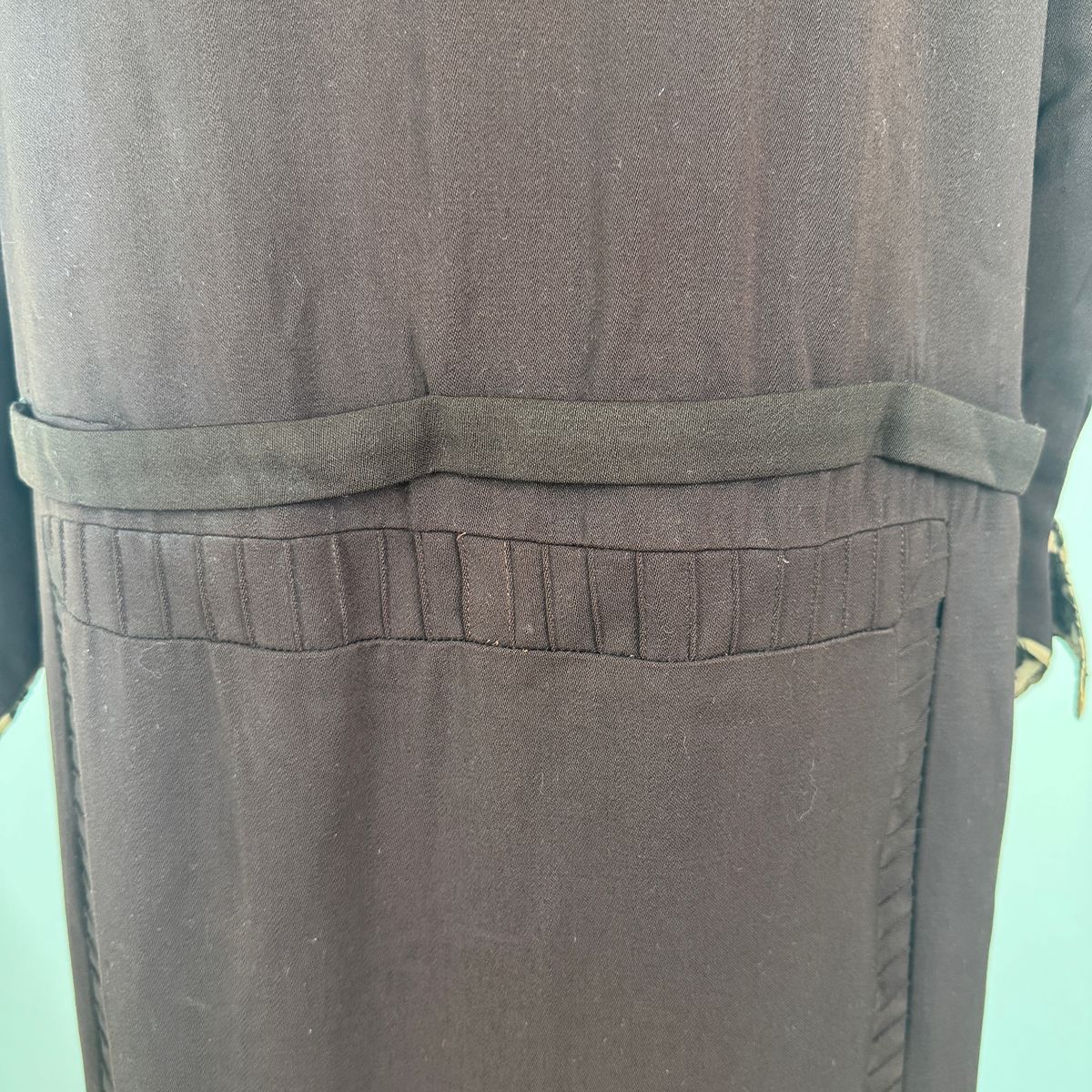
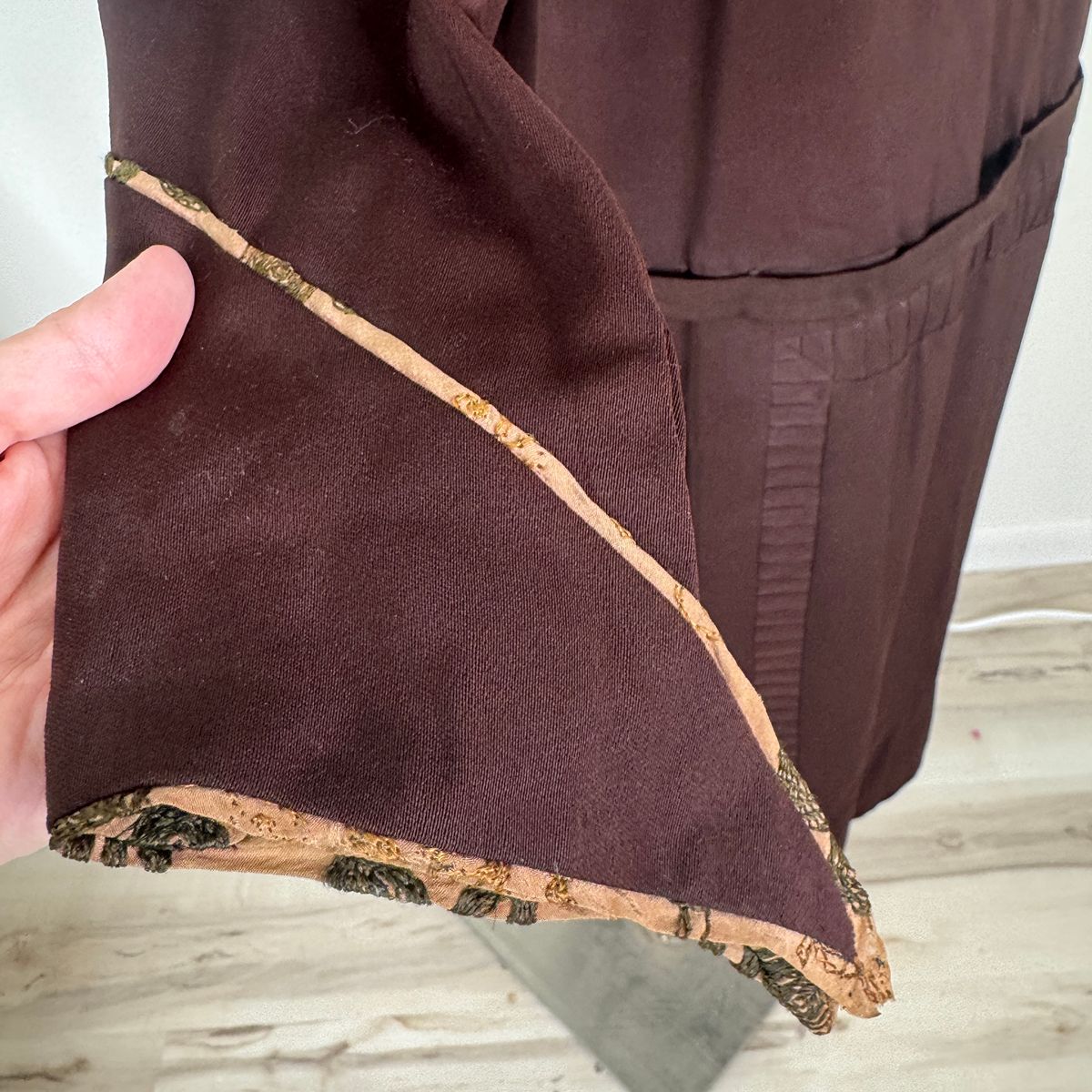
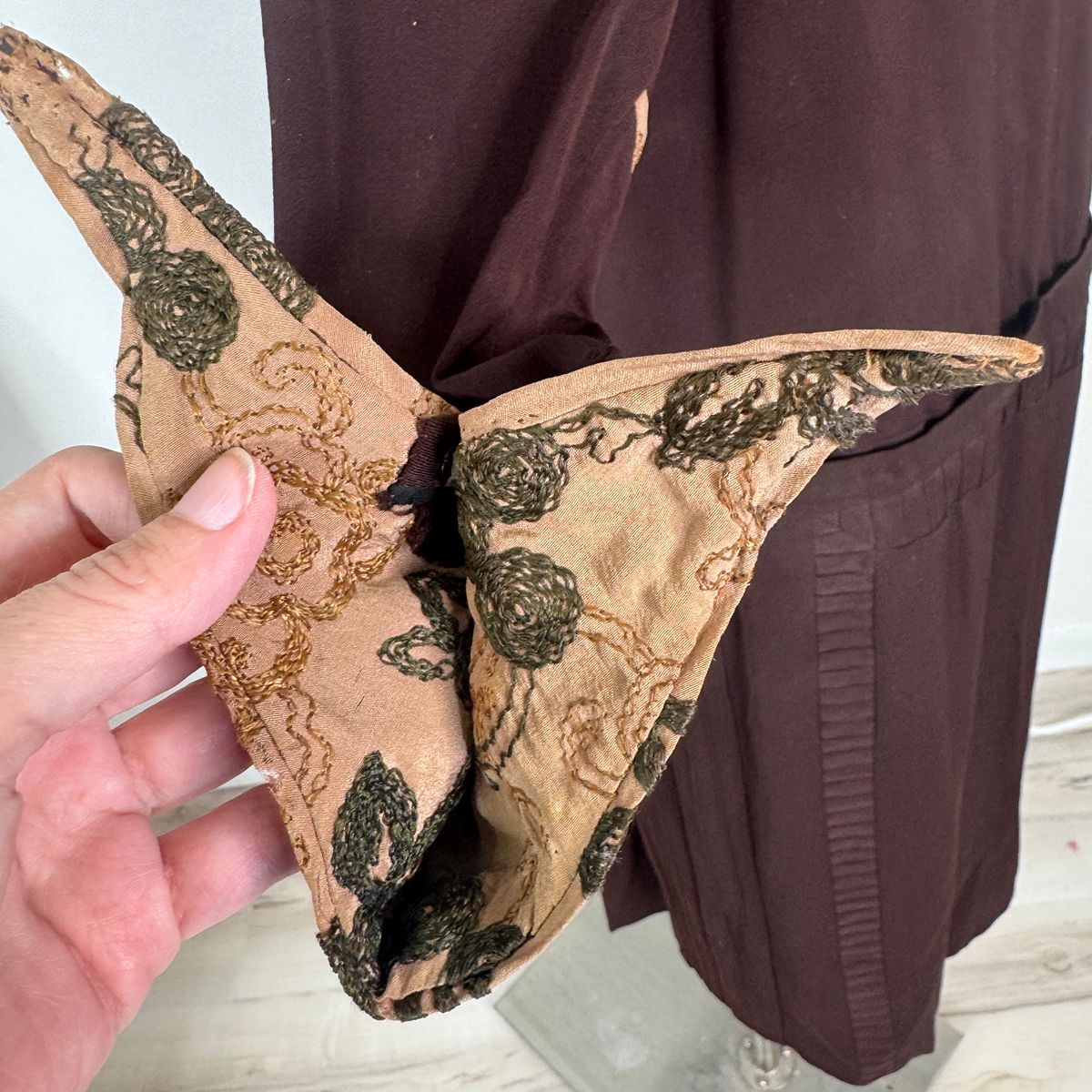
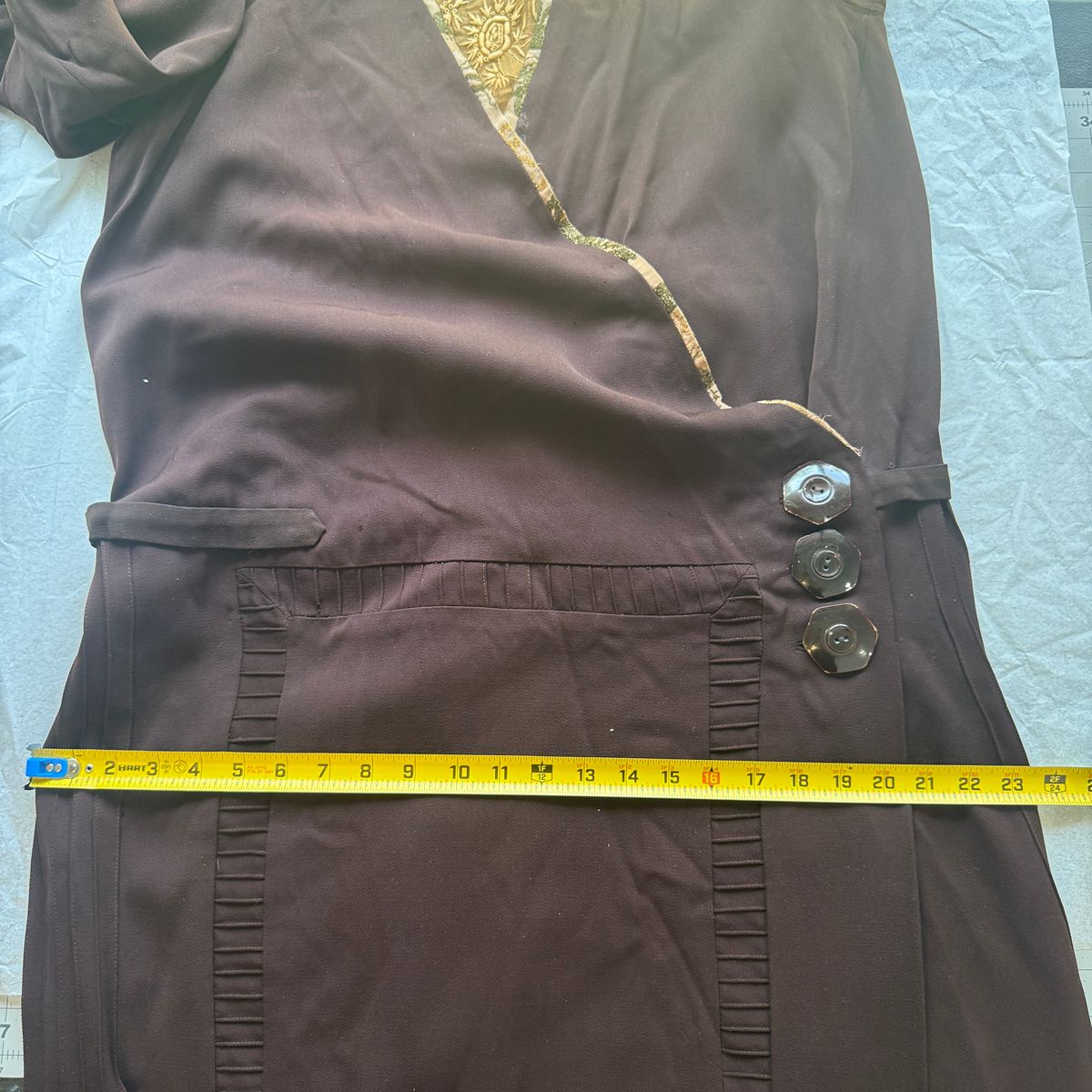
Step straight out of the 1920s with this incredibly rare, plus-size antique day dress! Featuring a rich dark chocolate brown worsted fabric, a classic drop-waist tubular silhouette, and exquisite gold and green Art Deco embroidery, this dress has absolute main character energy.
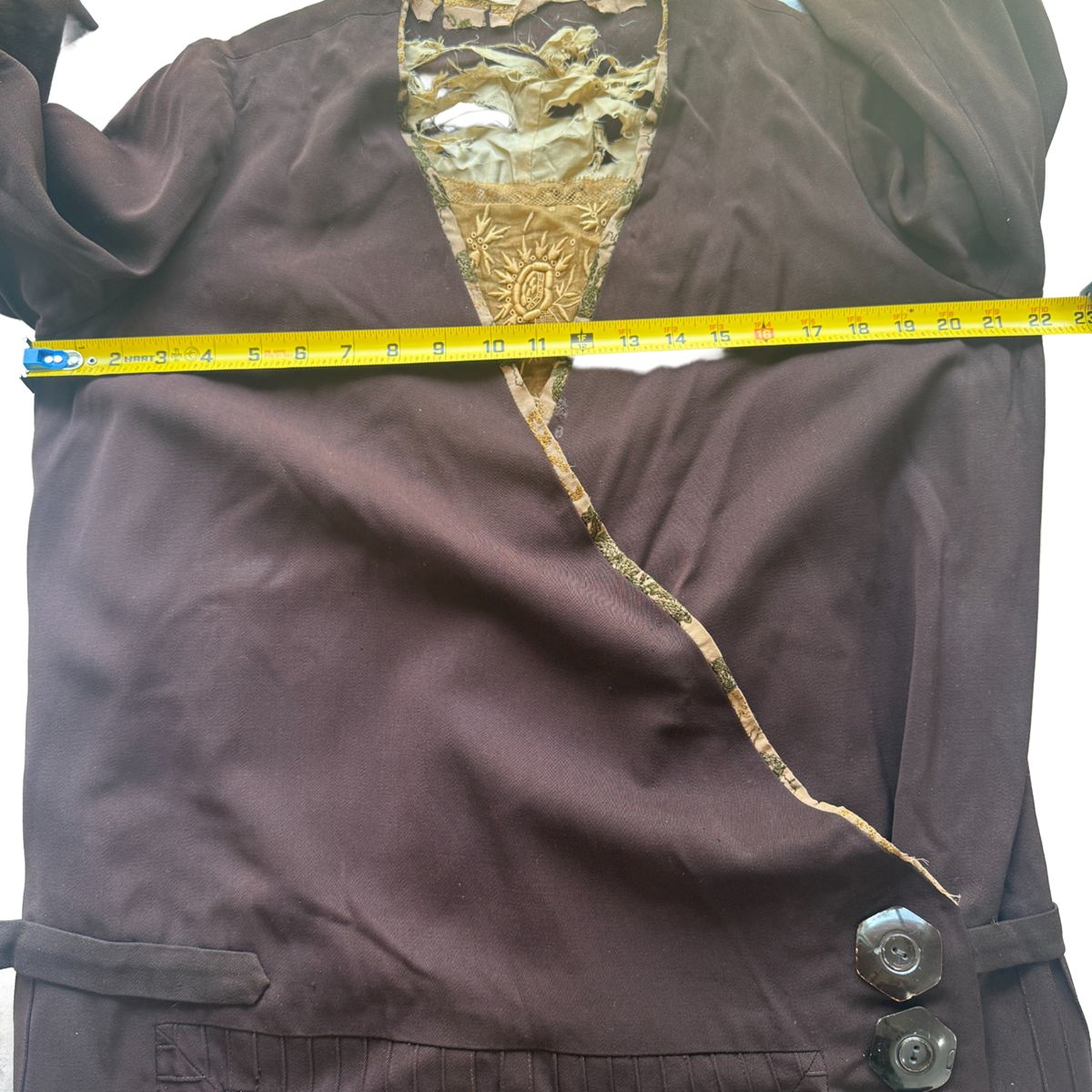
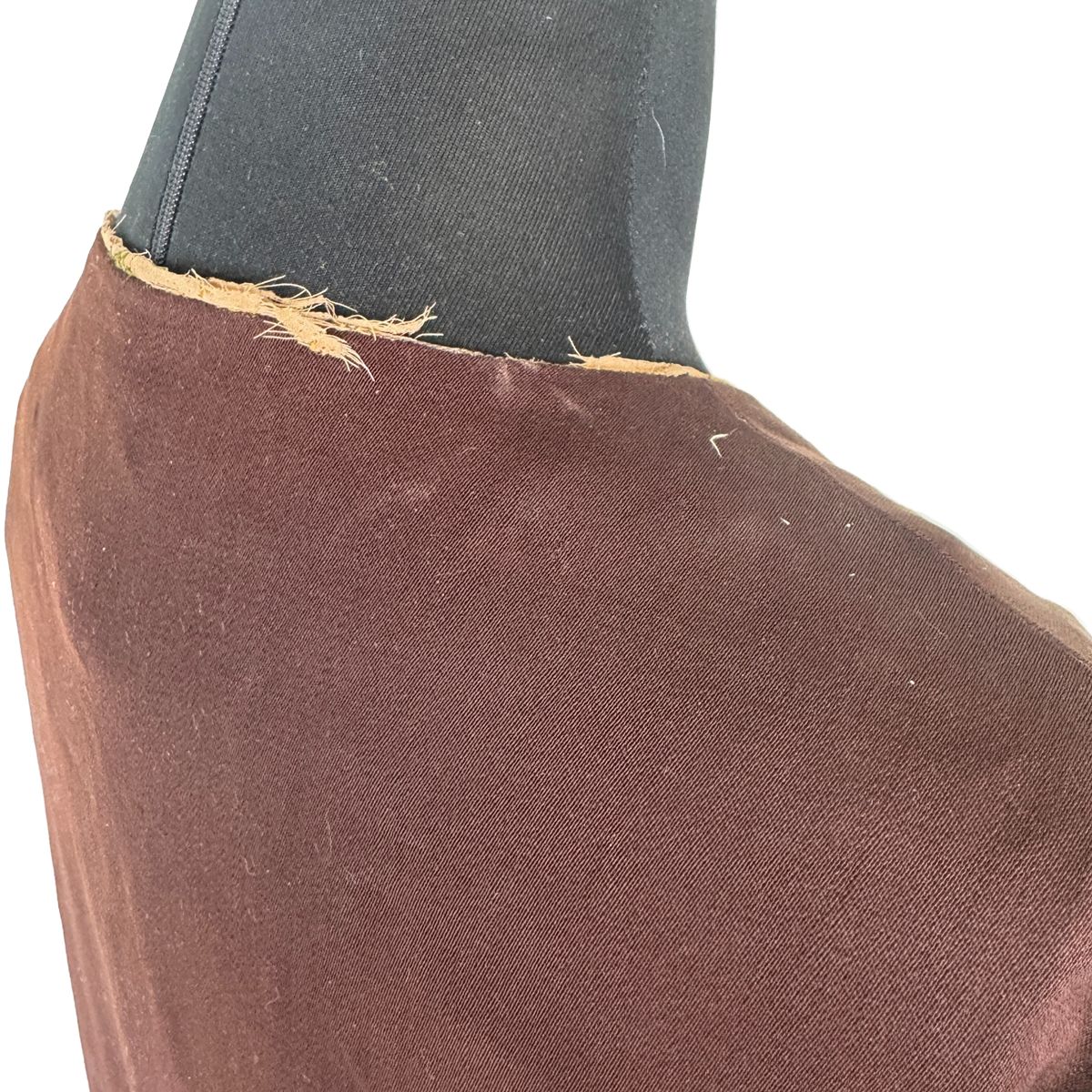
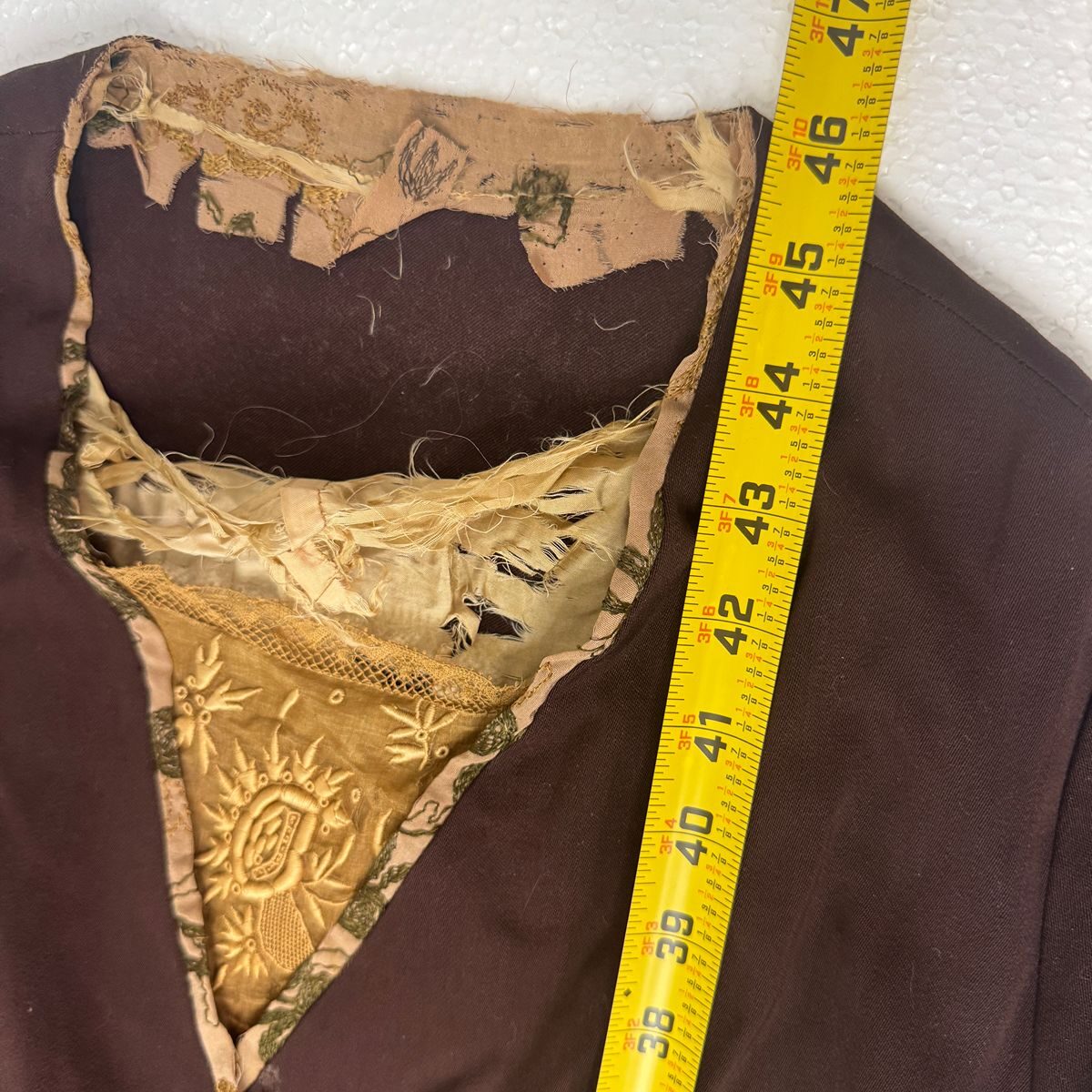
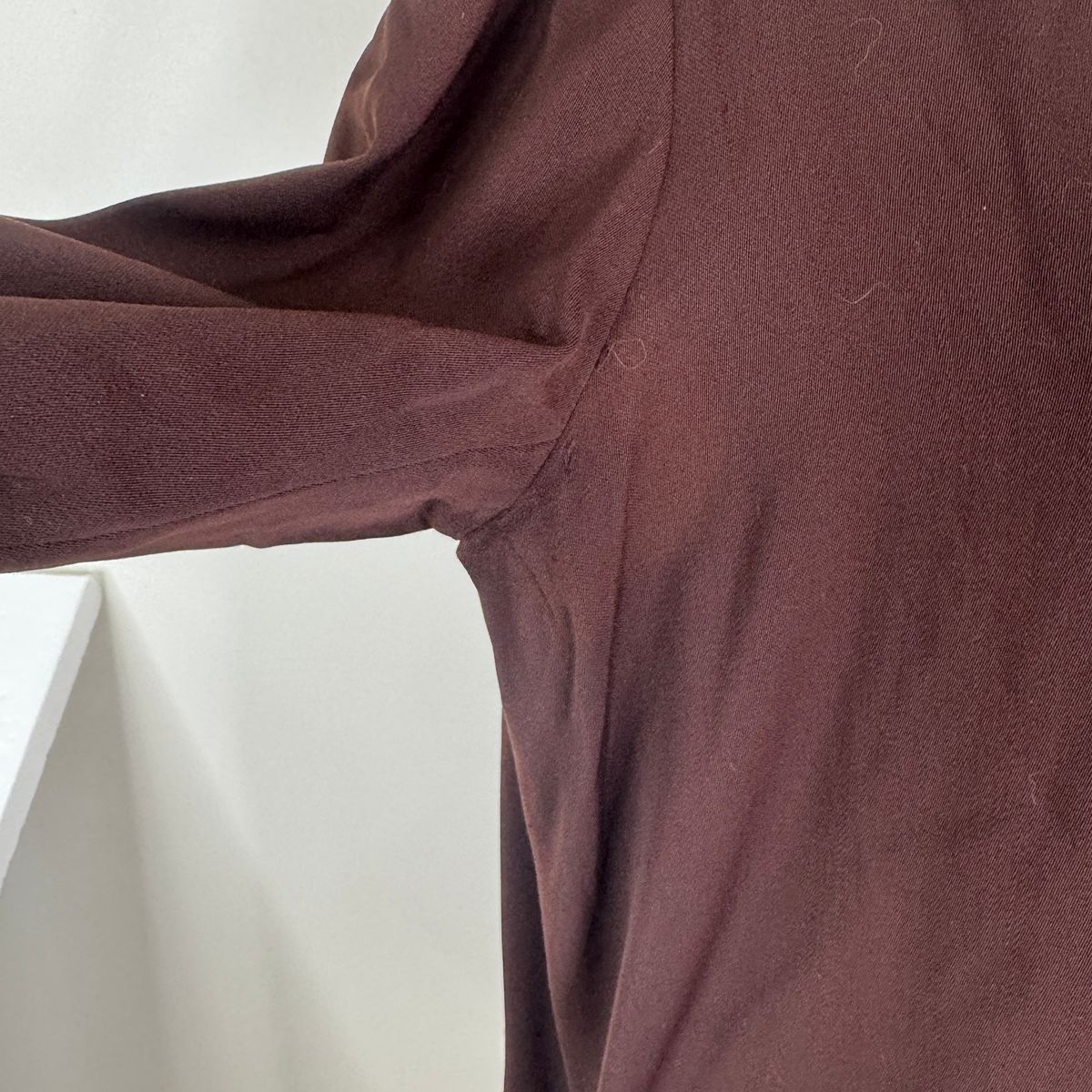
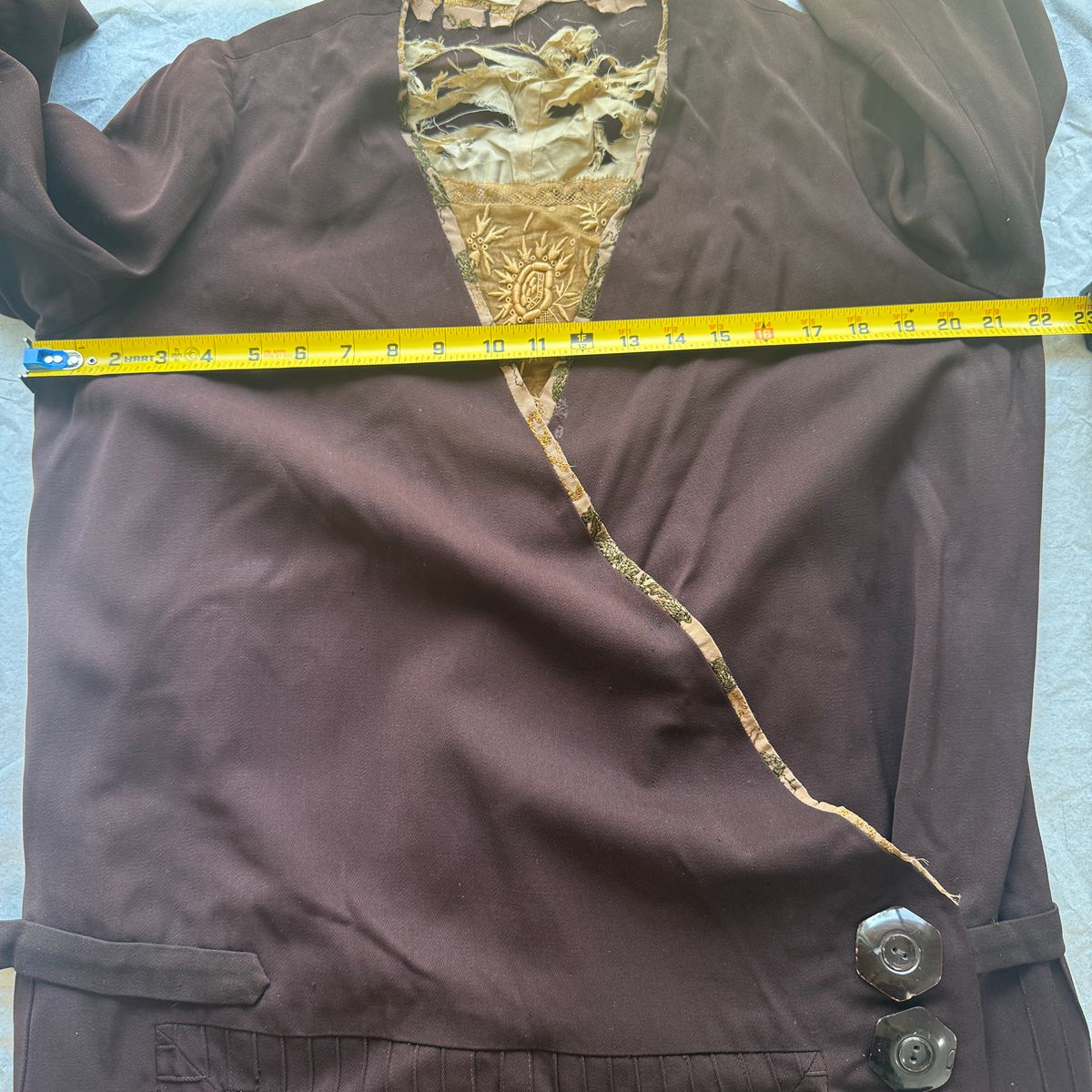
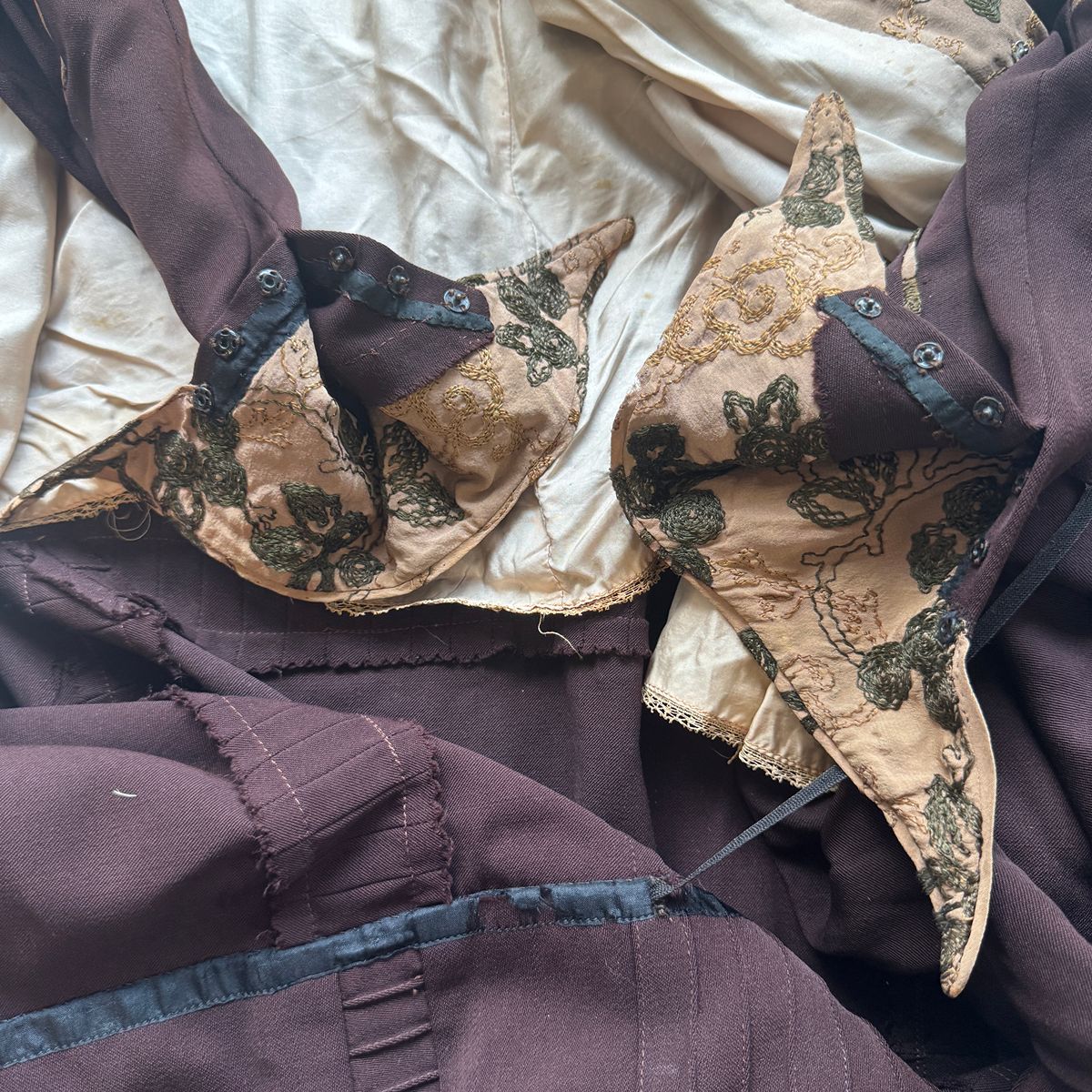
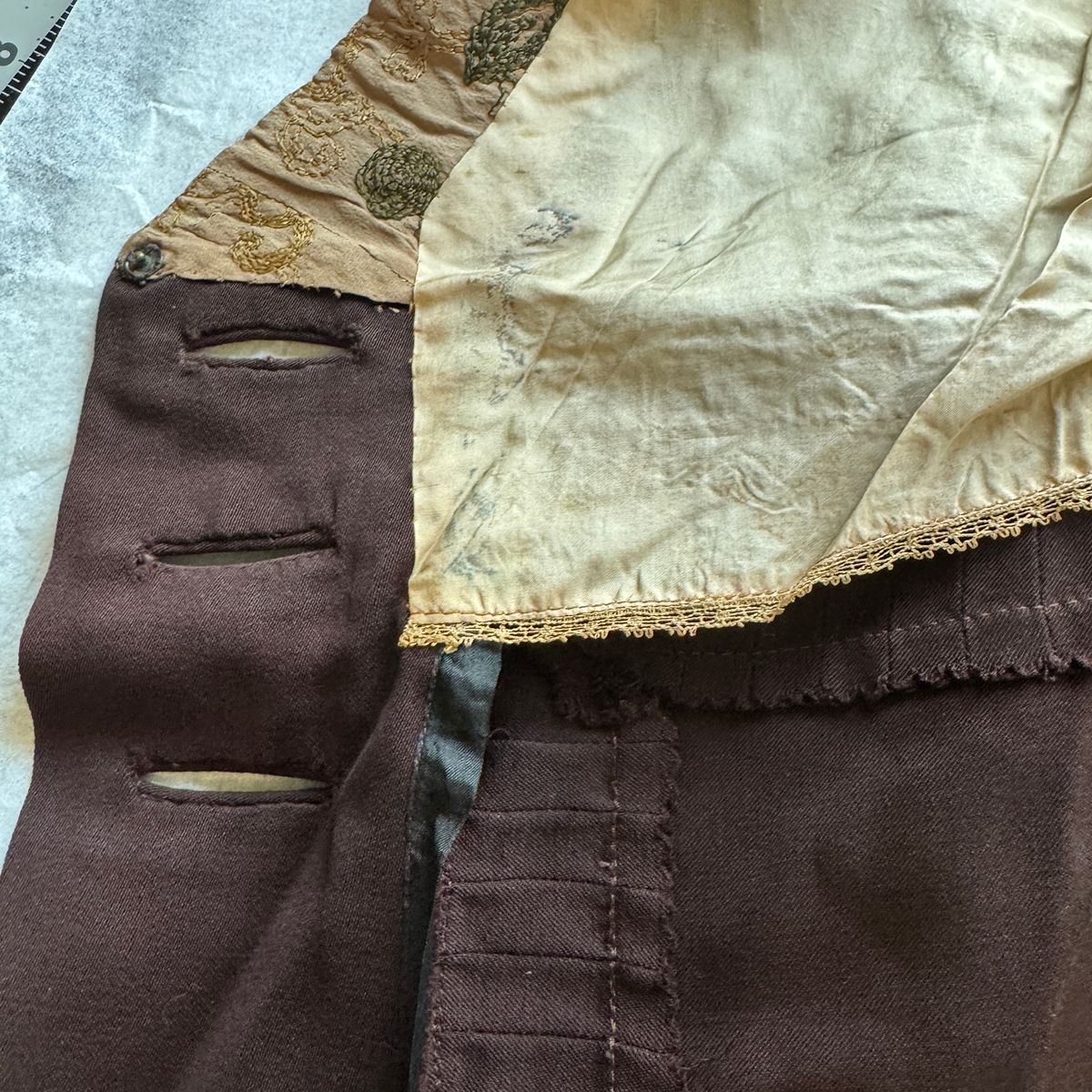
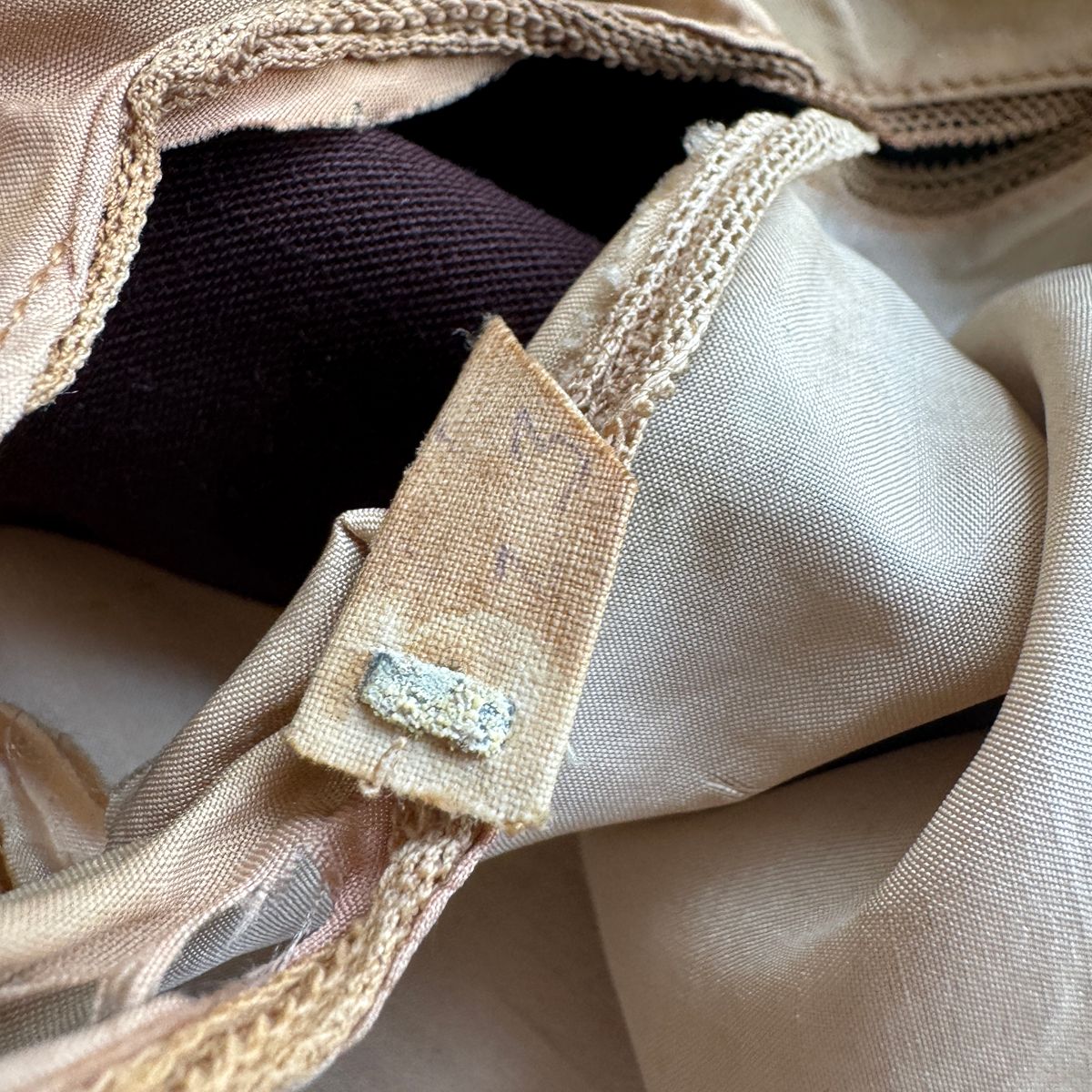
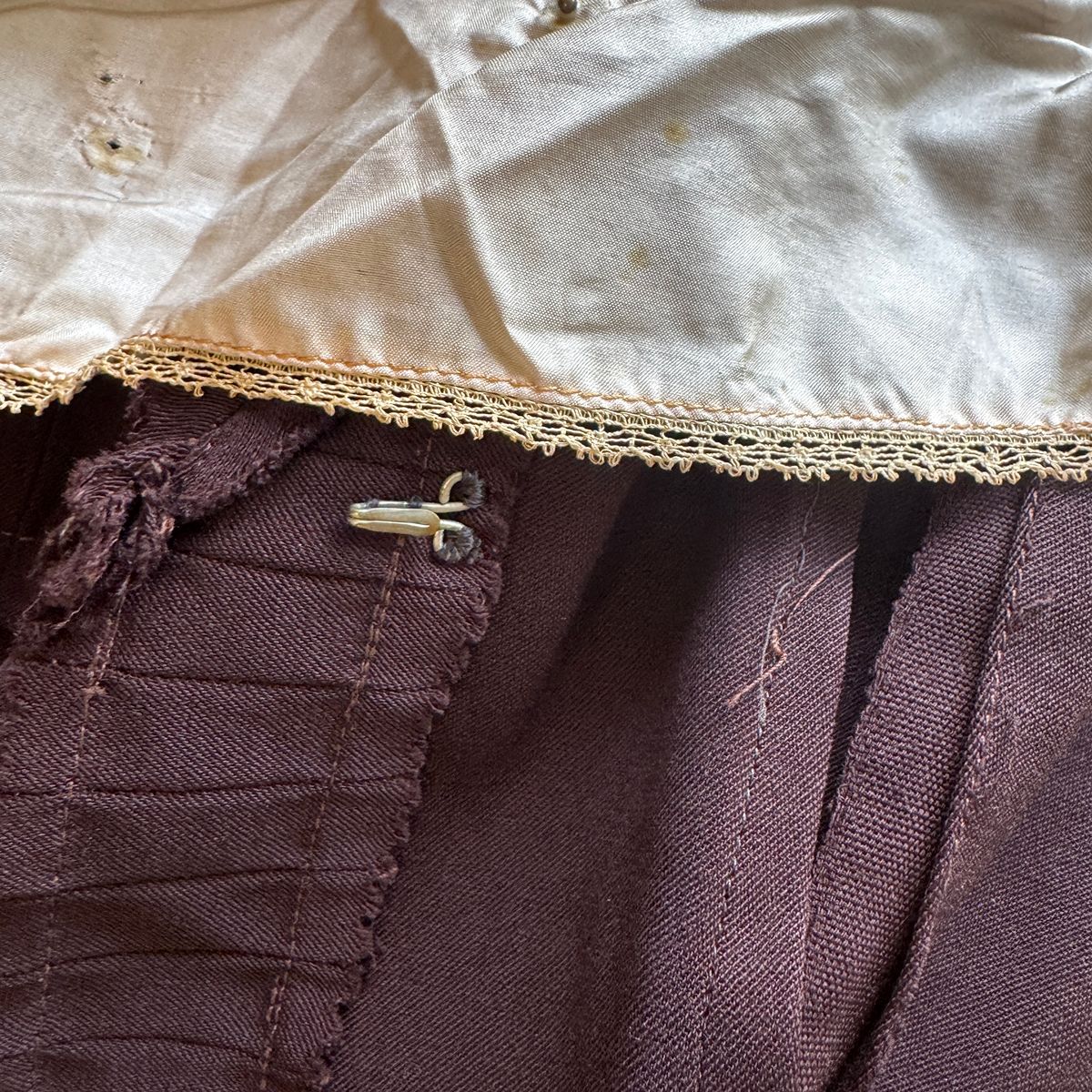
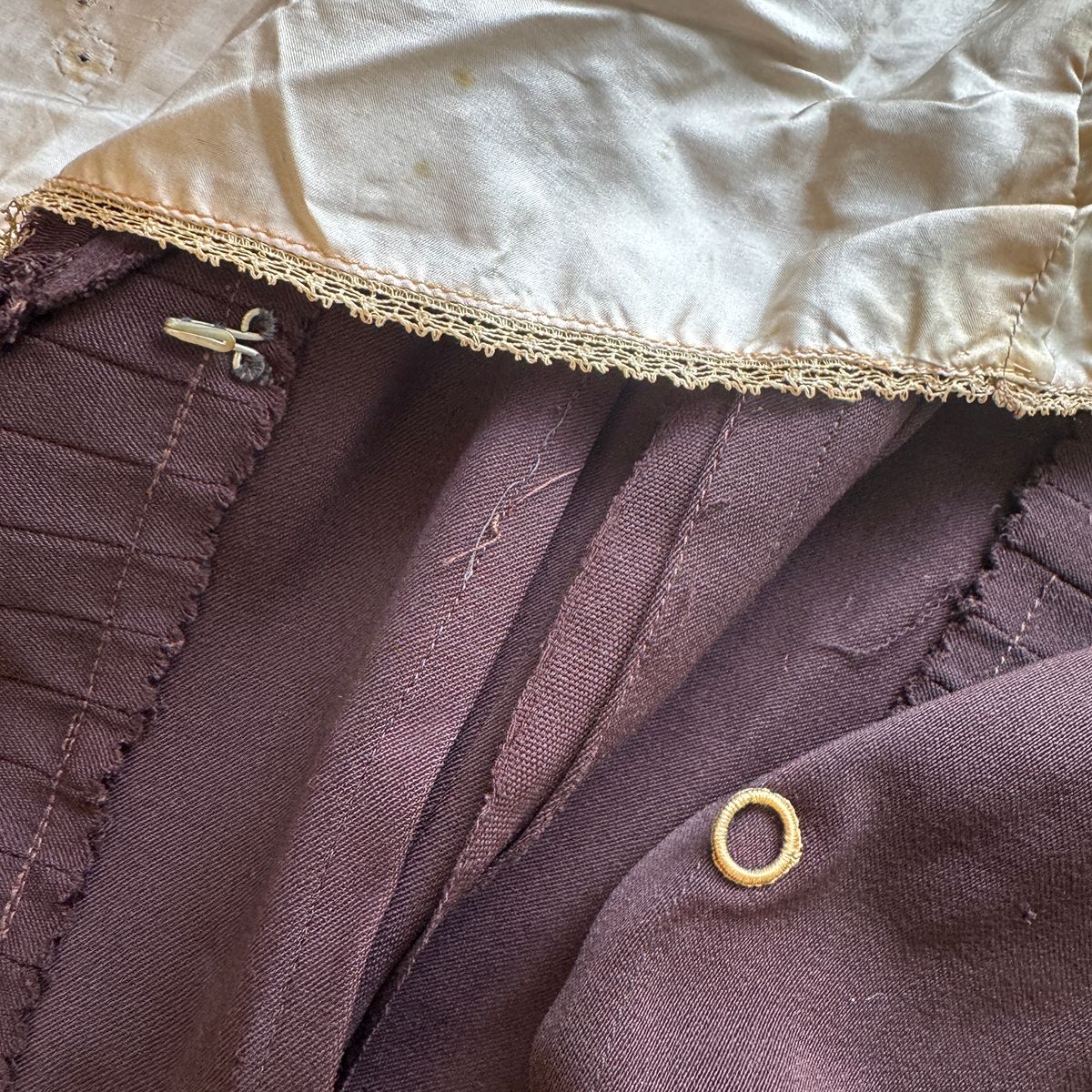
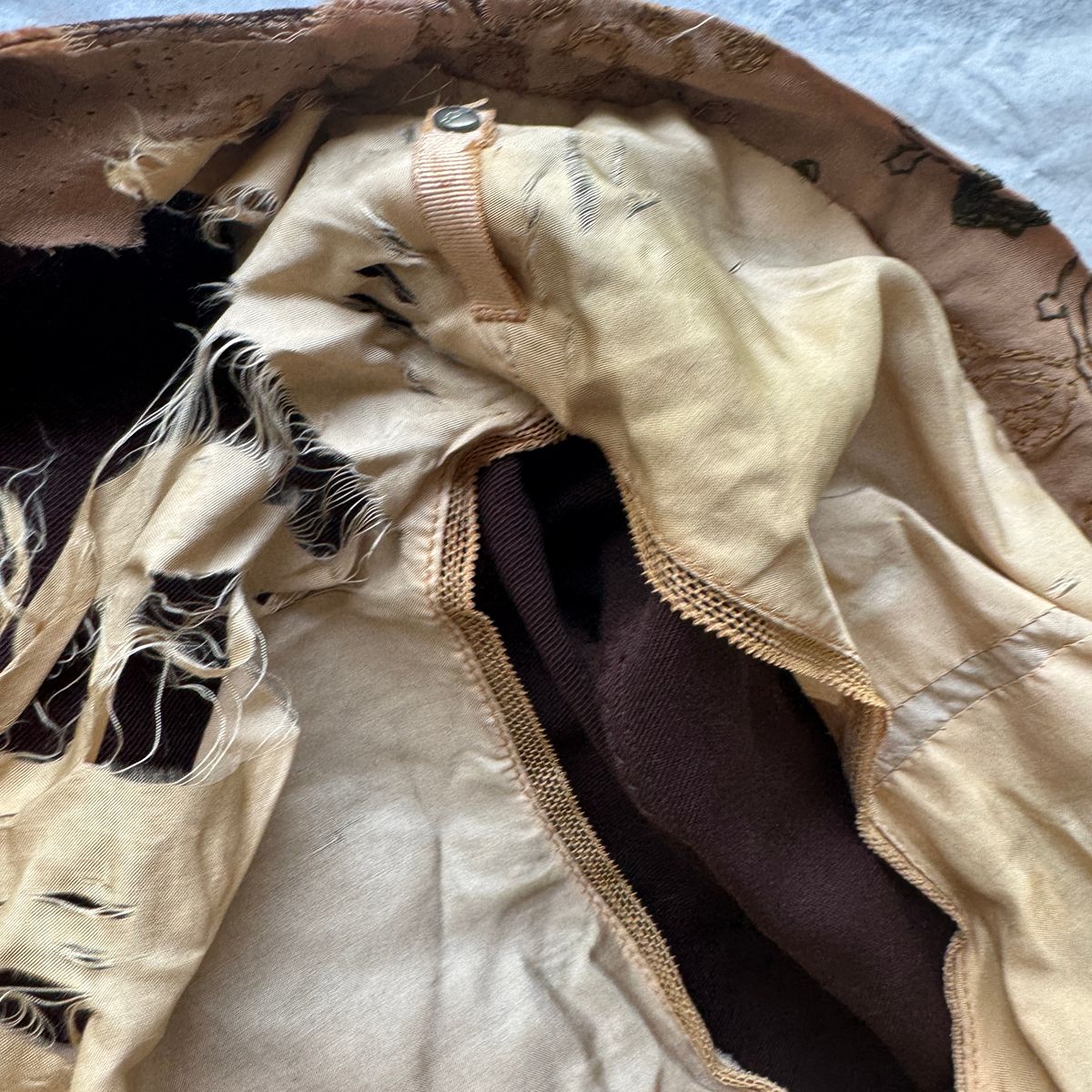
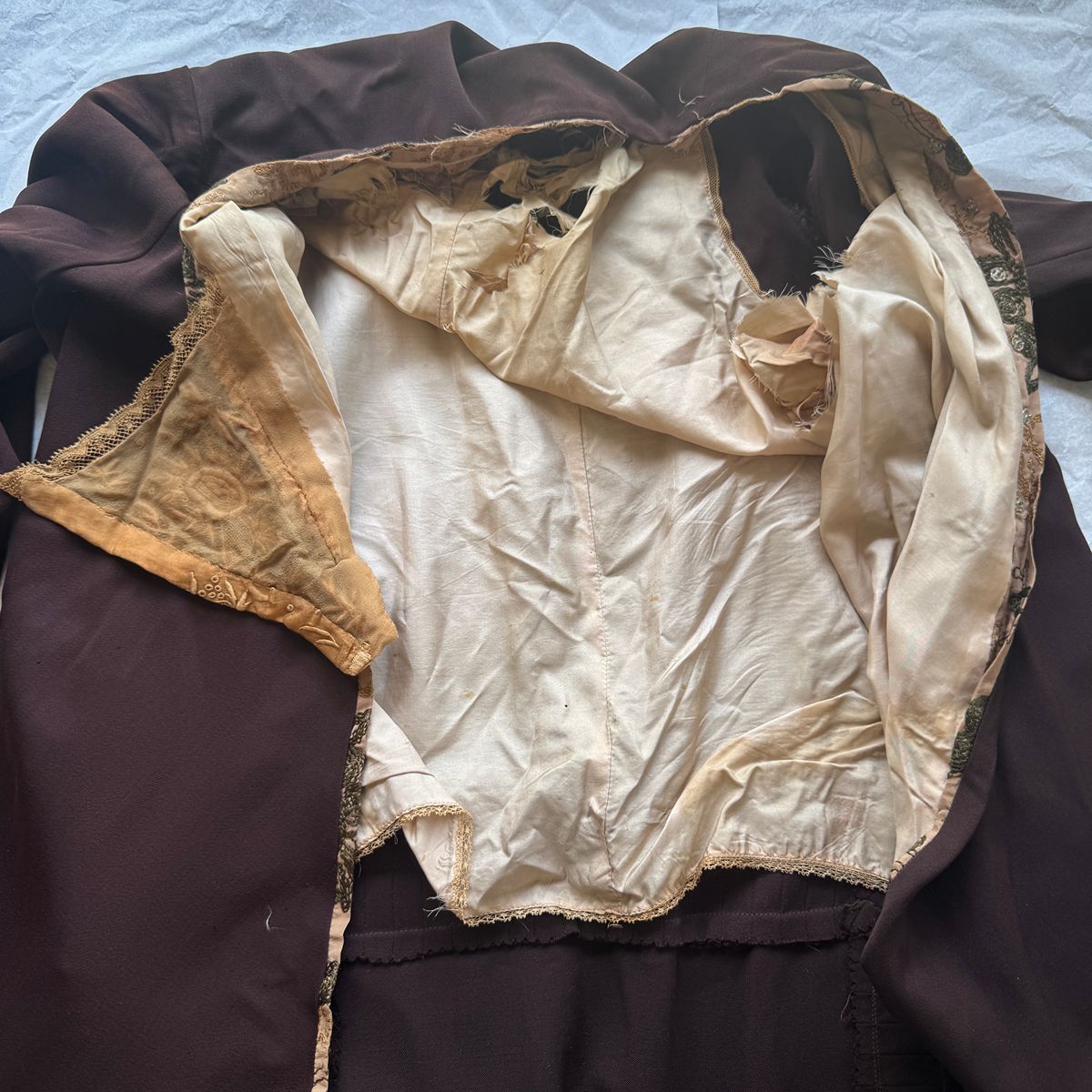
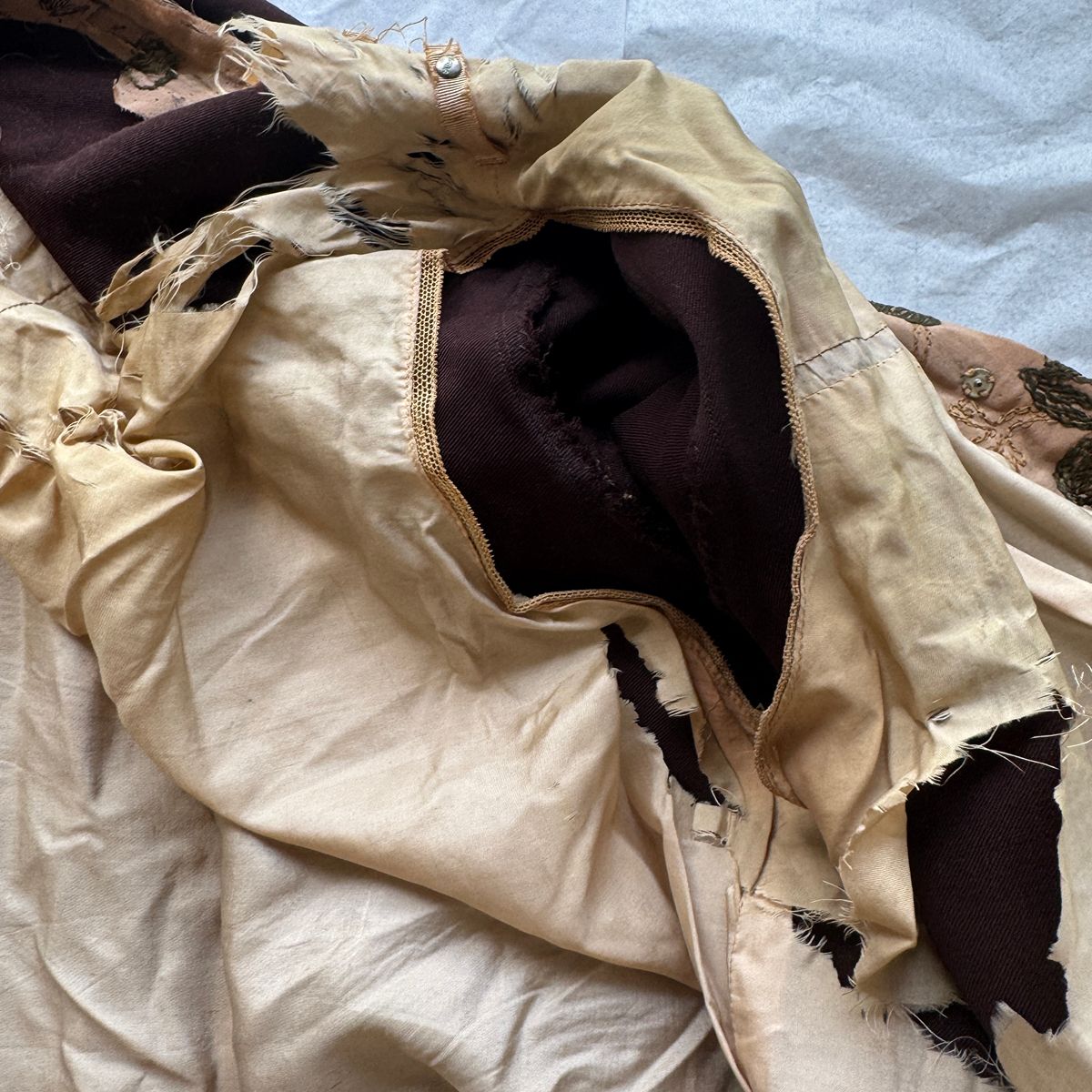
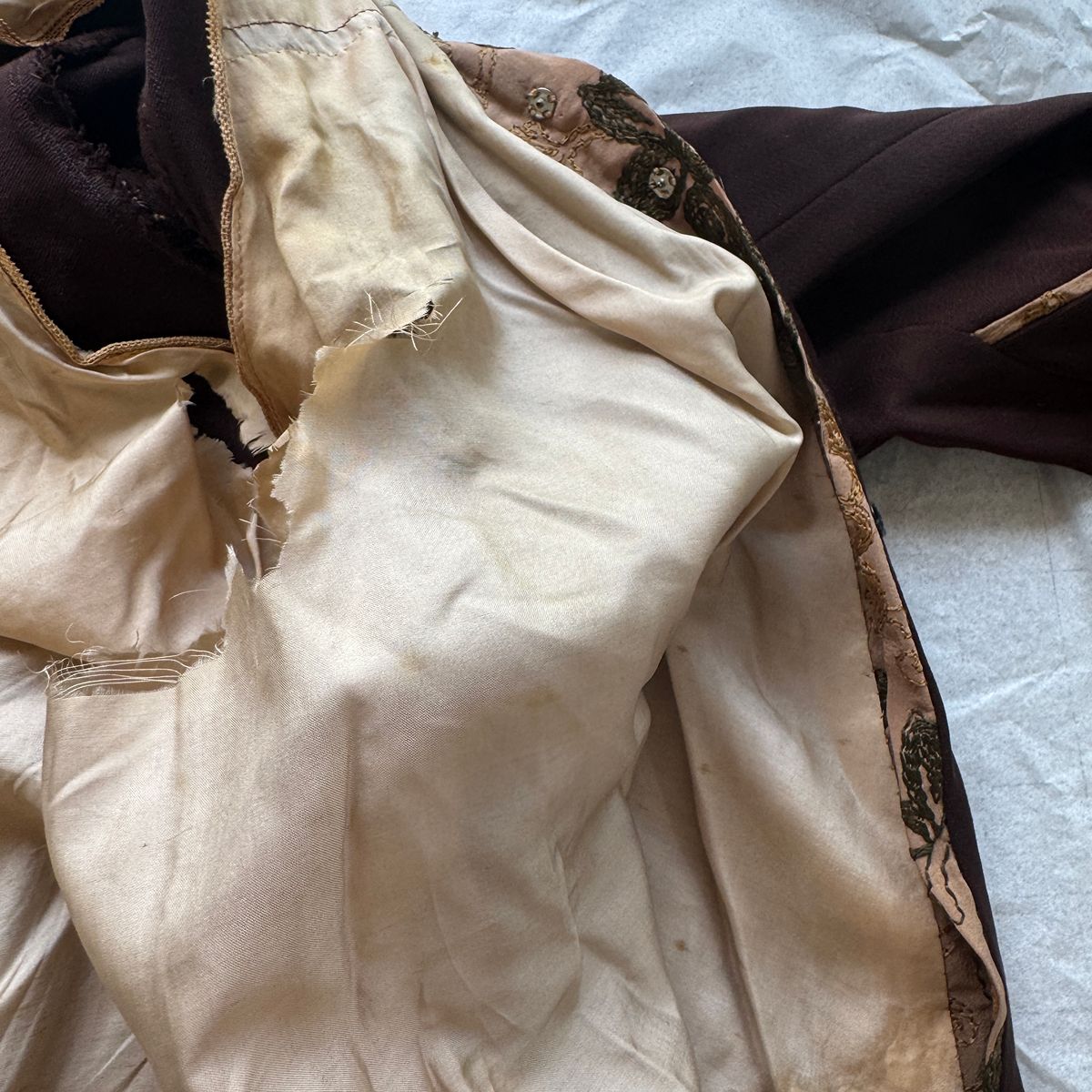
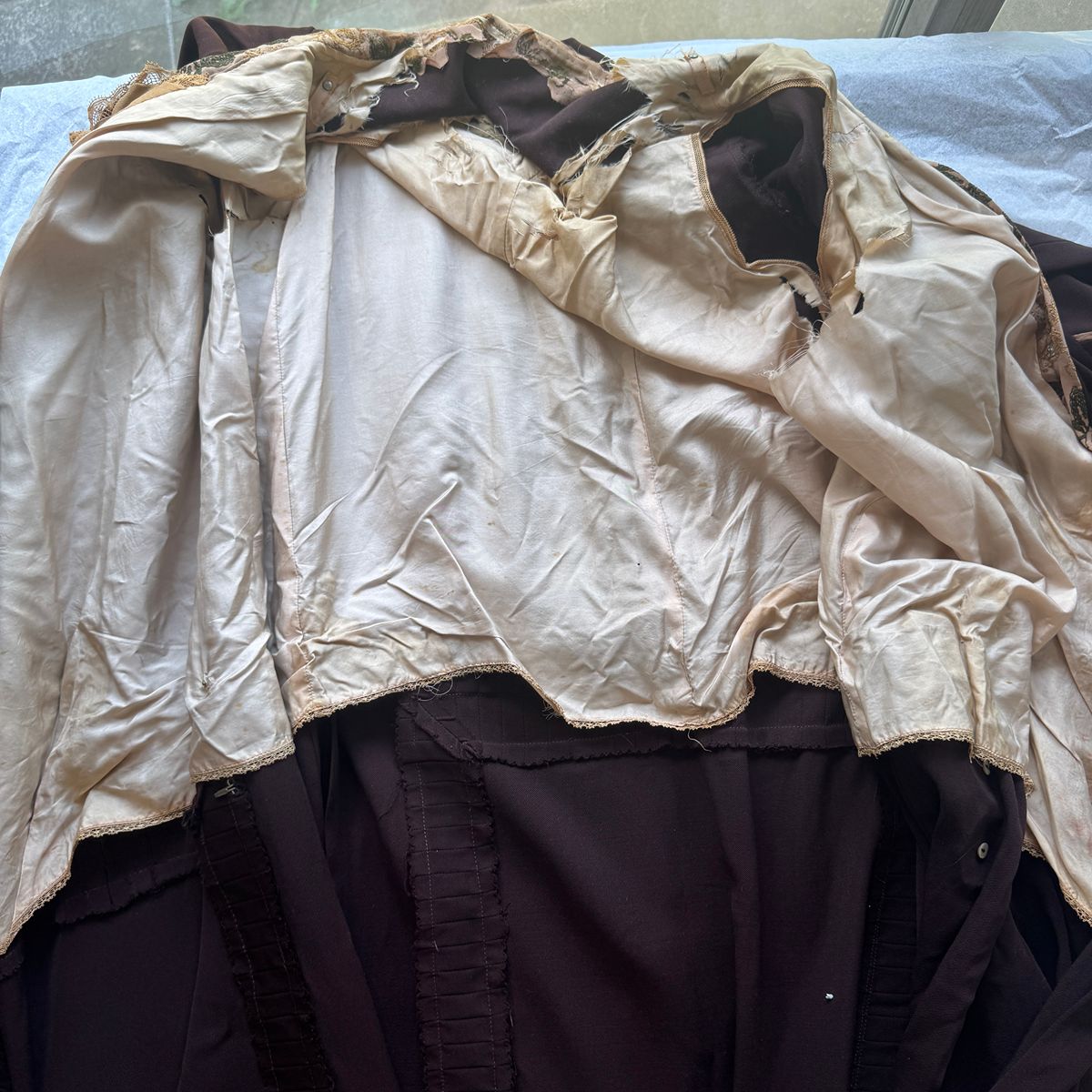
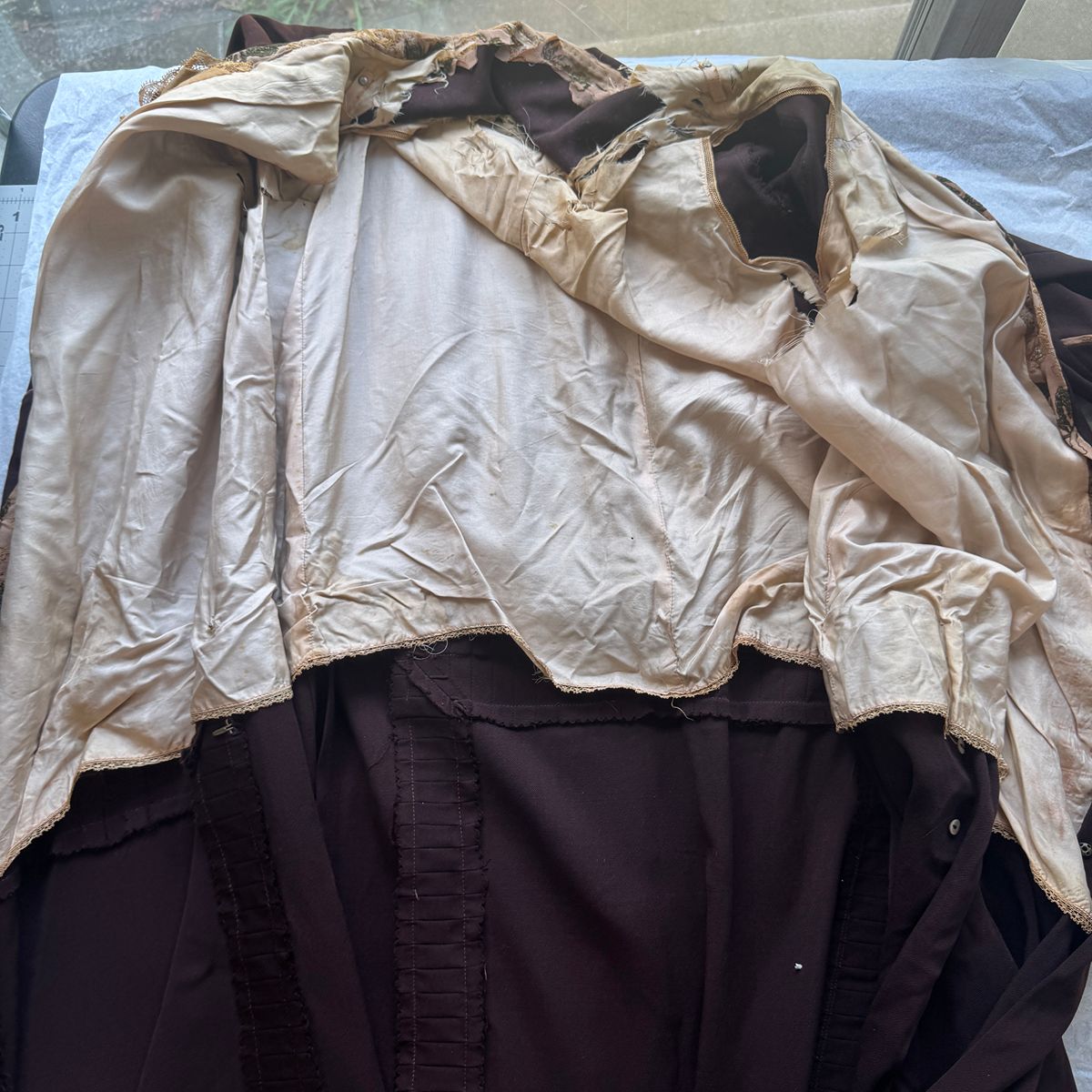
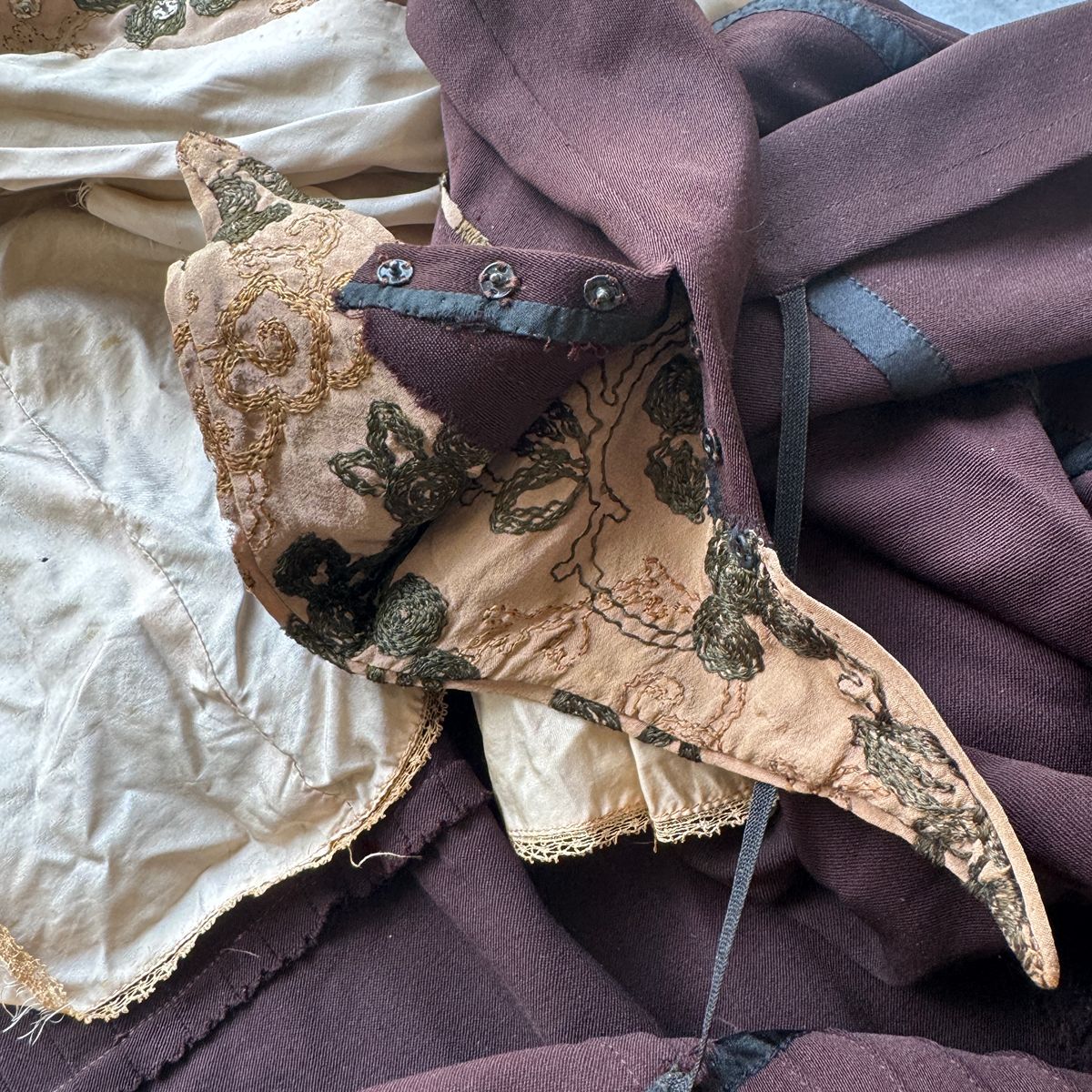
Please note that this is a near 100-year-old survivor and is being sold as a wearable project or display piece. The interior silk lining has shattered (a common occurrence with 1920s weighted silk) and will need to be carefully removed.
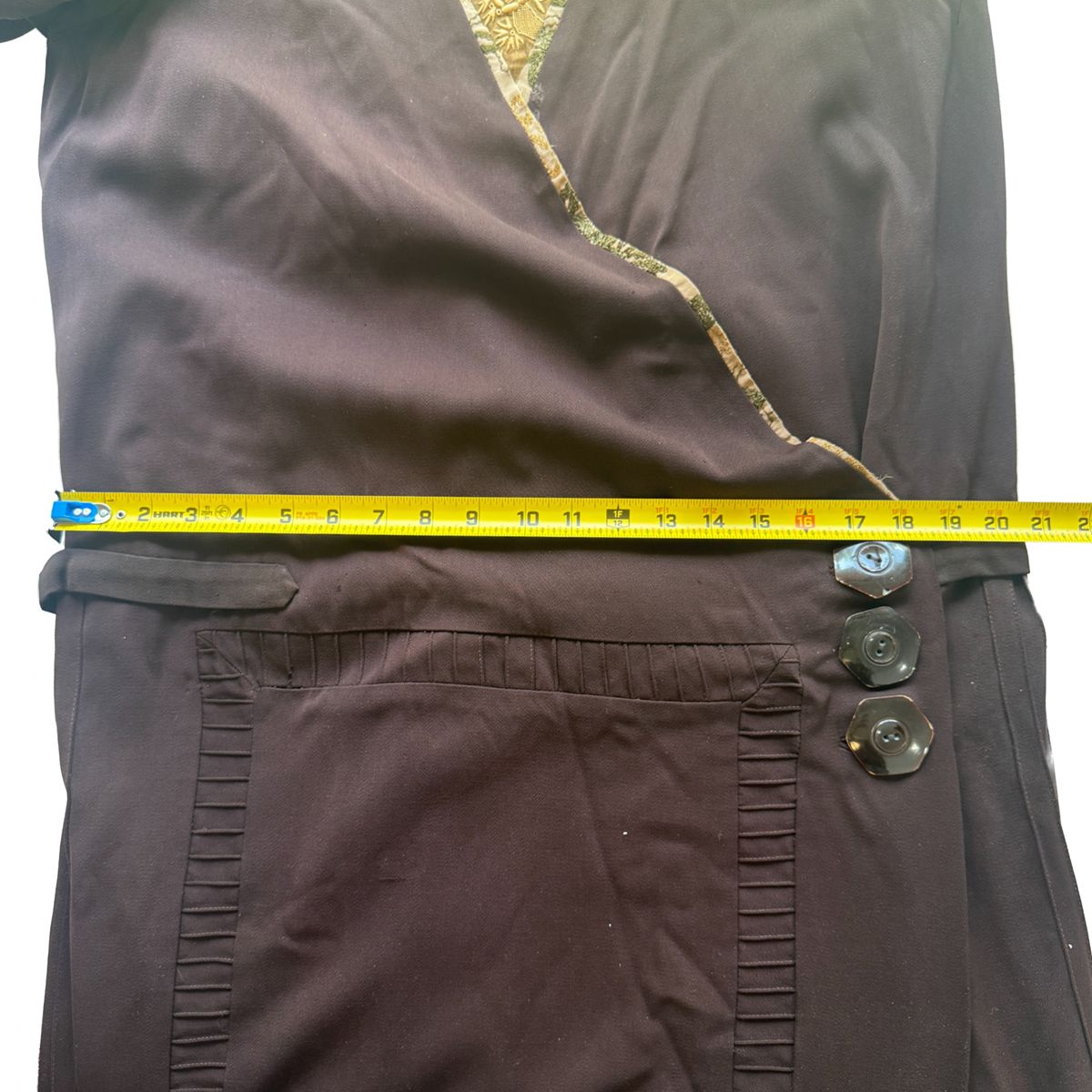
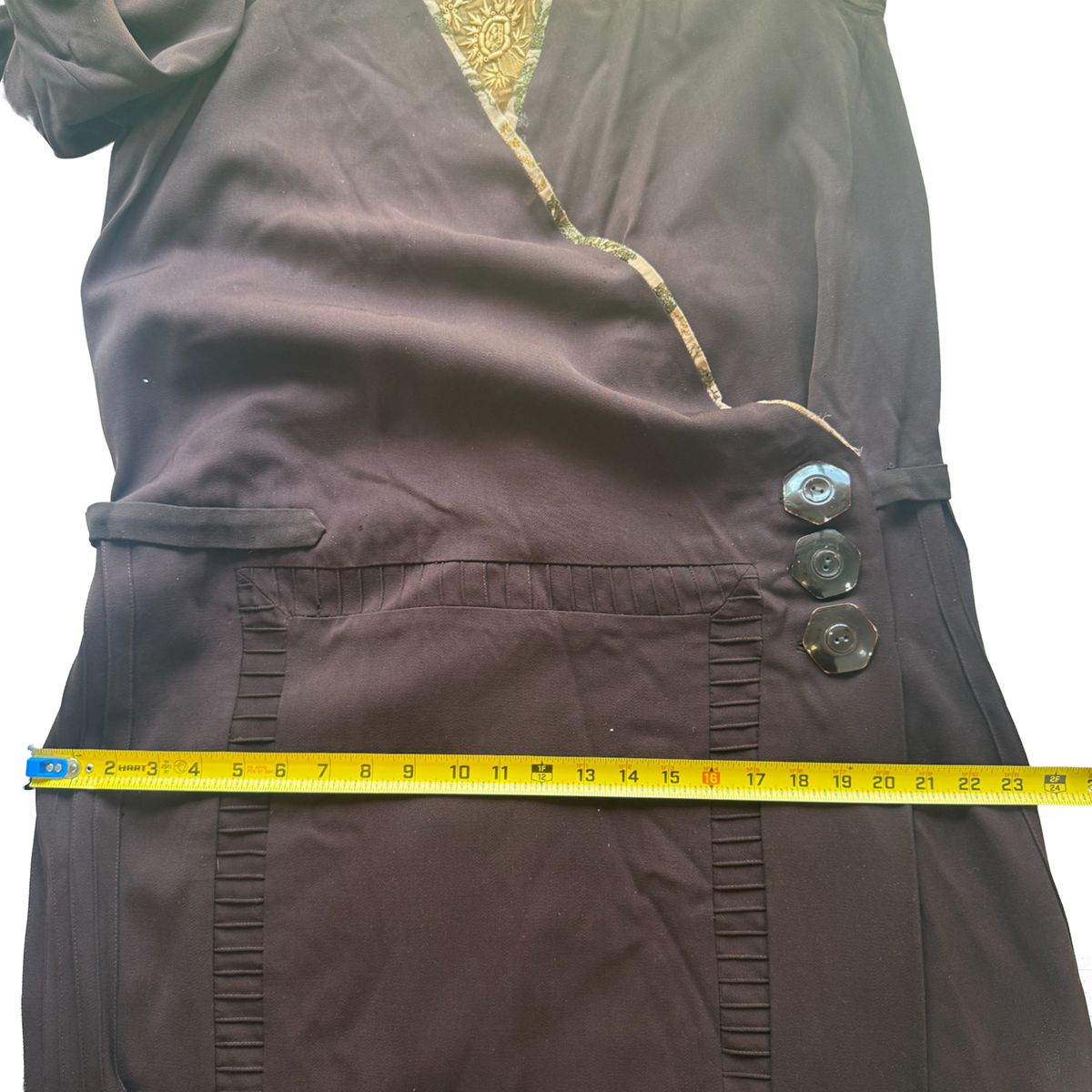
Measurements (Doubled):
Bust: 44″ (leave room to drape)
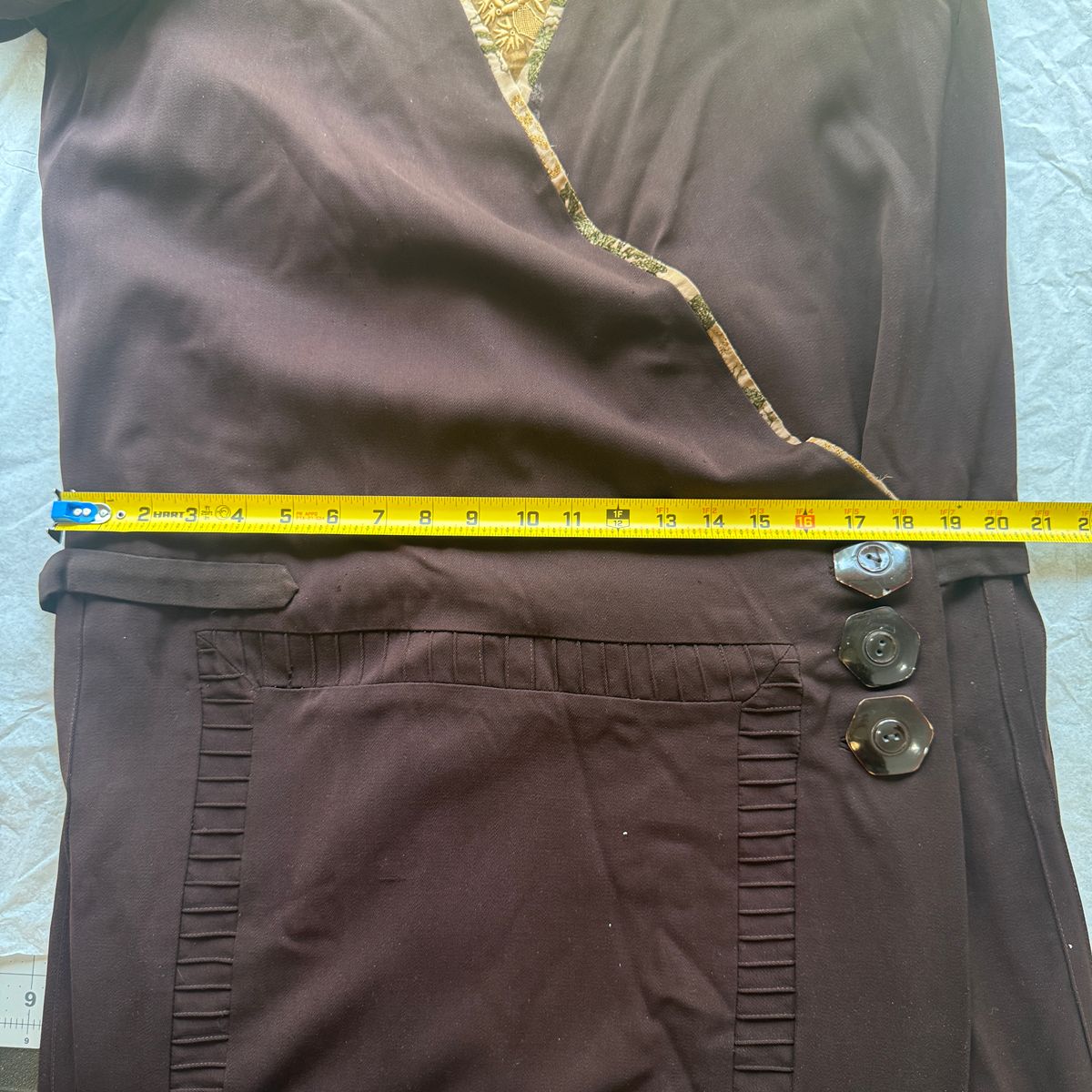
Waist: 41″
Hips: 47″
Length: 46″
Fits a modern XL / 1X.
Make me an offer!
(Almost) all pricing is negotiable.
More about this Item
I am constantly digging for buried treasure in the vintage world, but finding genuine 1920s garments in a modern plus size is the ultimate unicorn hunt… that I found right in my storage on the top shelf, picked up almost 20 years ago and forgotten about until my recent move! For decades, surviving antique pieces have skewed incredibly petite, leaving many to wonder if curvier women simply didn’t exist in the Jazz Age. They absolutely did, and this extraordinary dark brown 1920s drop-waist wrap dress is the glorious proof.
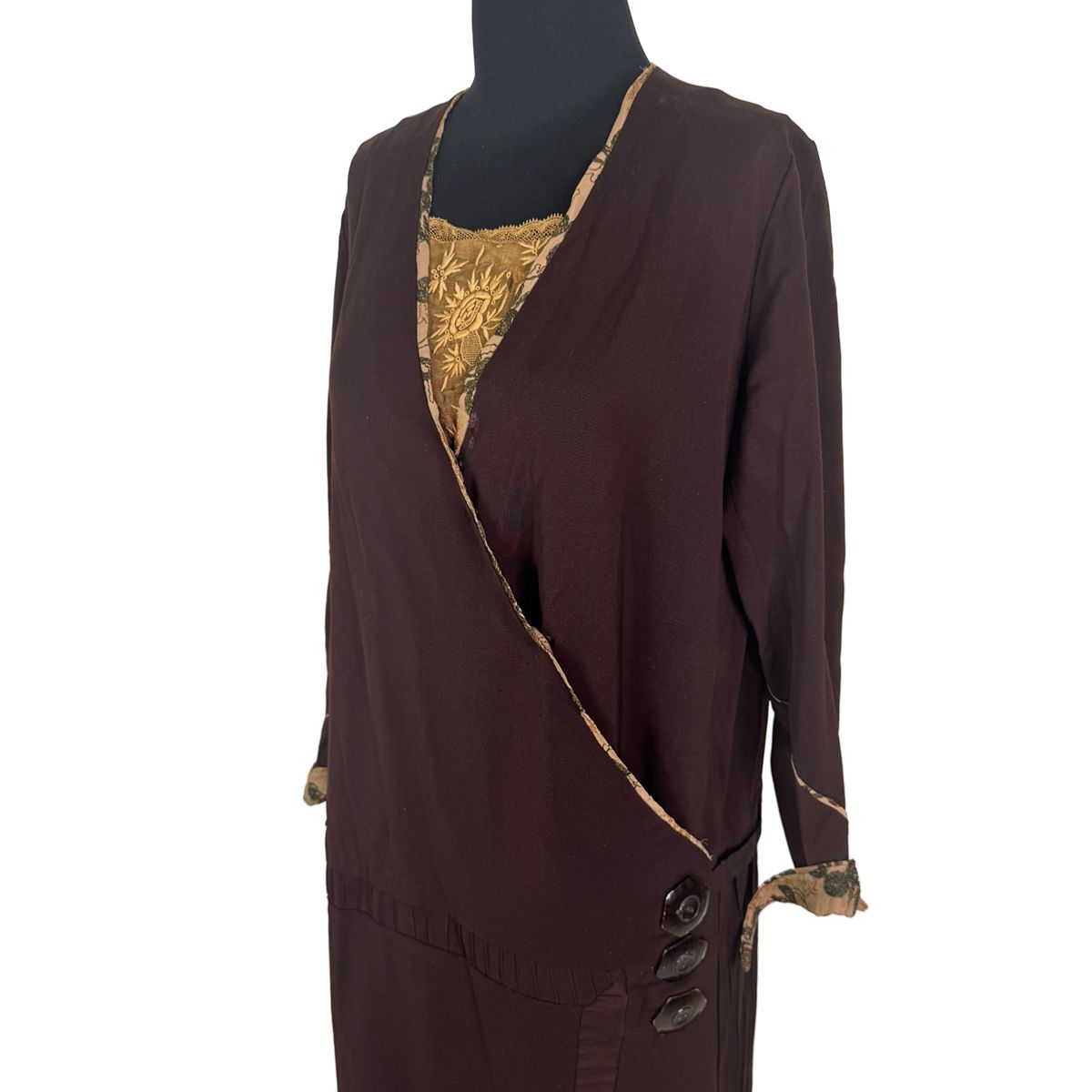
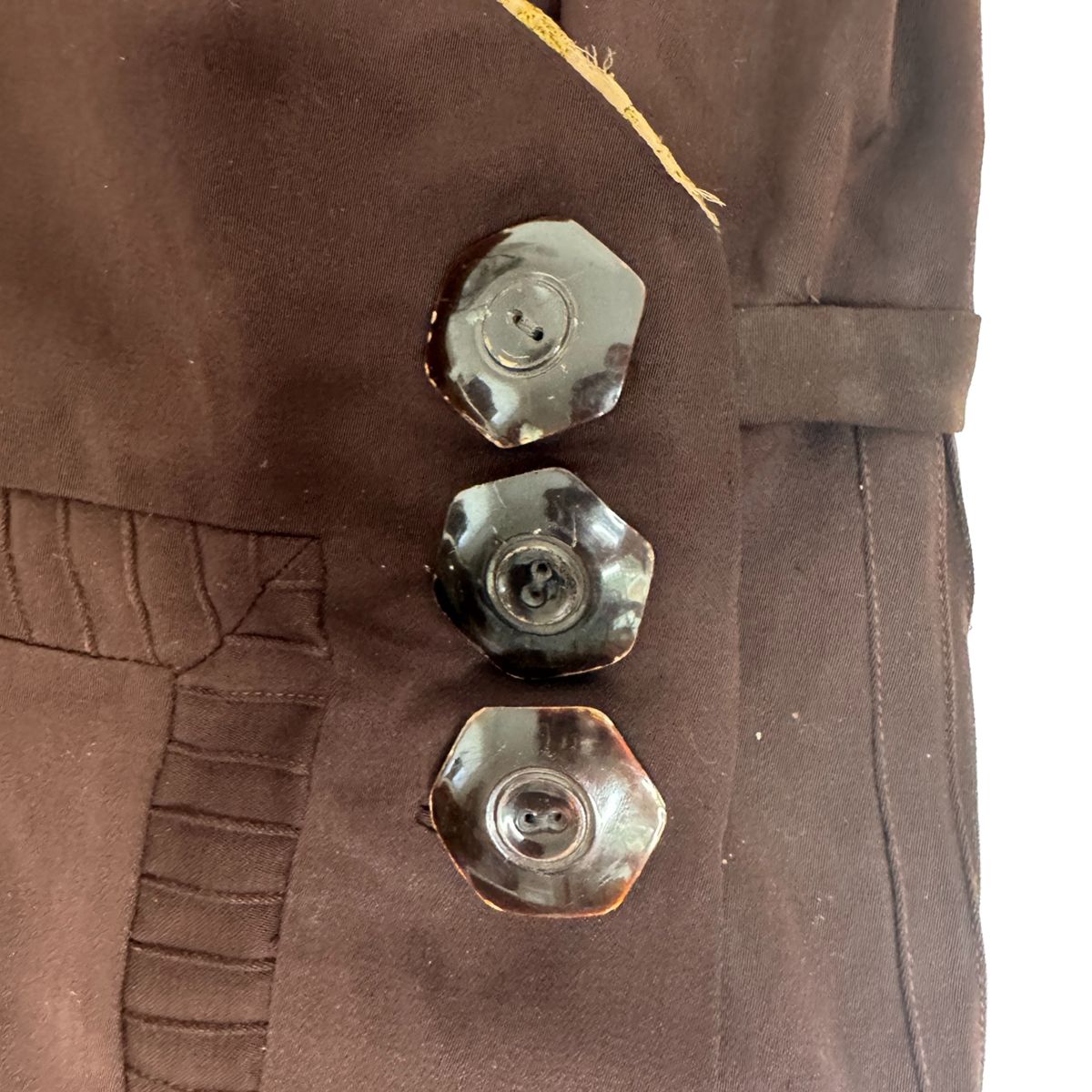
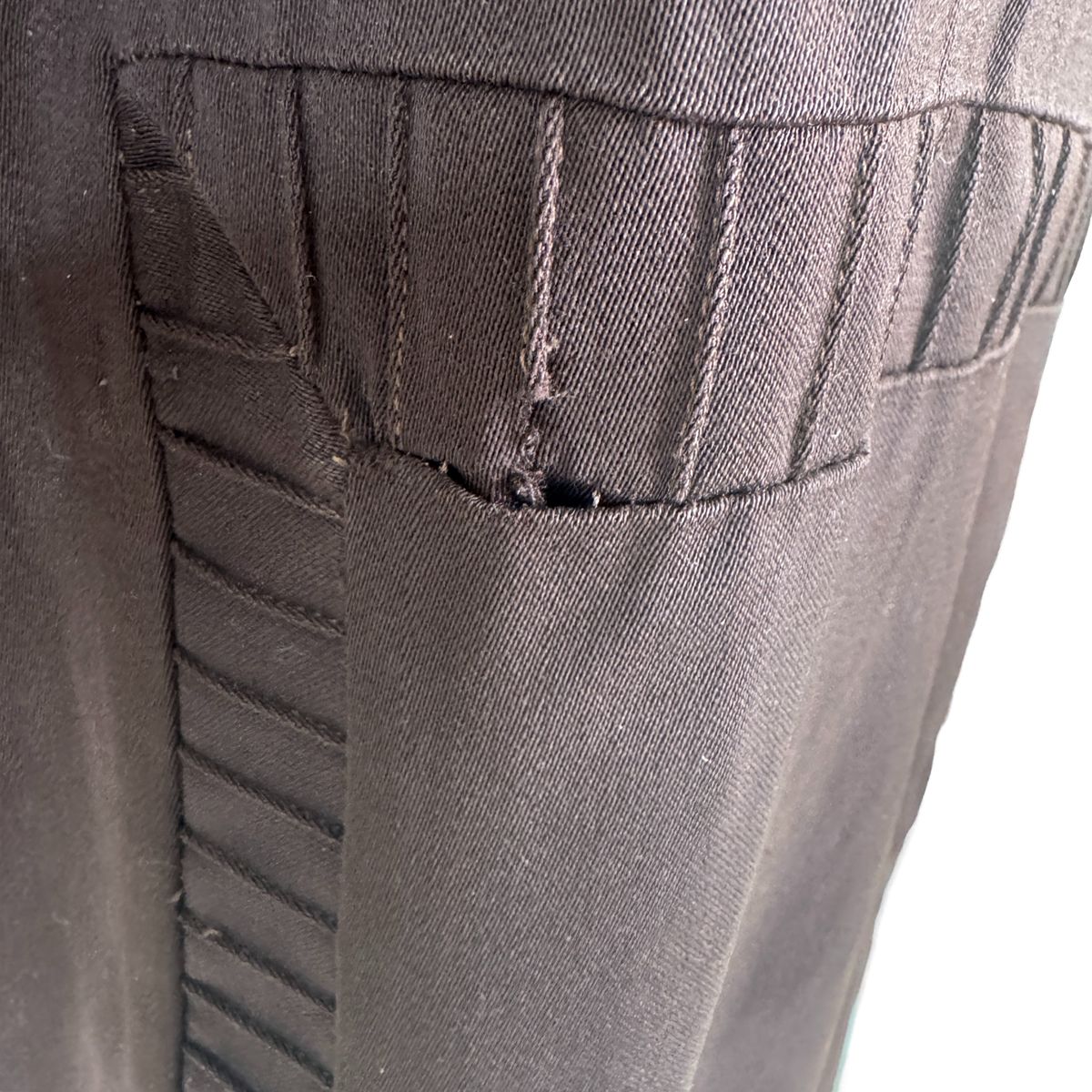
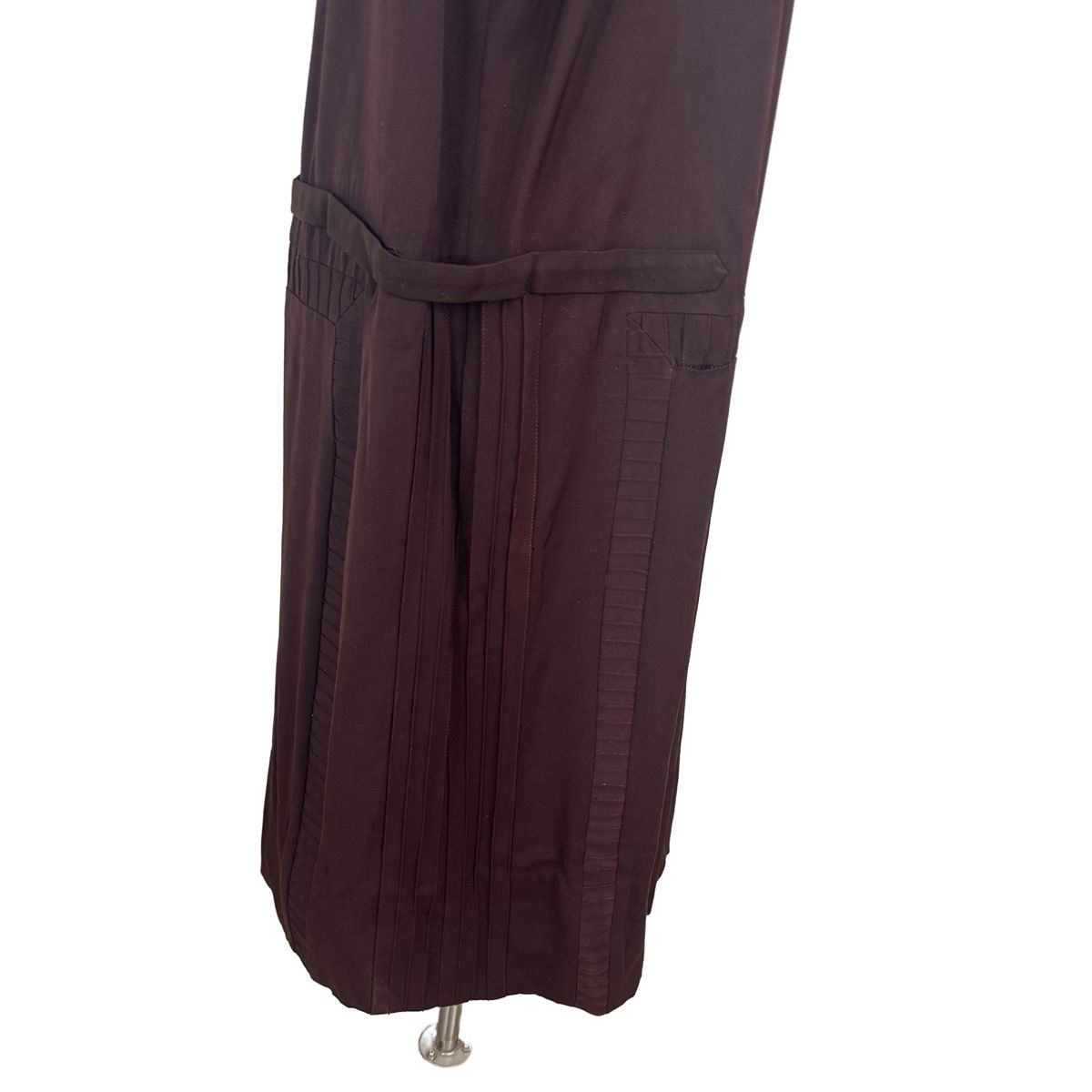
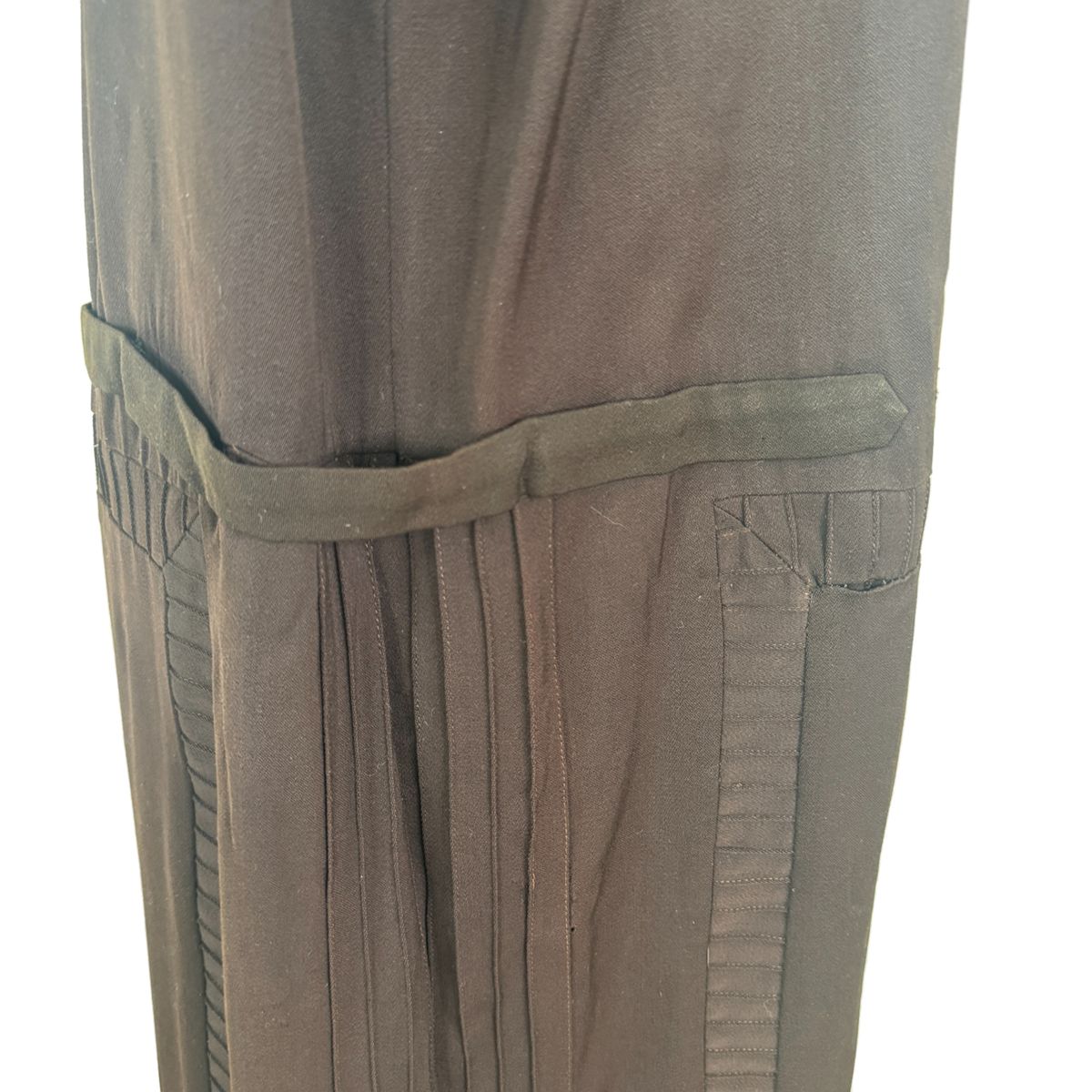
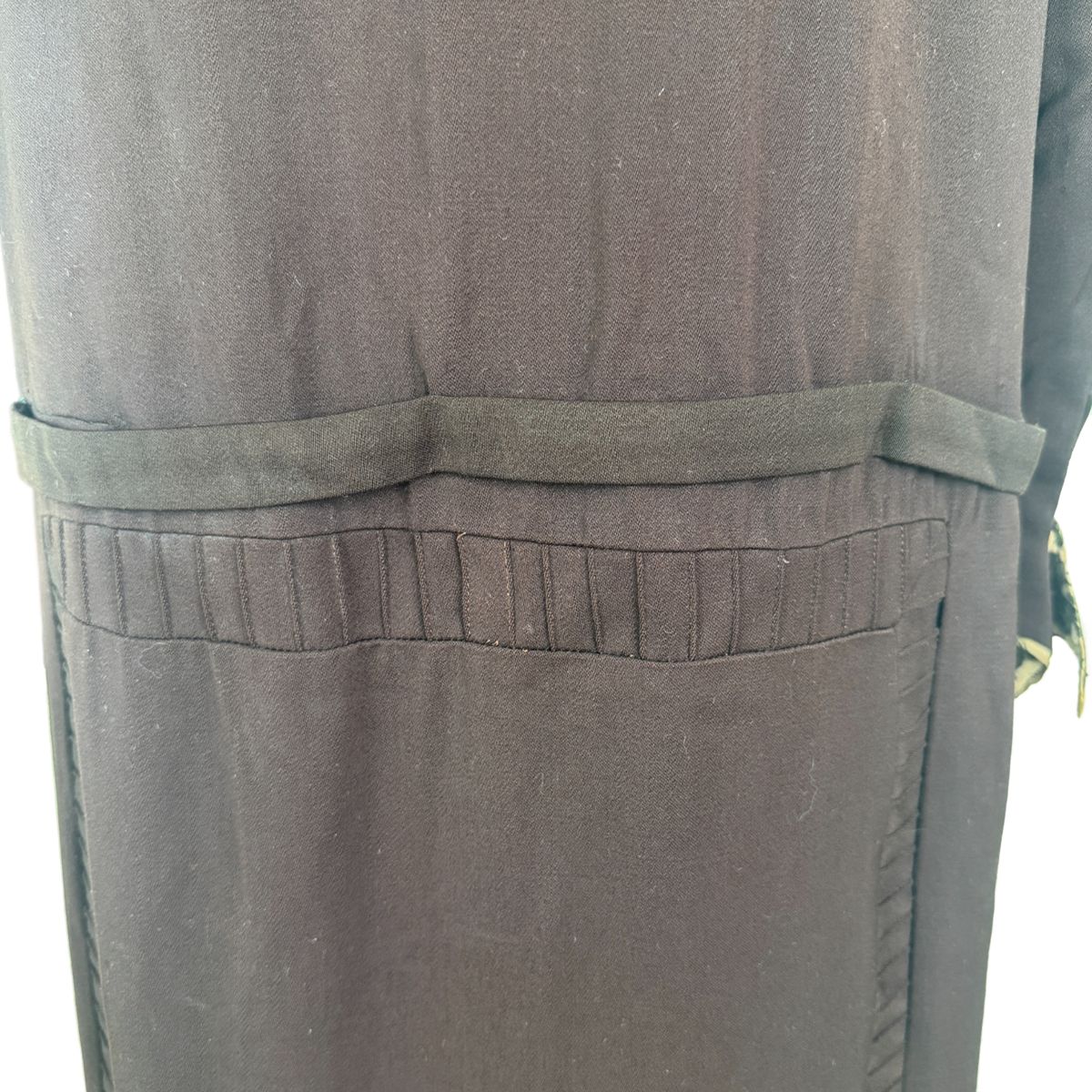
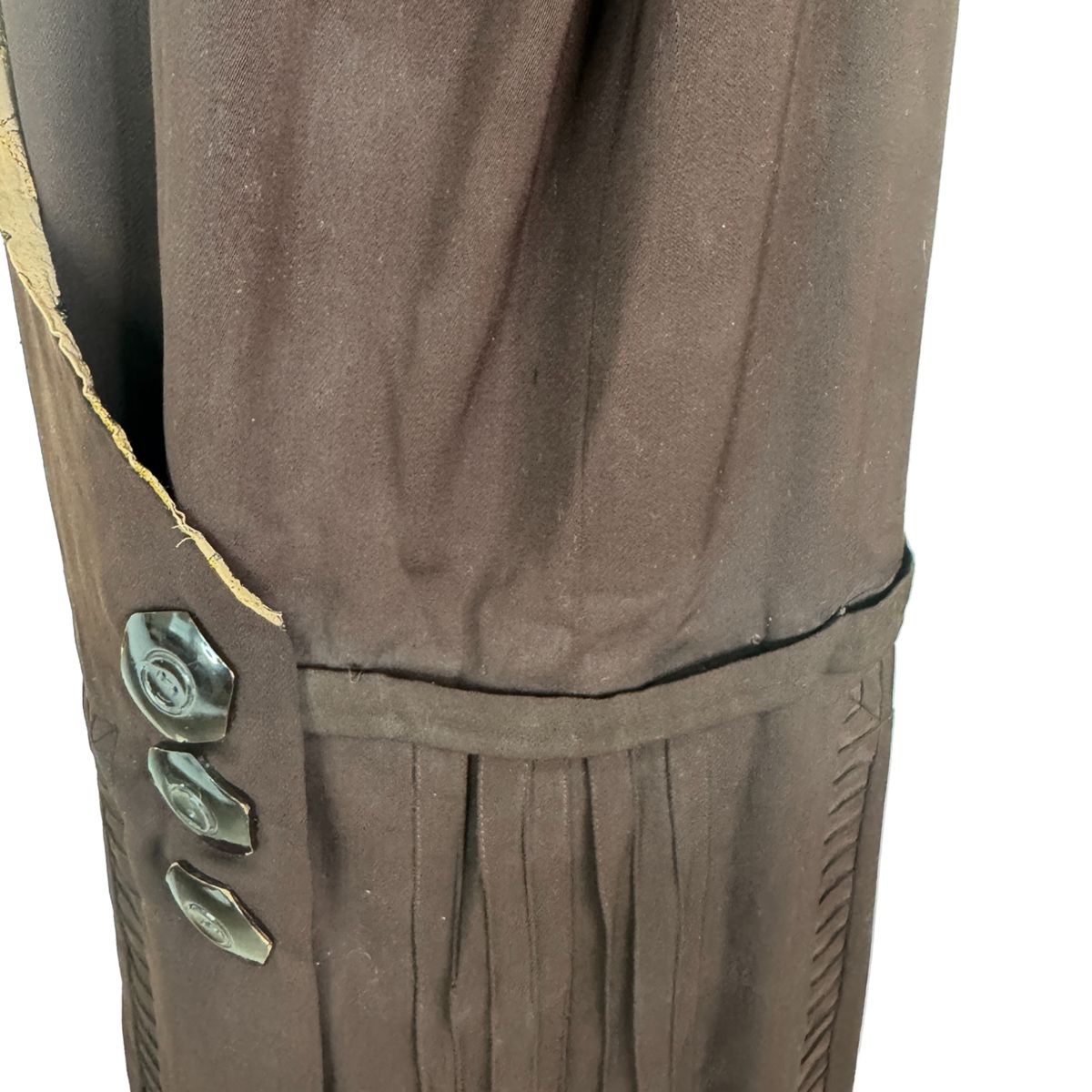
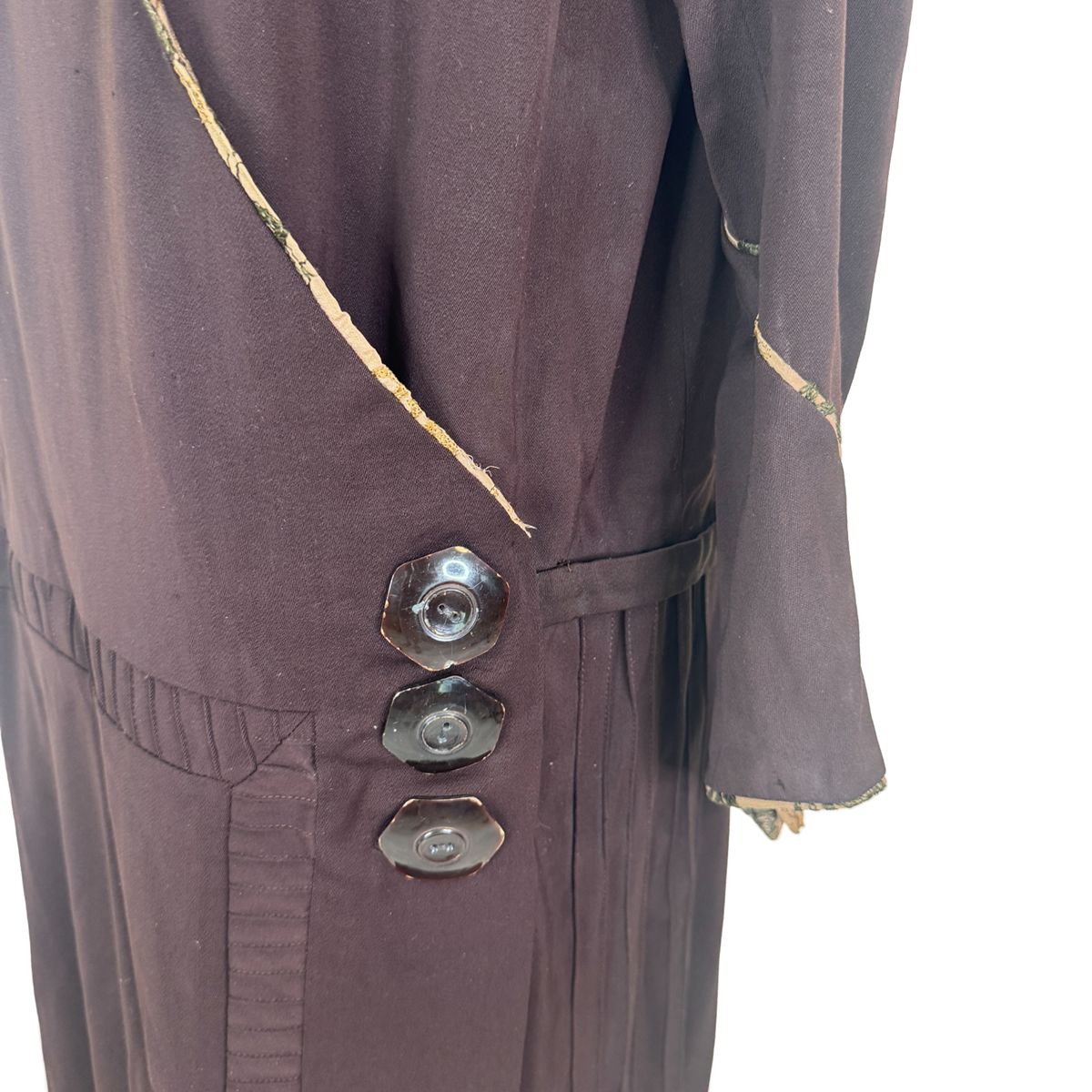
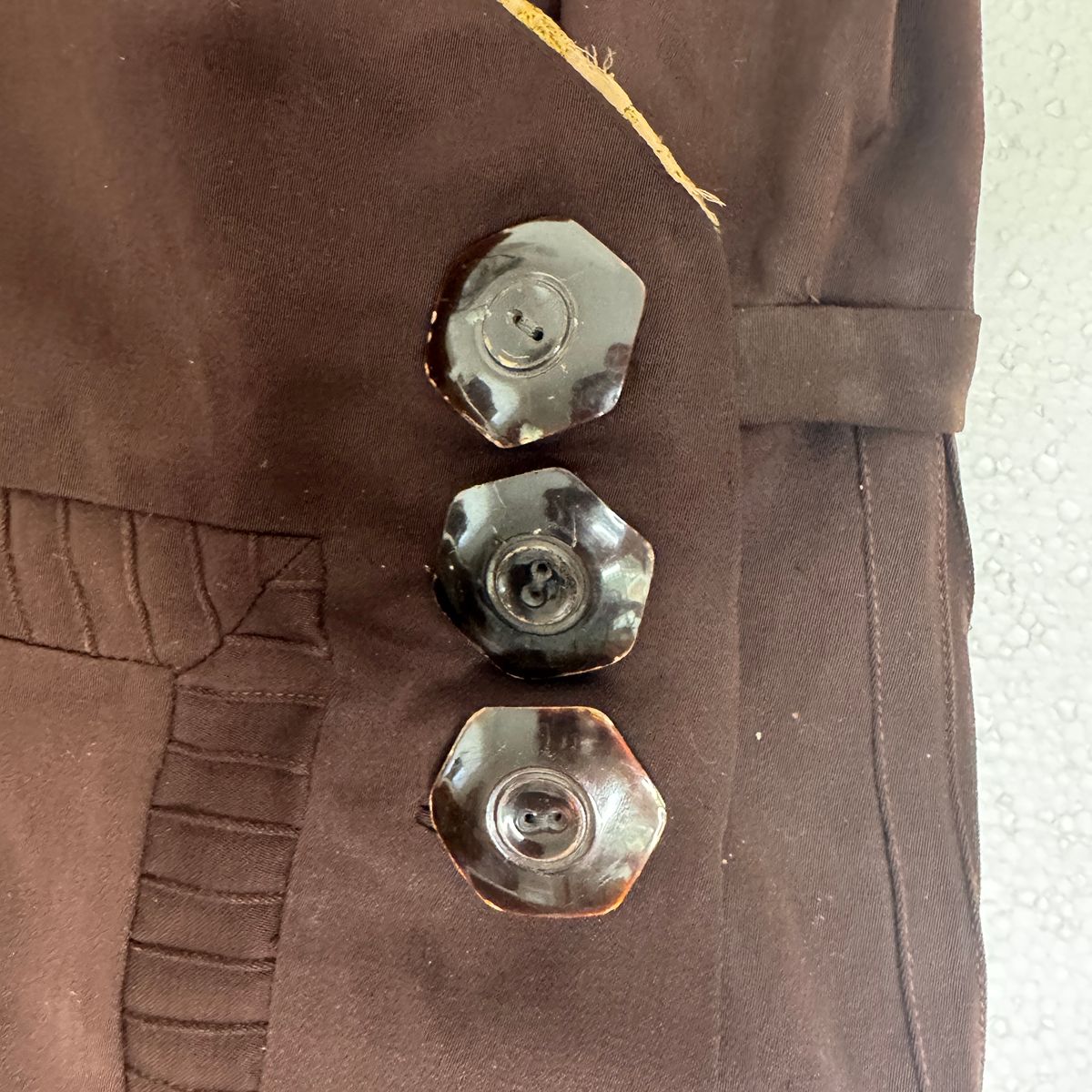
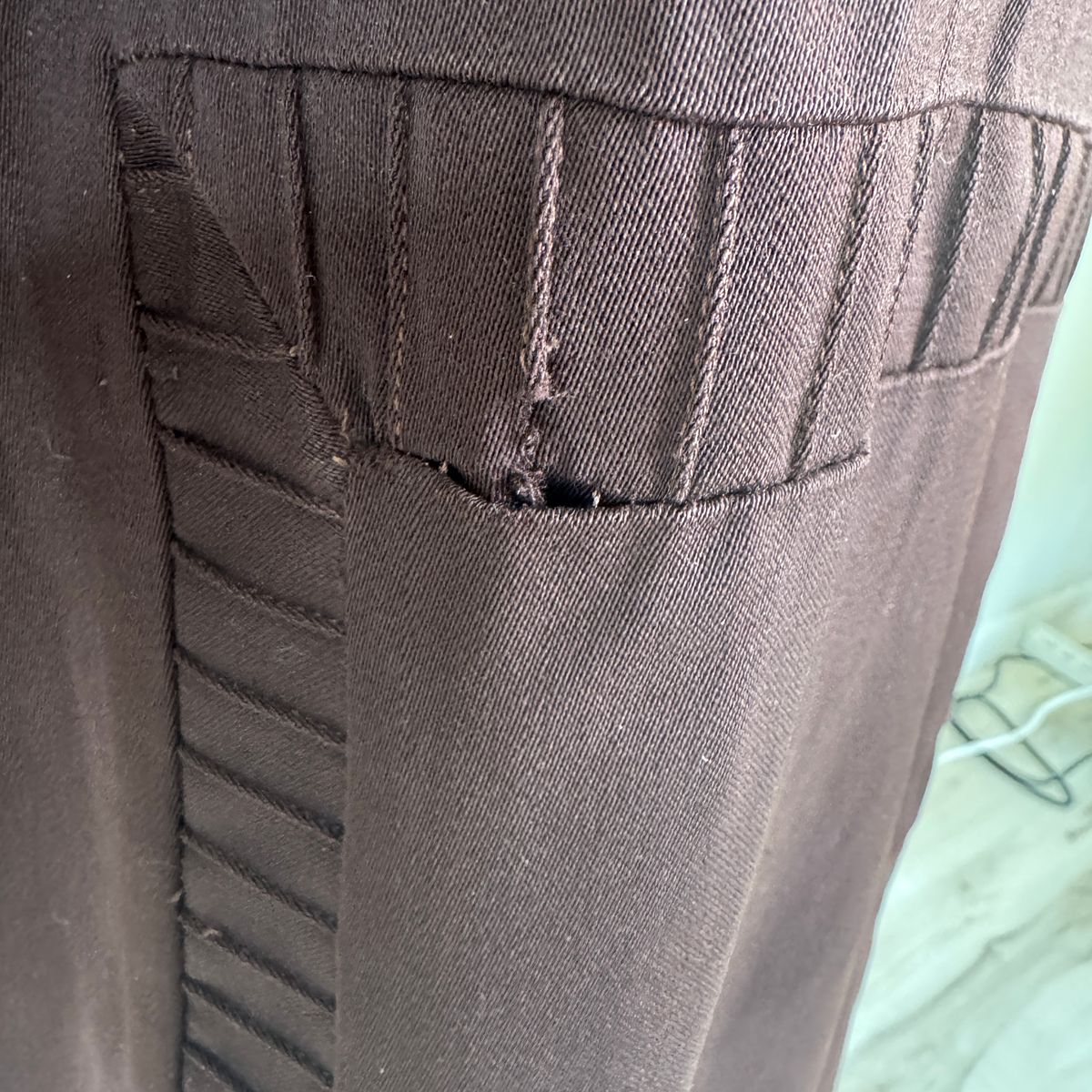
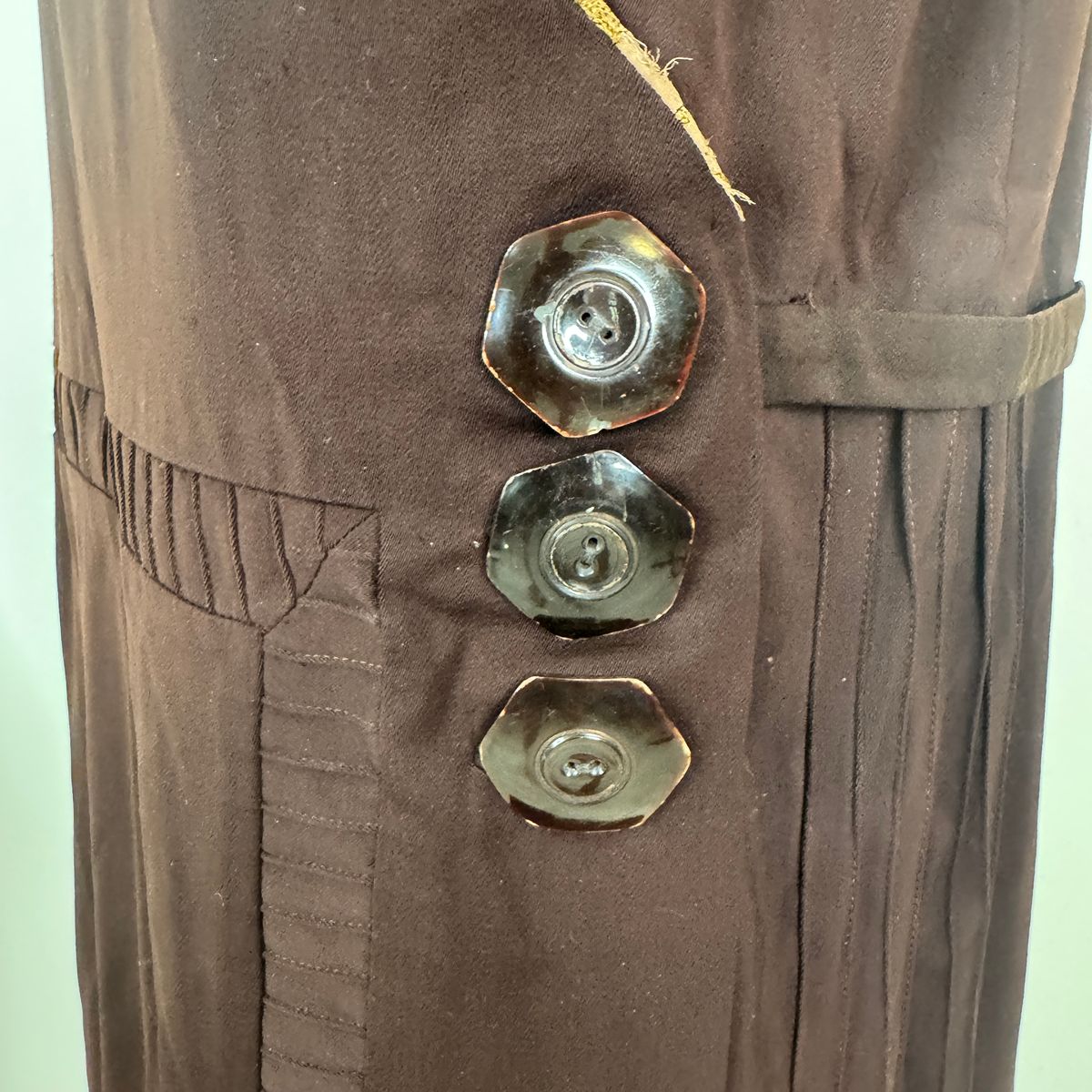
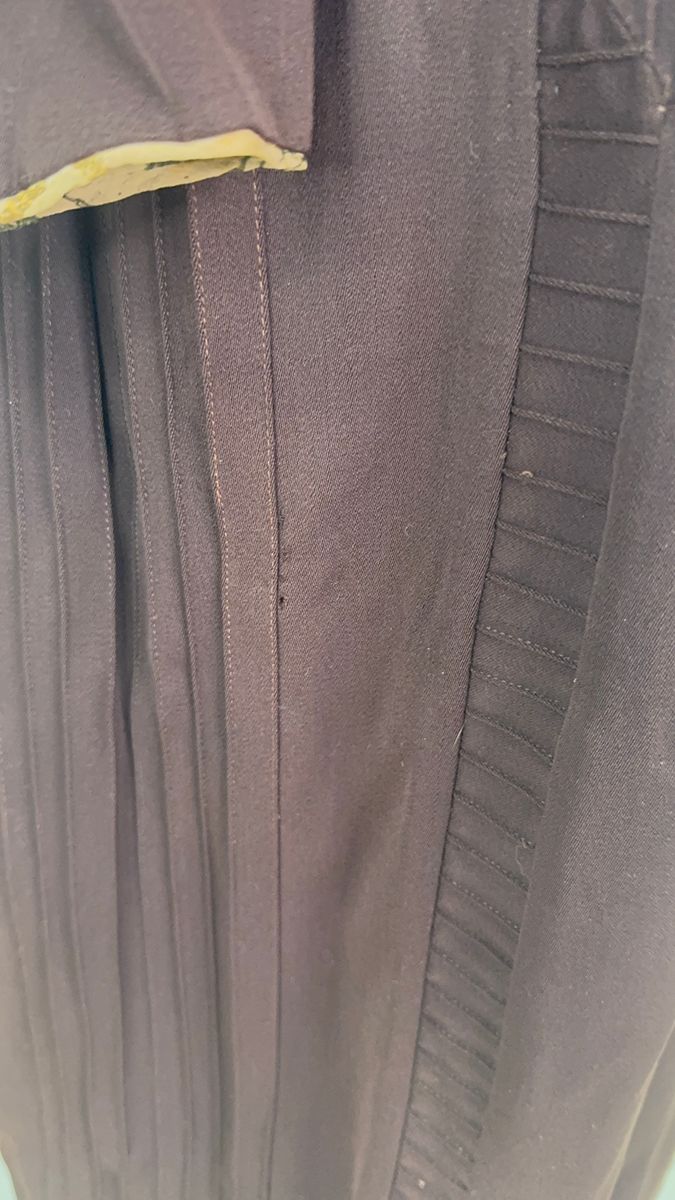
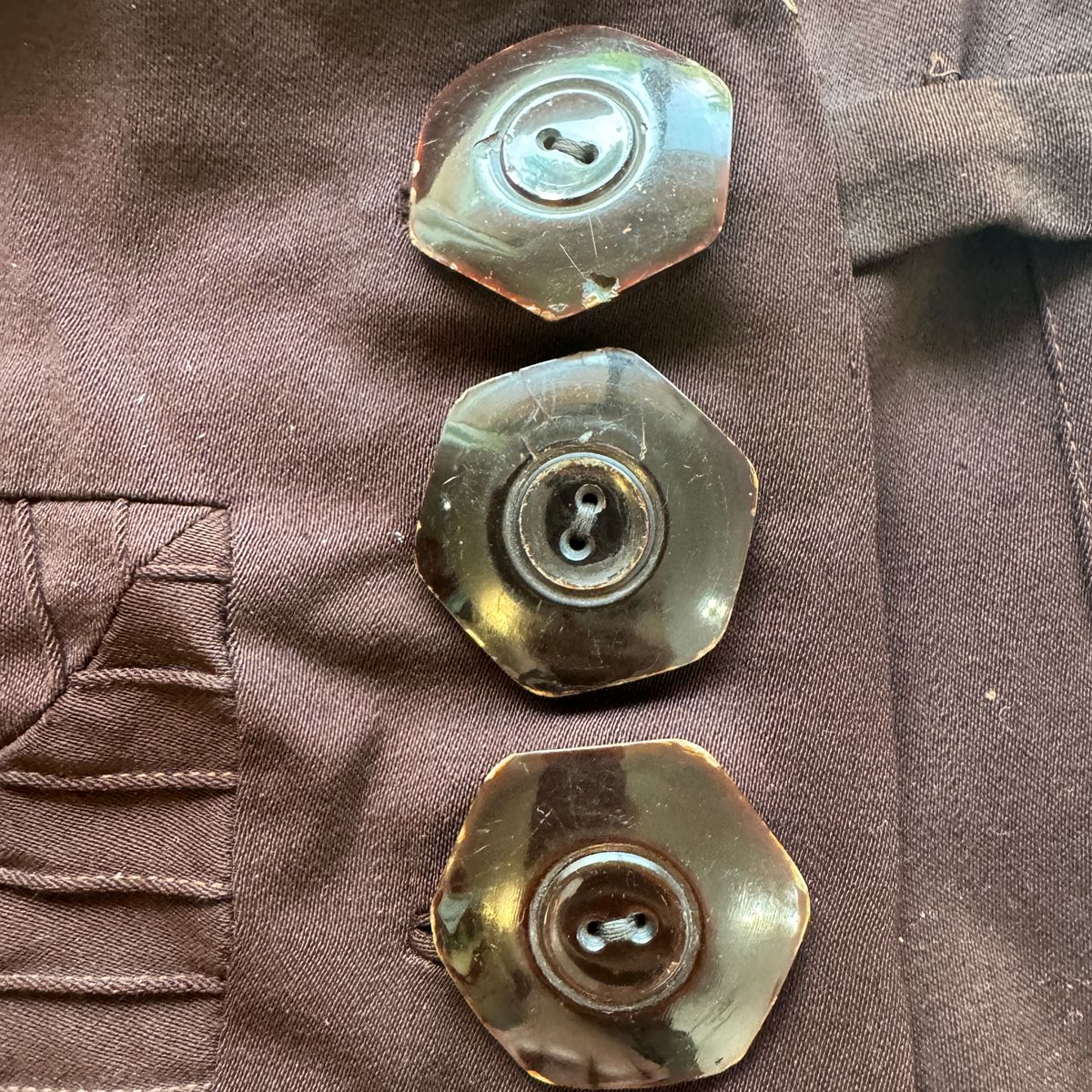
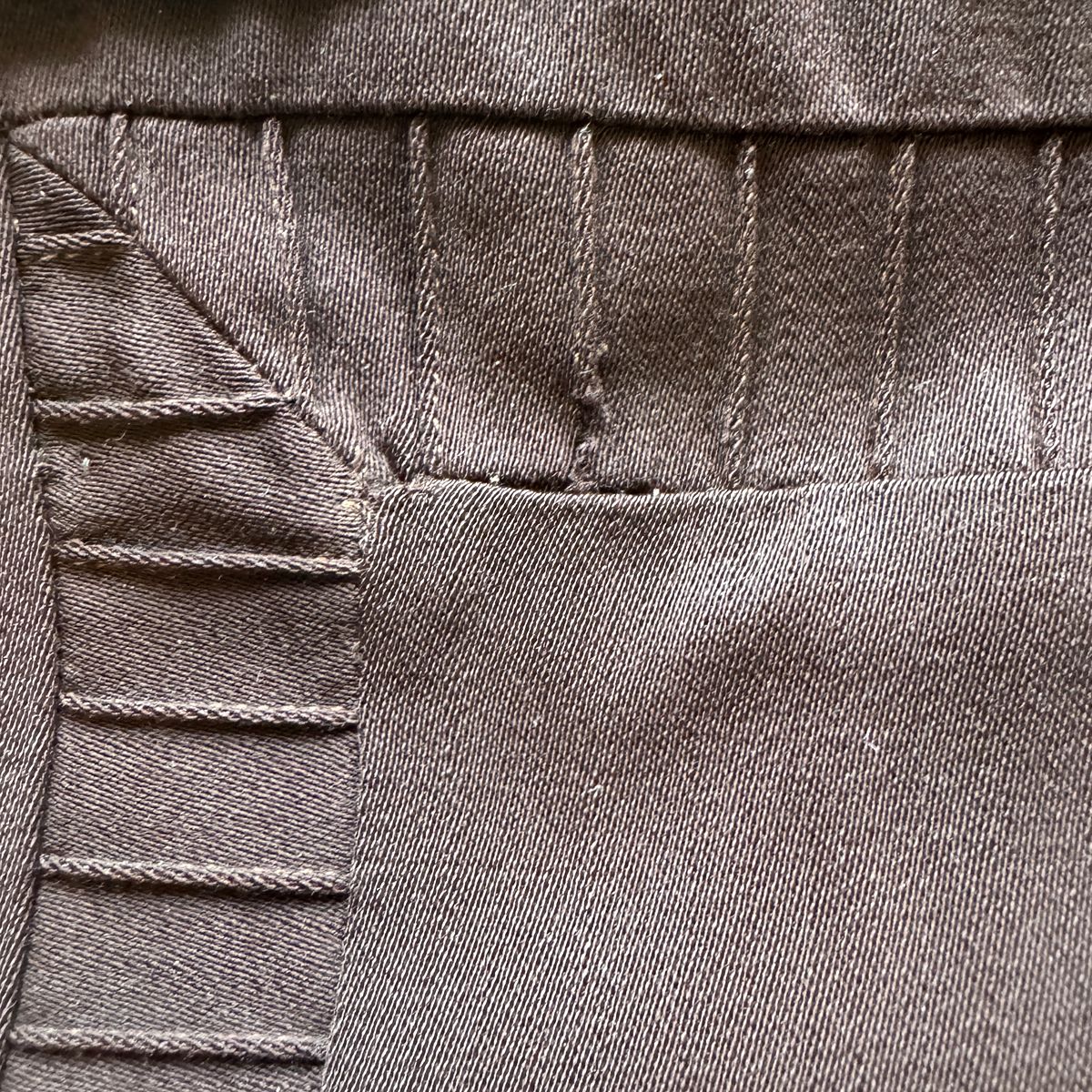
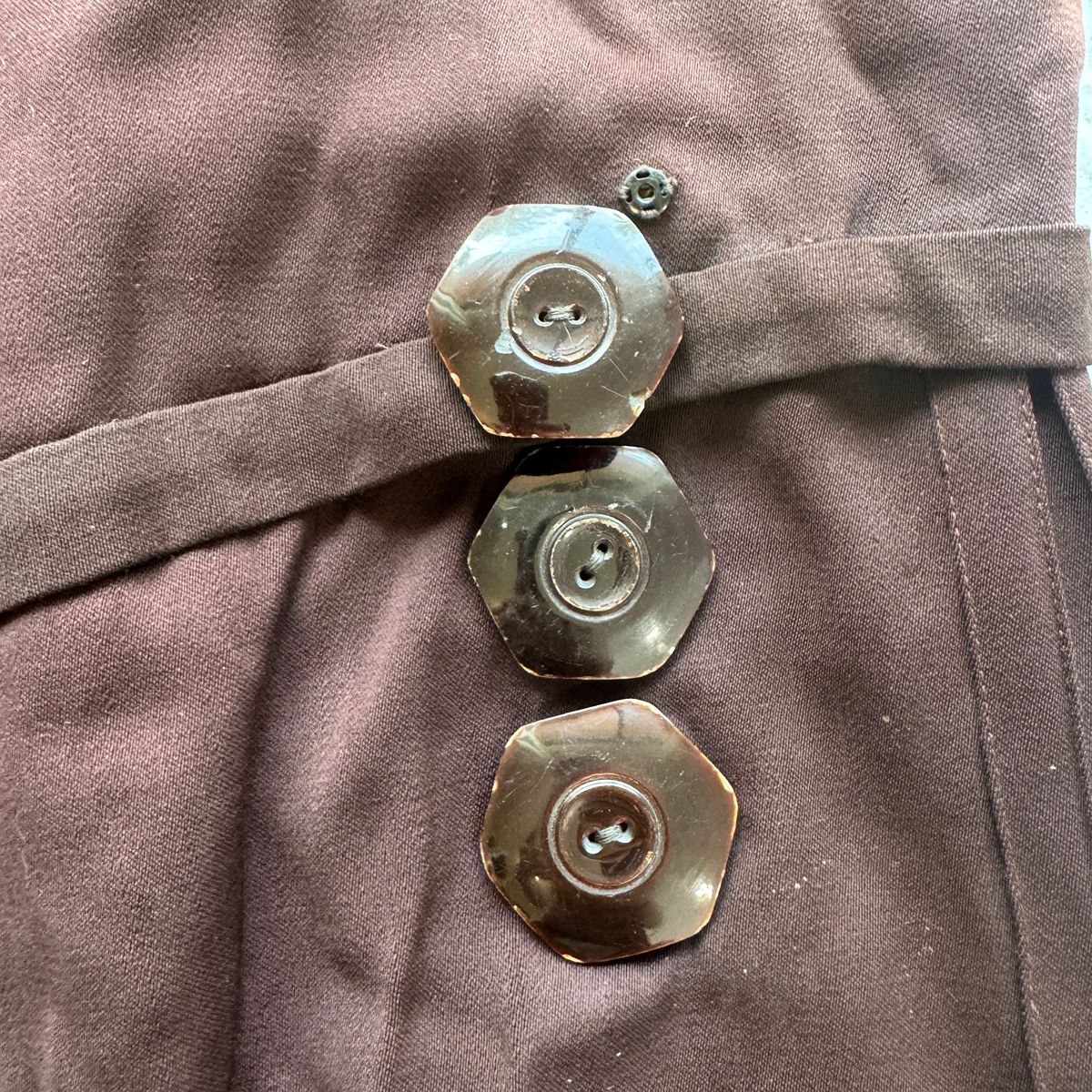
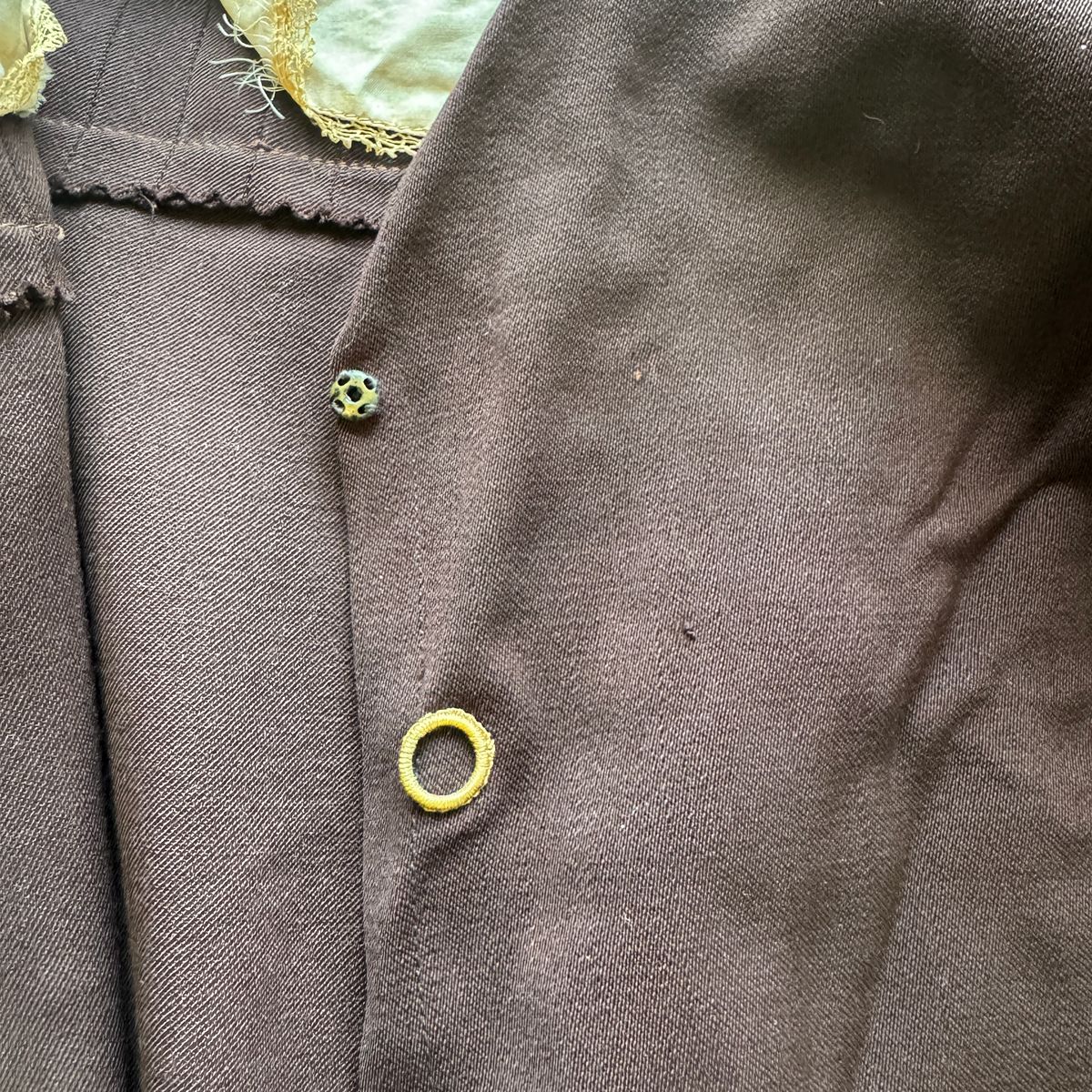
This piece is a masterclass in 1920s architectural tailoring. The silhouette is a classic, straight tubular shape designed to bypass the curves and drop straight down to the hips. It features a brilliant asymmetrical wrap front that secures at the left hip with three massive, incredibly cool geometric buttons. The skirt then drops into a beautiful section of stitched pleats.
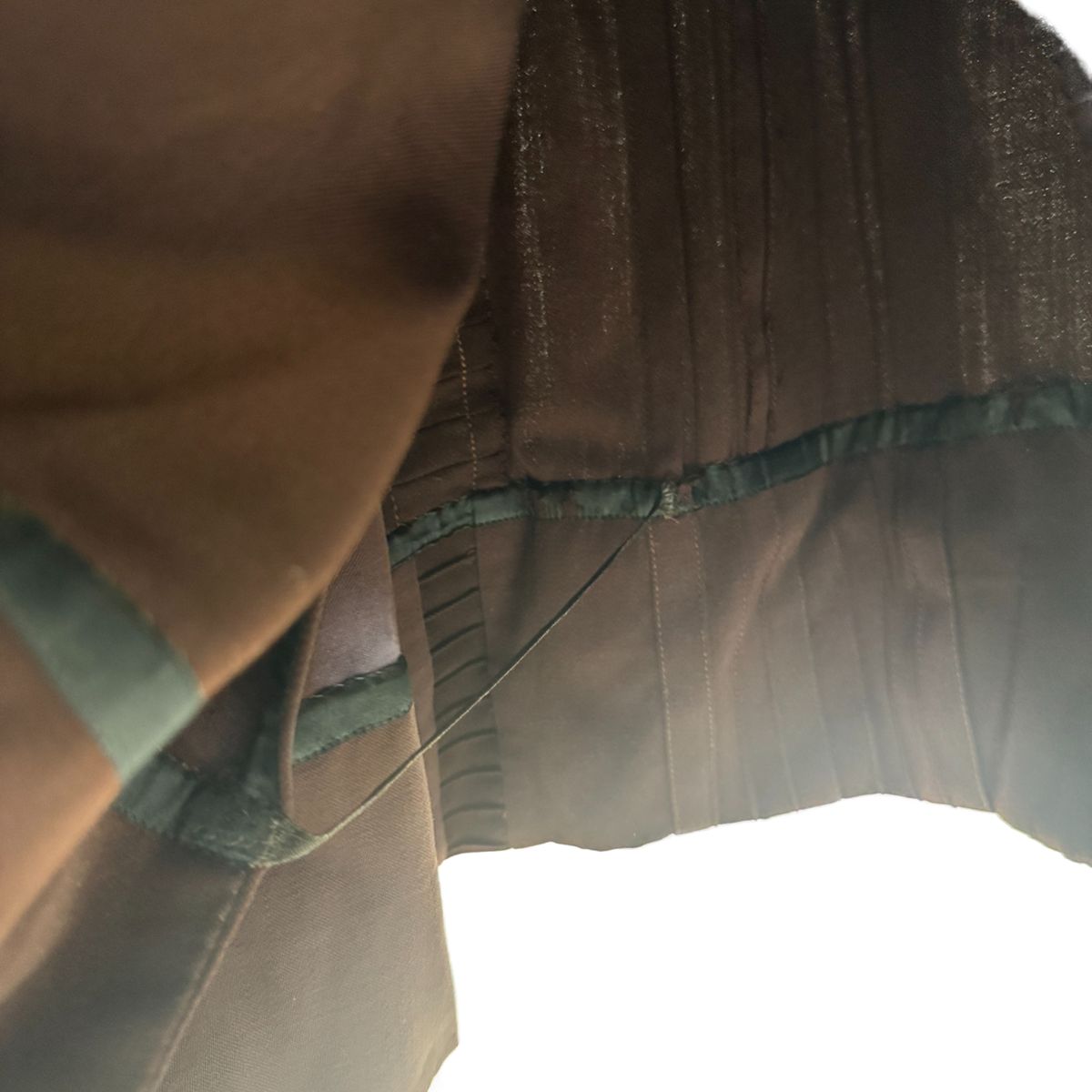
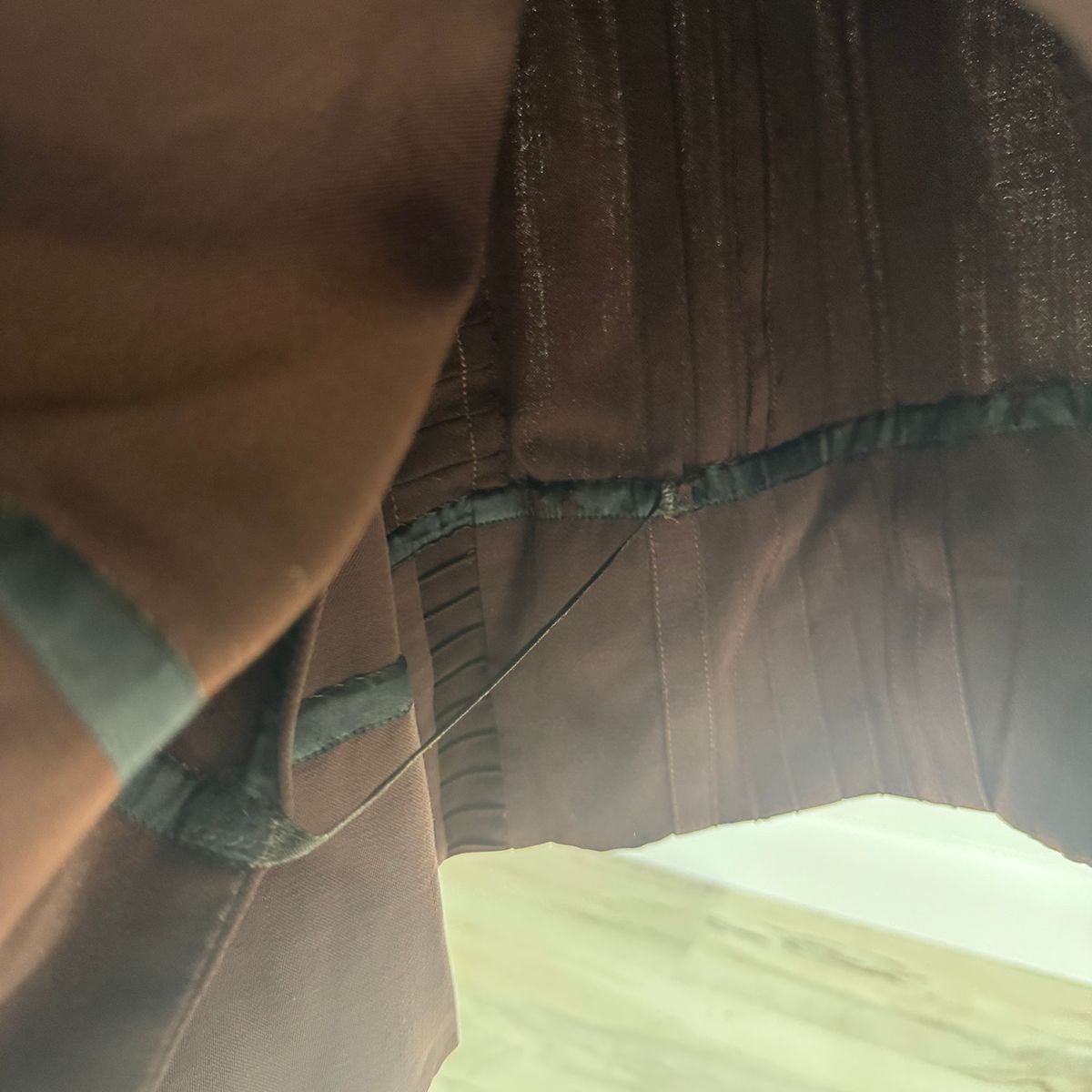
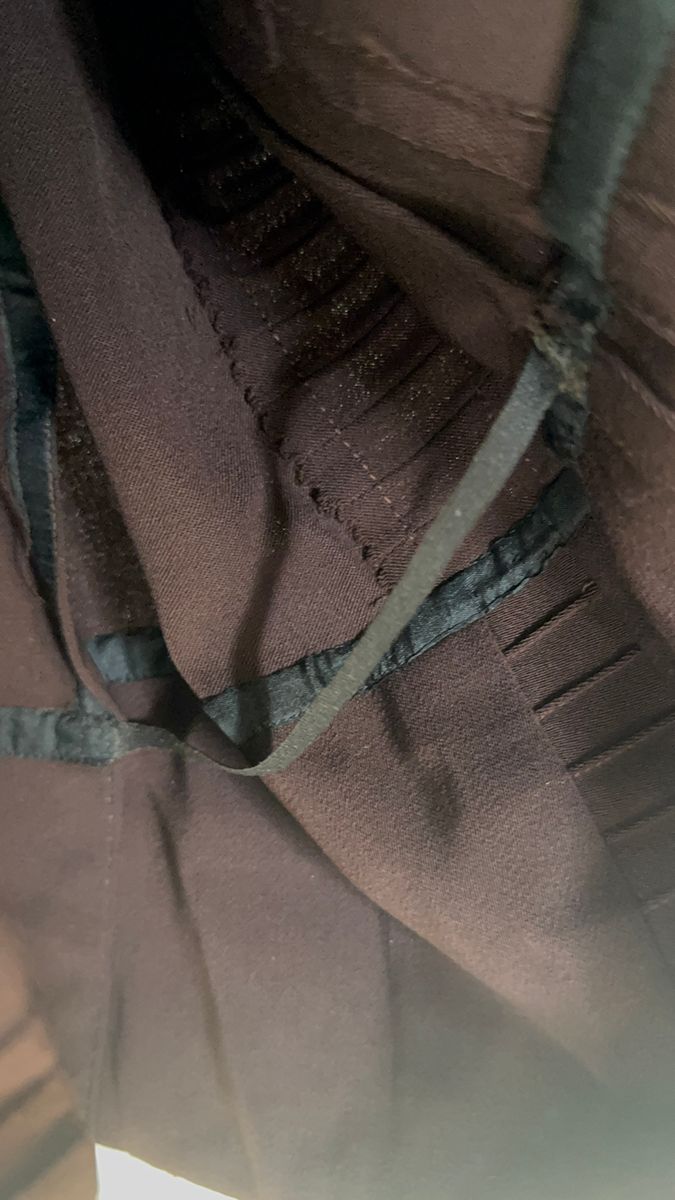
But it is the ingenious hidden details that truly make this dress a marvel. Because a straight wrap skirt runs the risk of flying open in the wind, the original dressmaker attached a brilliant internal modesty cord near the bottom hem. This clever little addition reinforces the tubular shape of the skirt and prevents any scandalous 1920s wardrobe malfunctions!
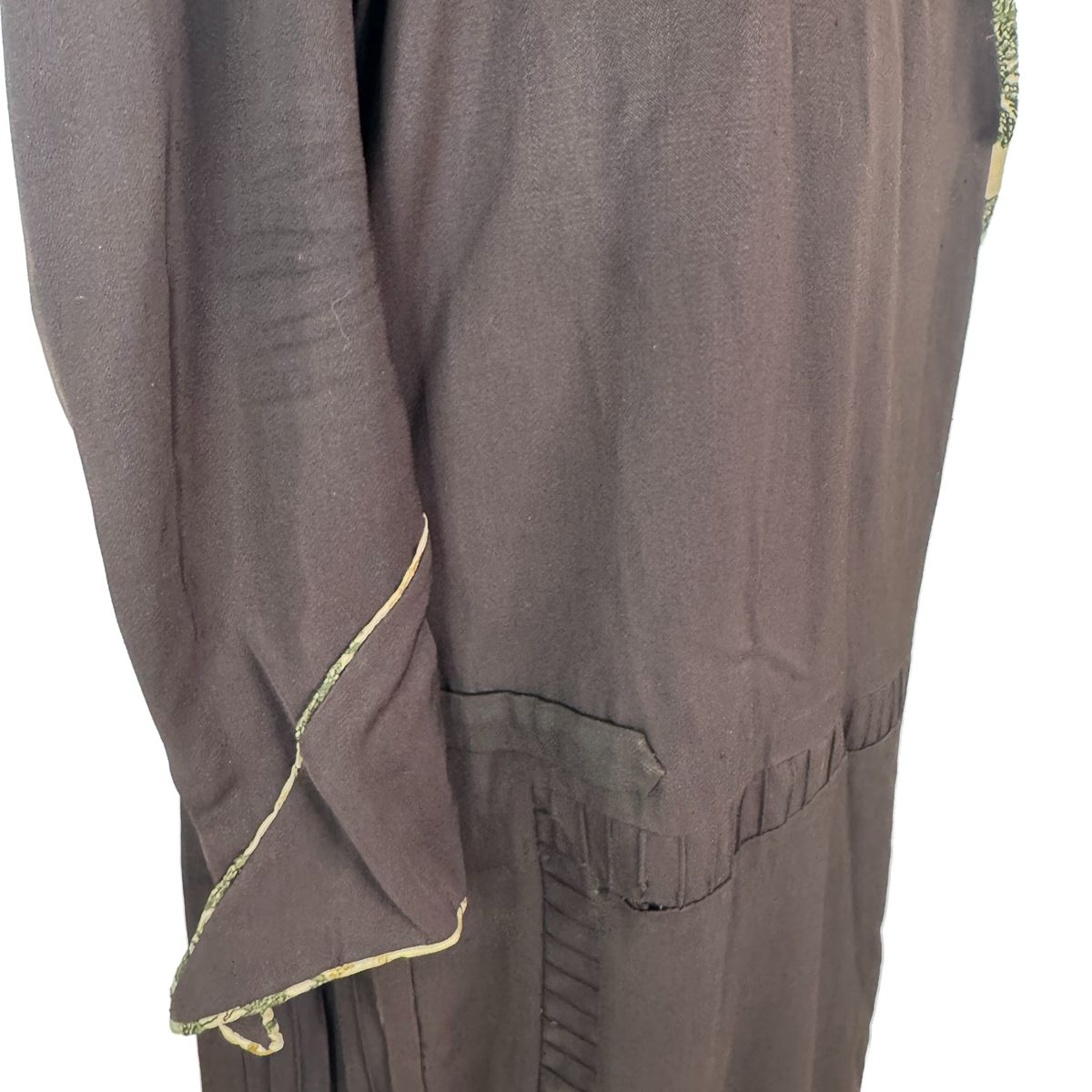
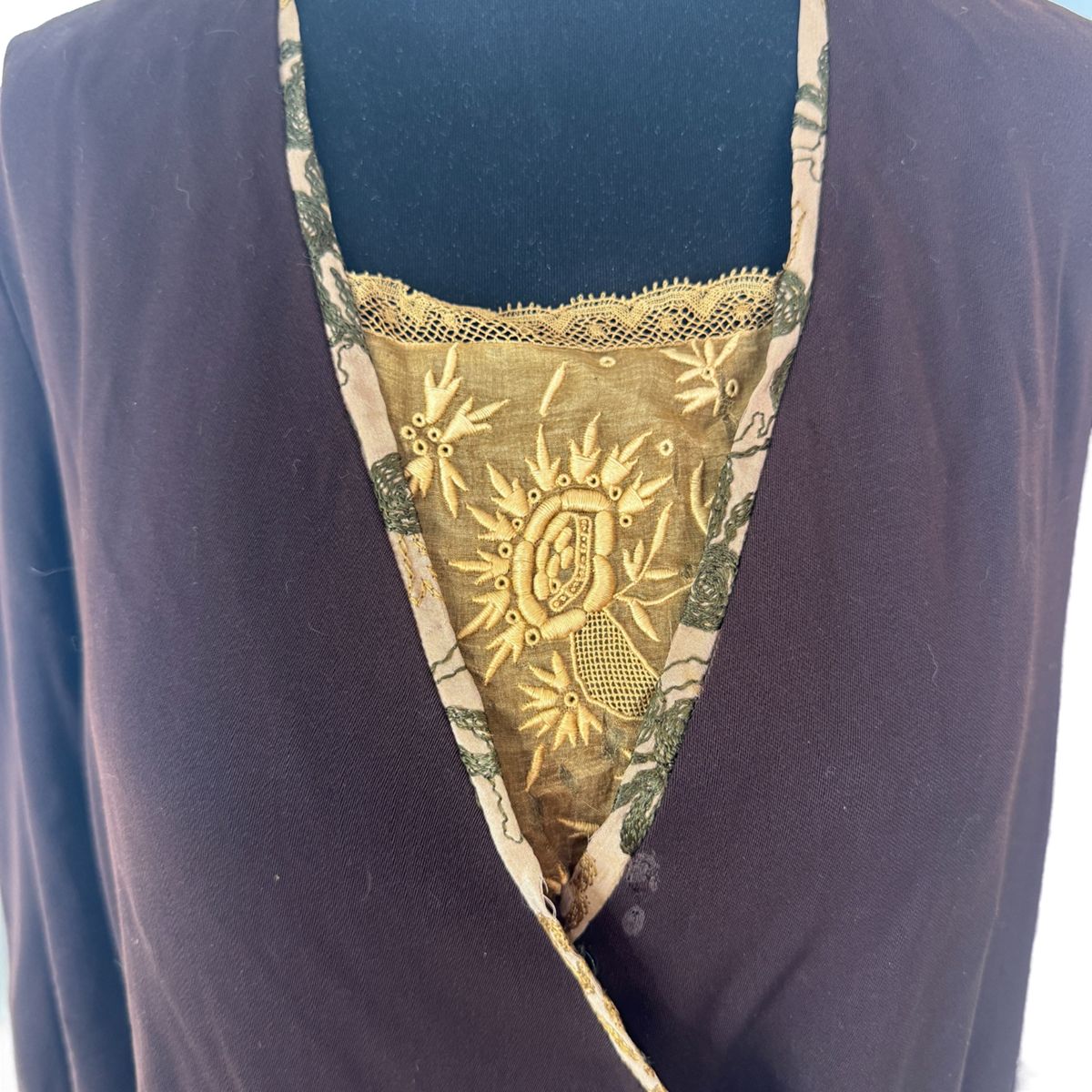
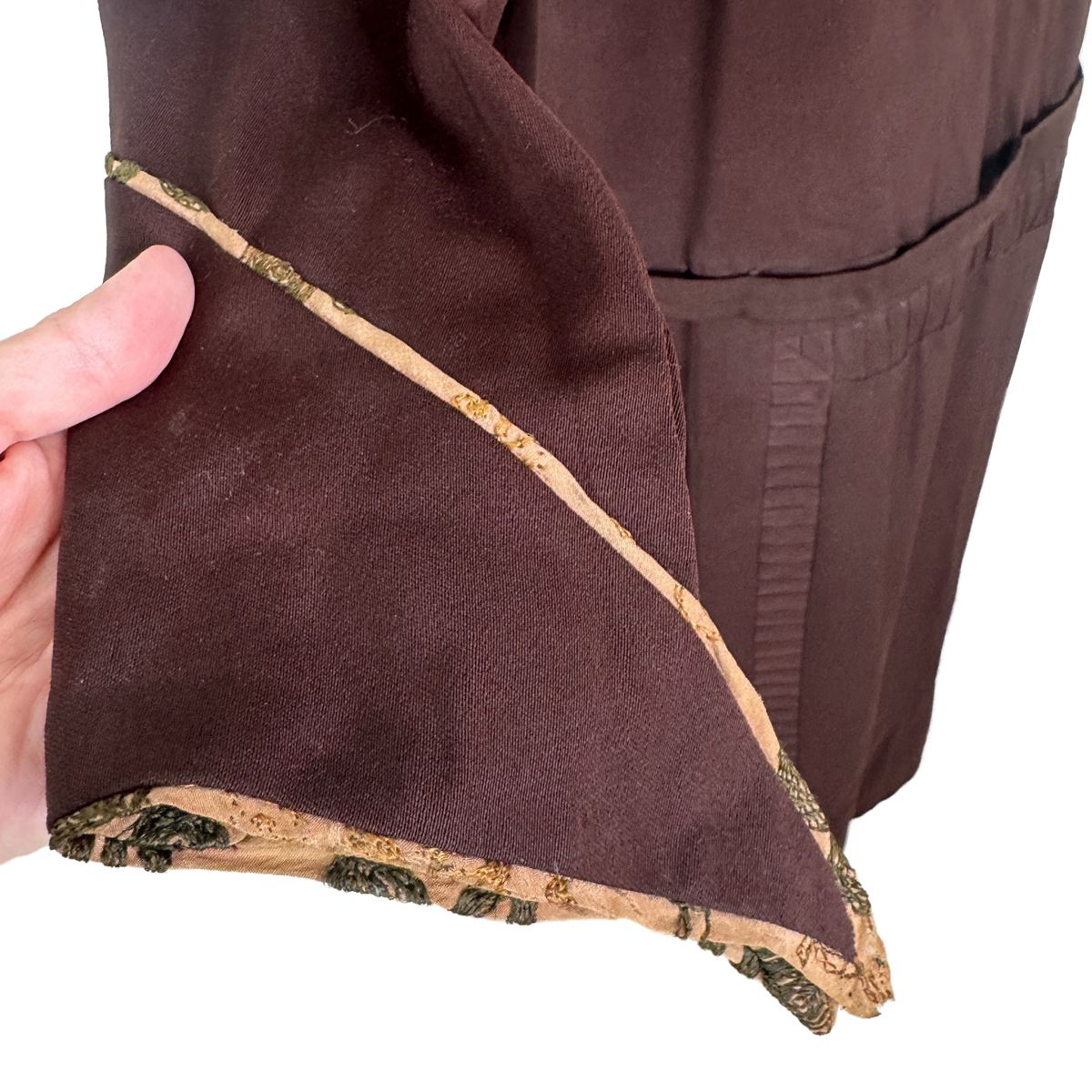
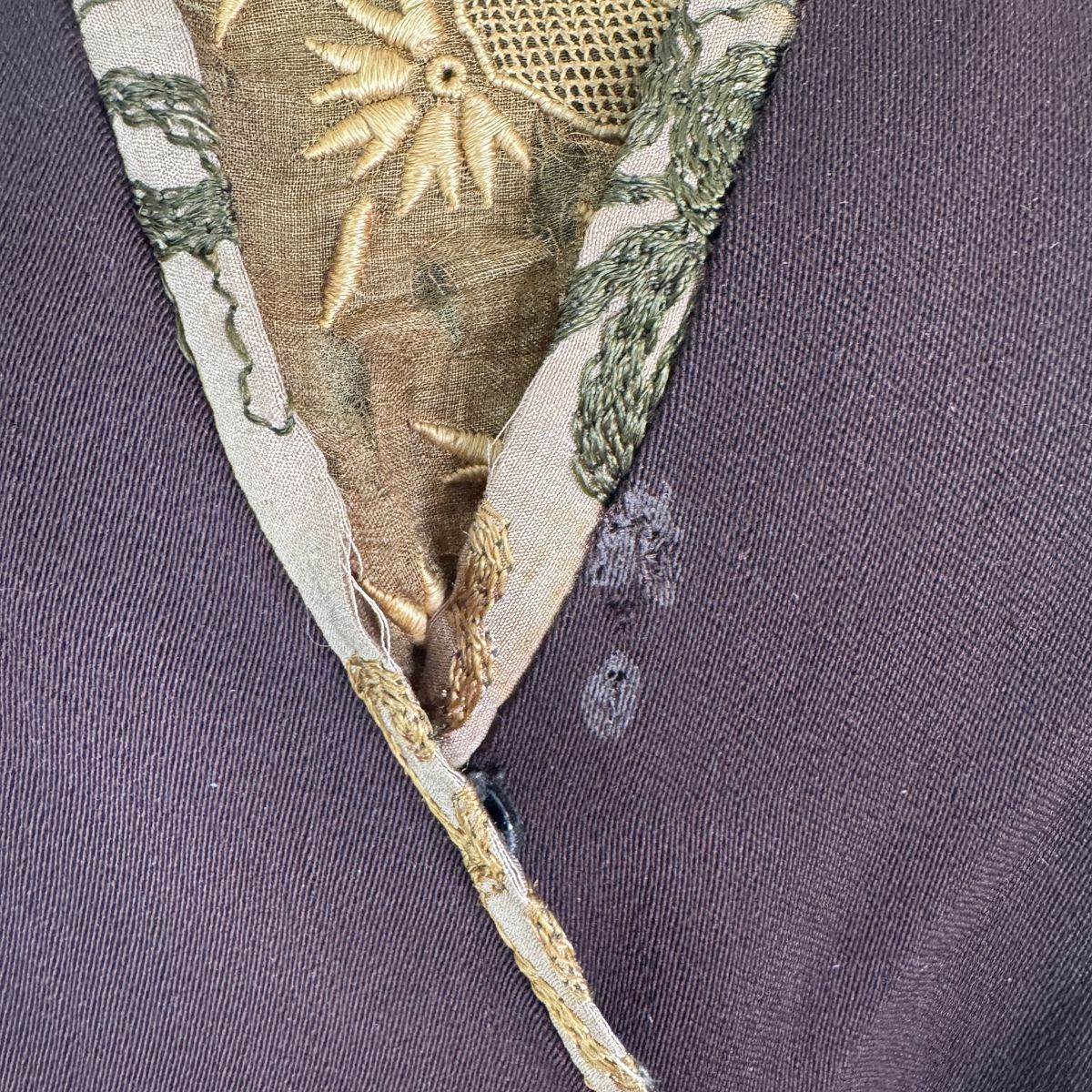
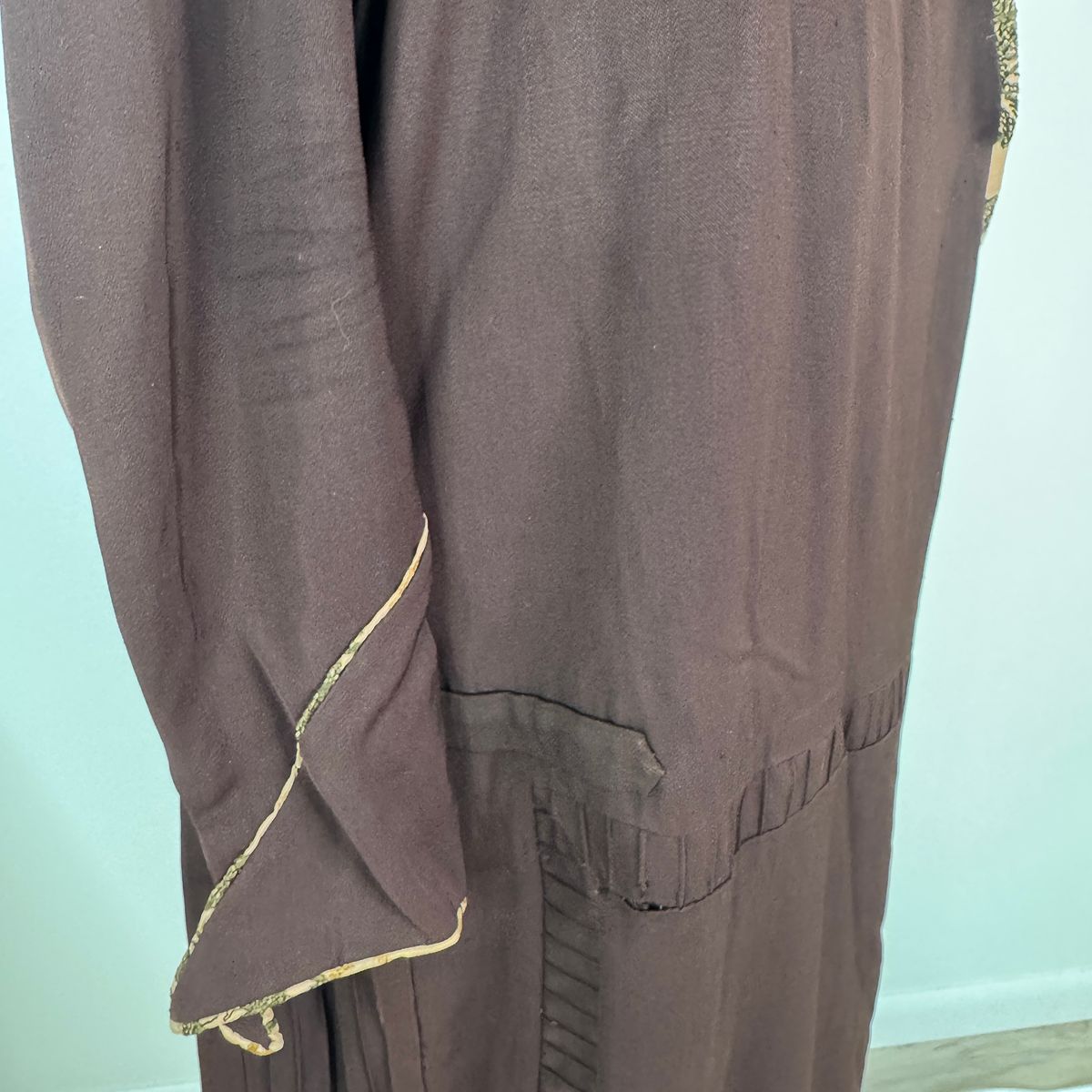
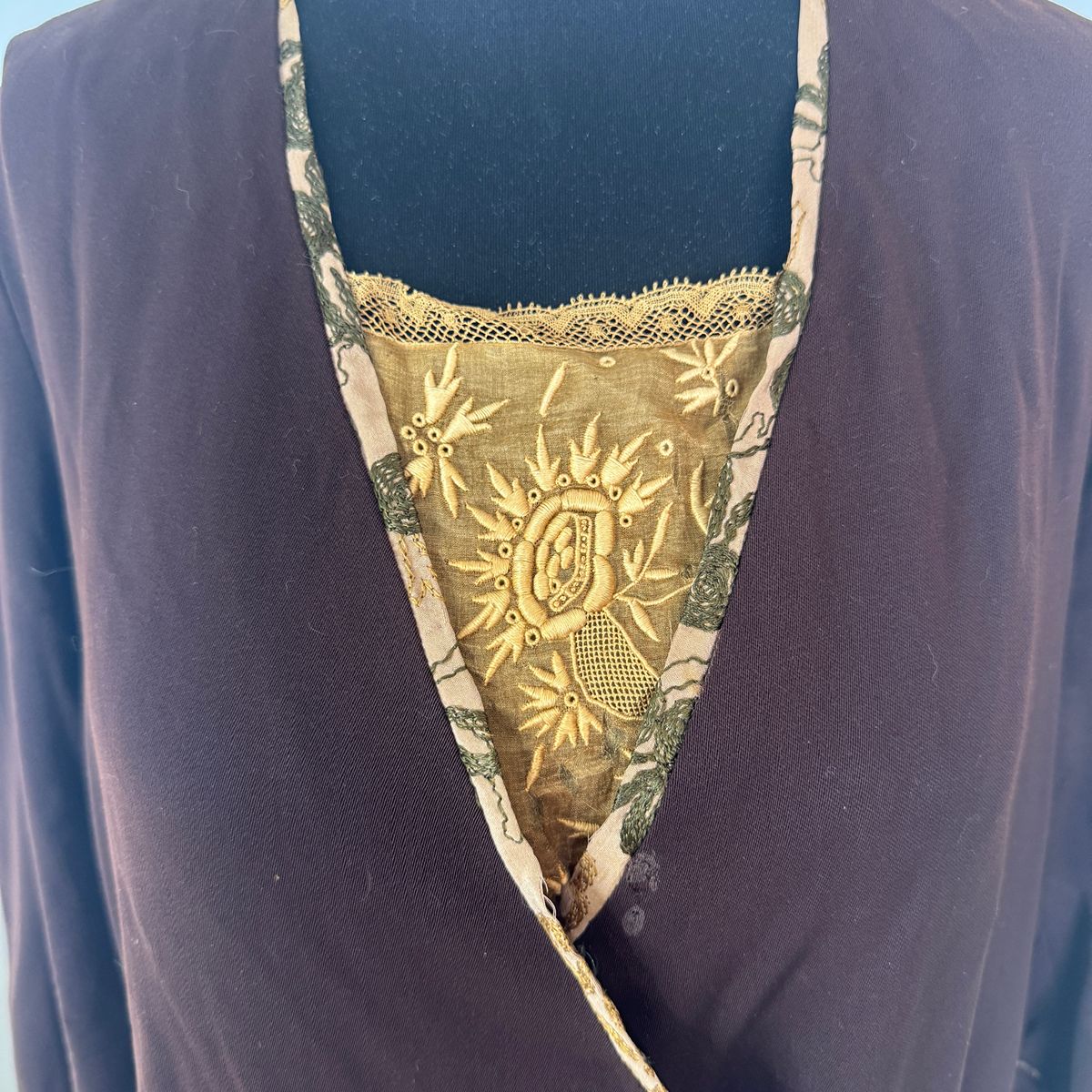
The detailing on the trim is equally breathtaking. The pointed sleeve cuffs and the chest modesty panel are adorned with a stunning, intricate floral Art Deco embroidery in shades of olive green and metallic gold. It provides a gorgeous, subtle contrast against the dark brown body of the dress.
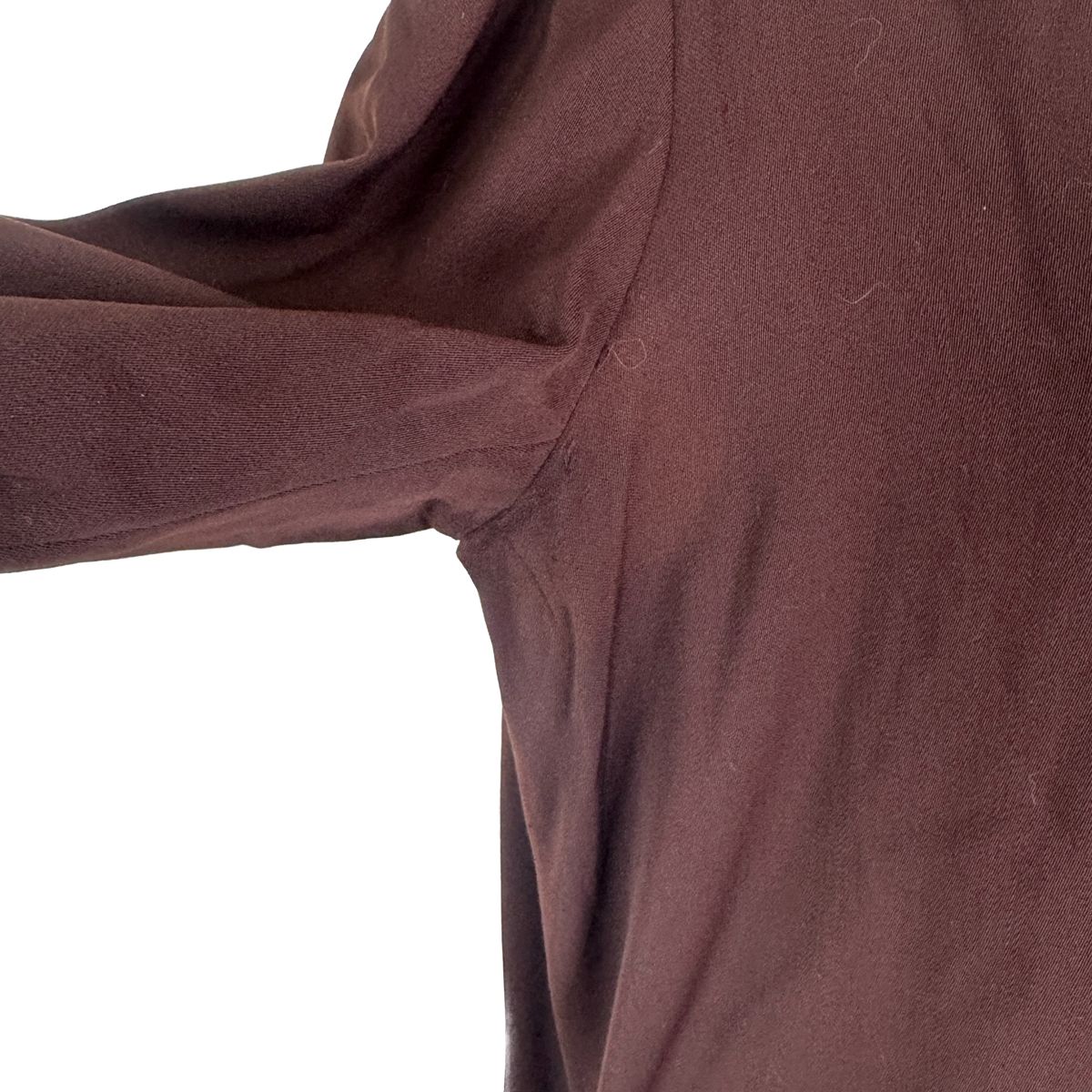
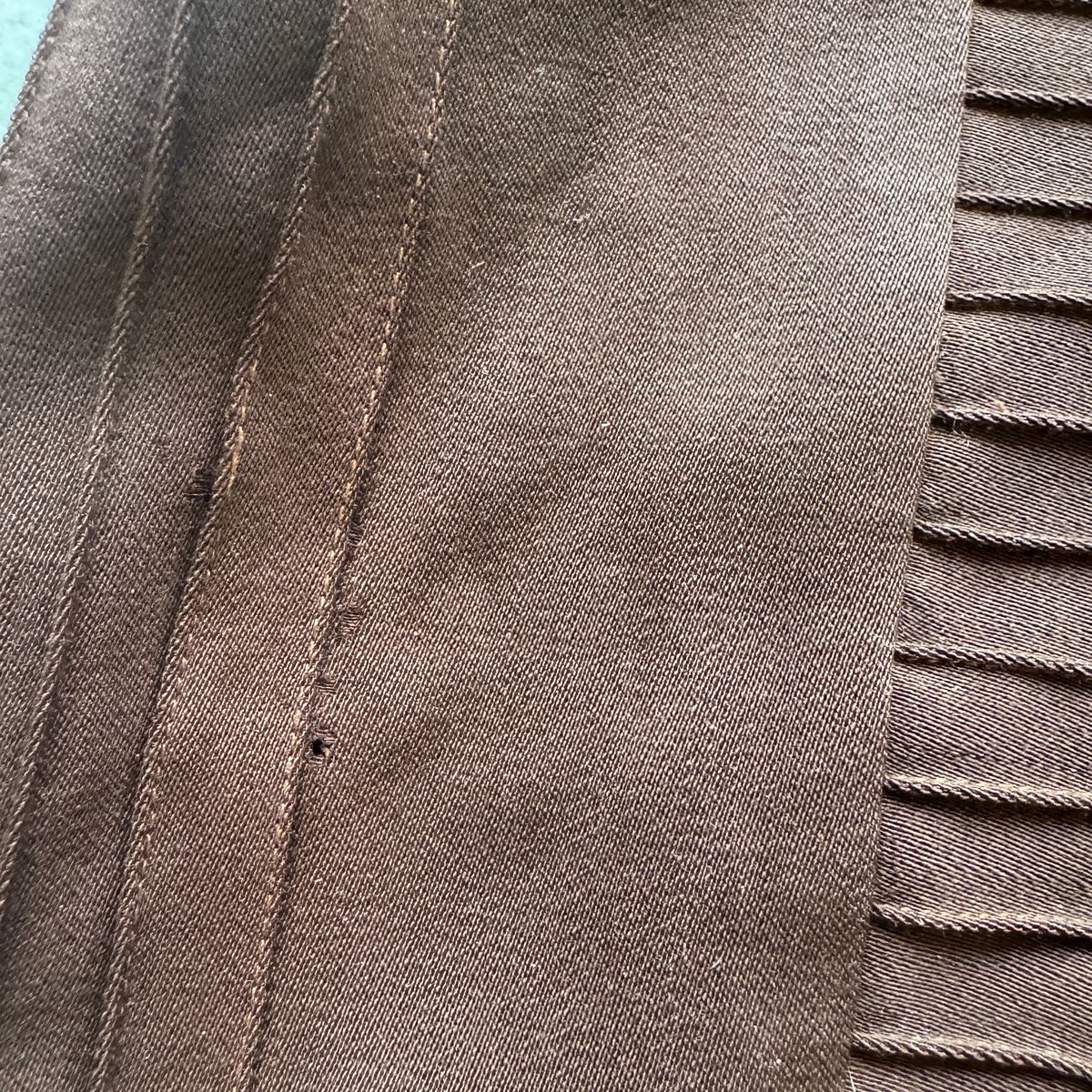
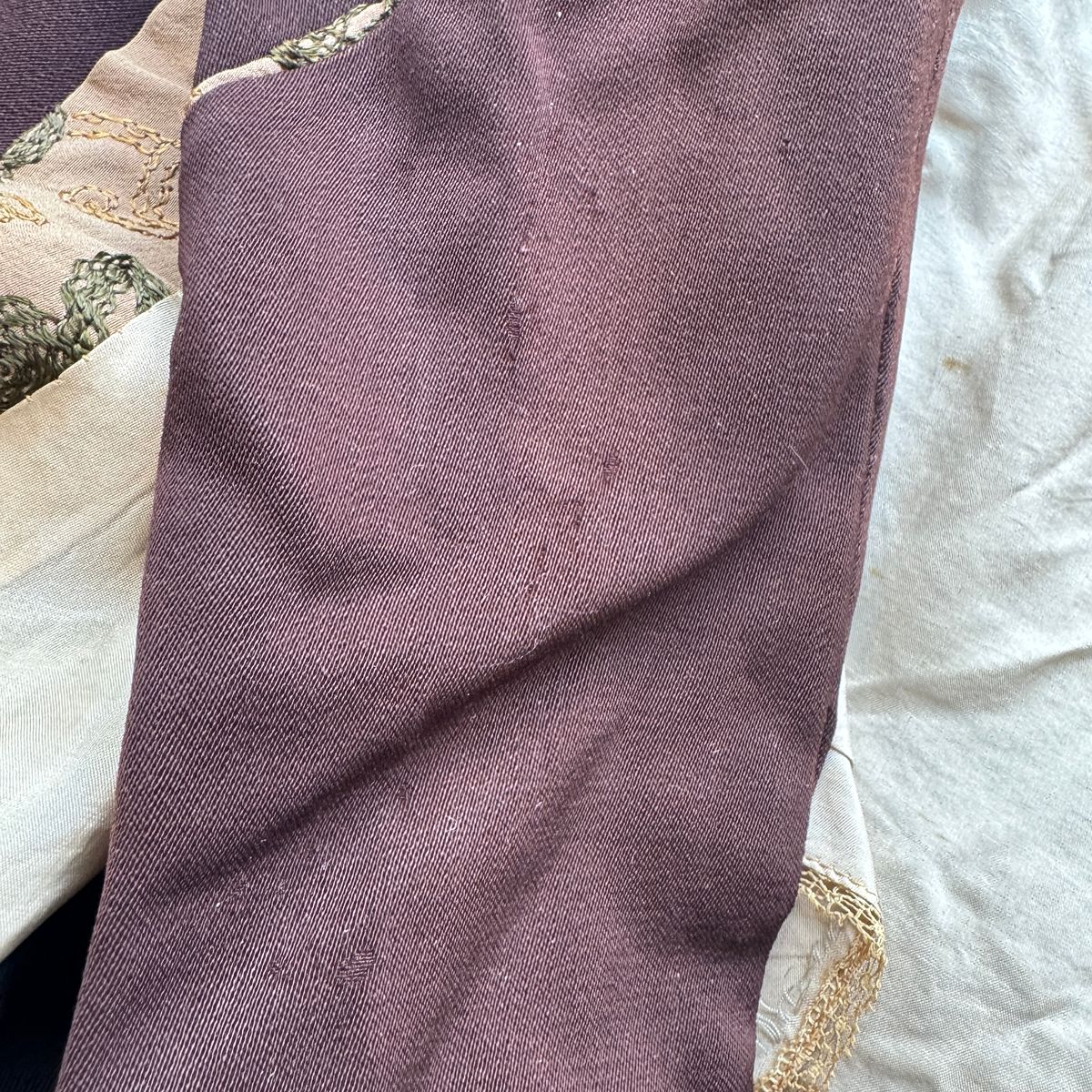
As with any textile that has survived a century, this dress comes with a story and a few battle scars. The exterior fabric is impressively sturdy and thick, showing only a few minor dust smudges from storage and a small seam separation near the hip pleats that will require a few quick mending stitches. However, the interior silk lining has completely shattered. In the 1920s, silk was often treated with metallic salts to give it a heavier drape, a process that unfortunately causes the fabric to literally shred itself over the decades.
If you wish to wear this piece, the shattered lining can be carefully snipped and torn out (or completely replaced if you are particularly handy with a sewing machine). It is currently resting peacefully in an acid-free box with archival tissue paper to preserve its condition.
Whether you are a collector looking for a sturdy, magnificent display piece, or a vintage wearer ready to carefully remove the lining and step out in authentic Jazz Age style, this dress is waiting for its next great adventure.
Measurements:
Bust (Pit to Pit): 44″ (Best fits up to 42″ to allow for 1920s drape)
Waist: 41″
Hips: 47″
Total Length: 46″
Modern Size Estimate: XL / 1X (Please leave wiggle room for the proper 1920s fit!)
Historical Significance: A Rare Plus-Size Jazz Age Dress and the Textile Story of the Great Depression
In the annals of fashion history, the 1920s is the Jazz Age—the decade that reinvented how women dressed, moved, and expressed freedom. This dress embodies that era’s architectural elegance: a straight, tubular silhouette that skims the body and drops to the hips, with an ingenious asymmetrical wrap and Art Deco embellishment that echo the period’s love of geometry, luxury, and subtle shimmer. What makes this piece especially significant is its plus-size fit—a rare survivor from a time when most preserved garments skewed petite. It’s a vivid reminder that curvier women did wear Jazz Age fashion, even if their silhouettes aren’t as frequently preserved in our museums and closets today.
Beyond its design, this dress tells a broader story about garment production, preservation, and longevity. The Great Depression, which began at the end of the 1920s, dramatically affected textile availability and fashion practices. Economic hardship pushed households to reuse, repair, and repurpose fabrics, leading many authentic antique garments to be altered, dismantled, or absorbed into other pieces rather than kept intact. This context helps explain why genuine plus-size antique clothing remains comparatively rare: larger-size patterns were less commonly produced or preserved, and textiles were frequently repurposed to stretch limited resources. The result is that a true plus-size Jazz Age dress—like this one—becomes not only a stylish treasure but also a tangible artifact of social history and resourceful styling.
In this dress, the delicate olive and metallic gold embroidery on the cuffs and chest panel speaks to the era’s decorative optimism, while the hidden internal modesty cord reflects practical ingenuity—crafted to preserve the sleek, tubular line even in breezy moments on the dance floor. The exterior’s sturdy weave and the thoughtful, if imperfect, interior lining also tell a story of materials, techniques, and preservation challenges from a century ago.
If you’re a collector or a vintage wearer, this gown offers a rare gateway to the Jazz Age’s fashion ecology: an authentic example of how designers adapted dramatic silhouettes for larger figures, how people dressed for public life and celebration, and how economic pressures shaped what endured. It’s more than a dress—it’s a bridge to a pivotal moment in fashion history and a testament to the resilience of vintage textiles.
Vintage Product Gallery
You might also like…
Related products

1960s Black Mod Shift Dress w/ Pockets | Size 12 | Vintage Classic
$48.00
1950s Gray Wiggle Dress by Roseweb NY – Vintage Sheath with Side Zip
$55.00-
Sale!

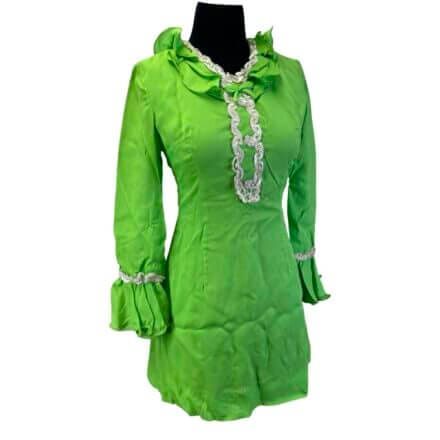
Vintage 1960s Neon Green Mini Dress with Sequin Accents – Tricel 100% Acetate
Original price was: $90.00.$65.00Current price is: $65.00. 
1950s Ruth Roaman Sheath Dress – Black Double-Layer Crepe Over Satin, Madison Ave Label
$80.00



Get 10% Off Your First Vintage Find
Subscribe to receive a 10% off welcome coupon by email, plus early access to new vintage drops, behind-the-scenes sourcing notes, and scans of the old photos, programs, and paper ephemera I uncover and digitize.
Almost there! Please check your email inbox right now and click the link in our confirmation message to complete your subscription. (If you don't see it, check your spam folder!)