
Vintage 1930s Sheer Black Chiffon Peplum Dress | Lace Trim Flutter Sleeve Goth Midi | As-Is Wearable History


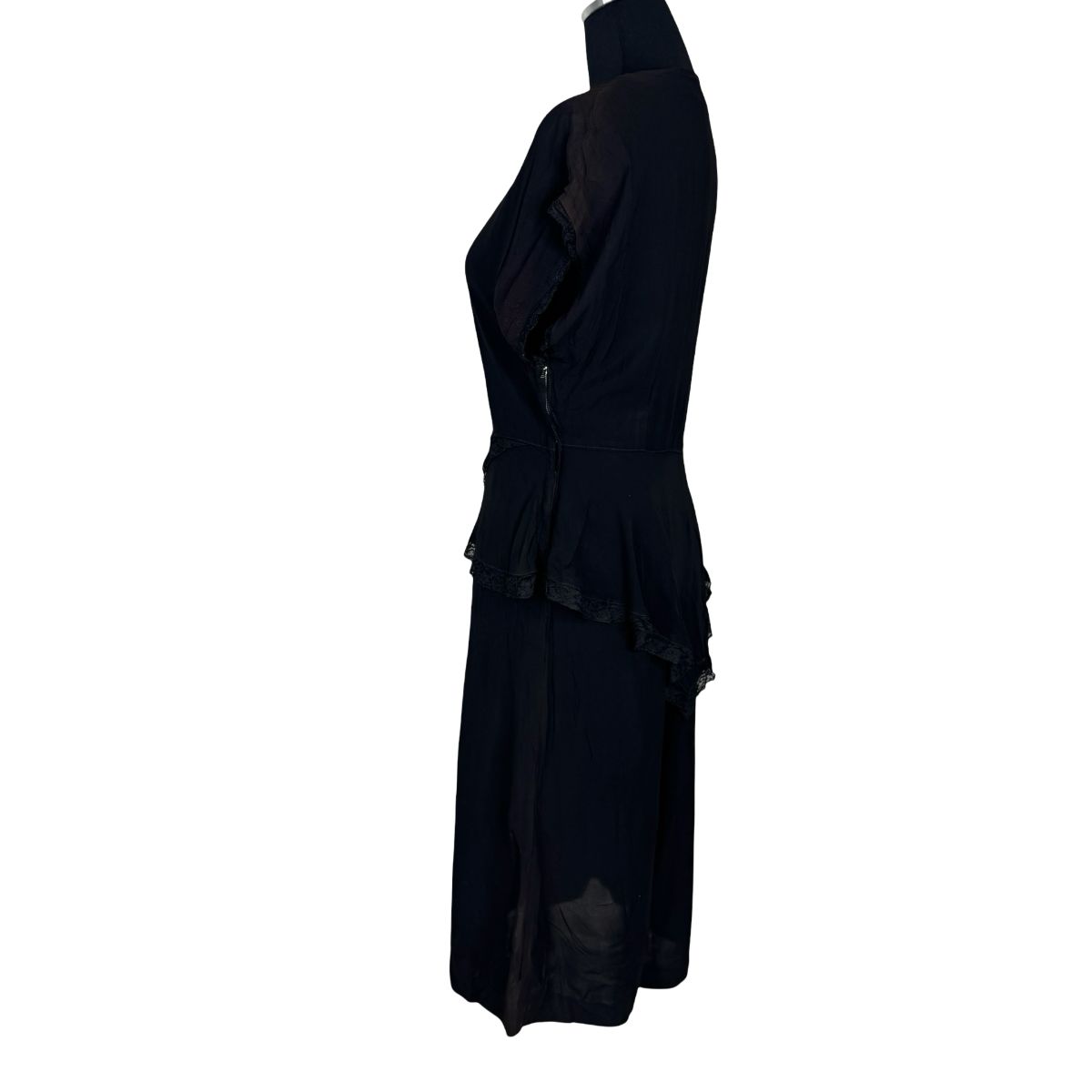
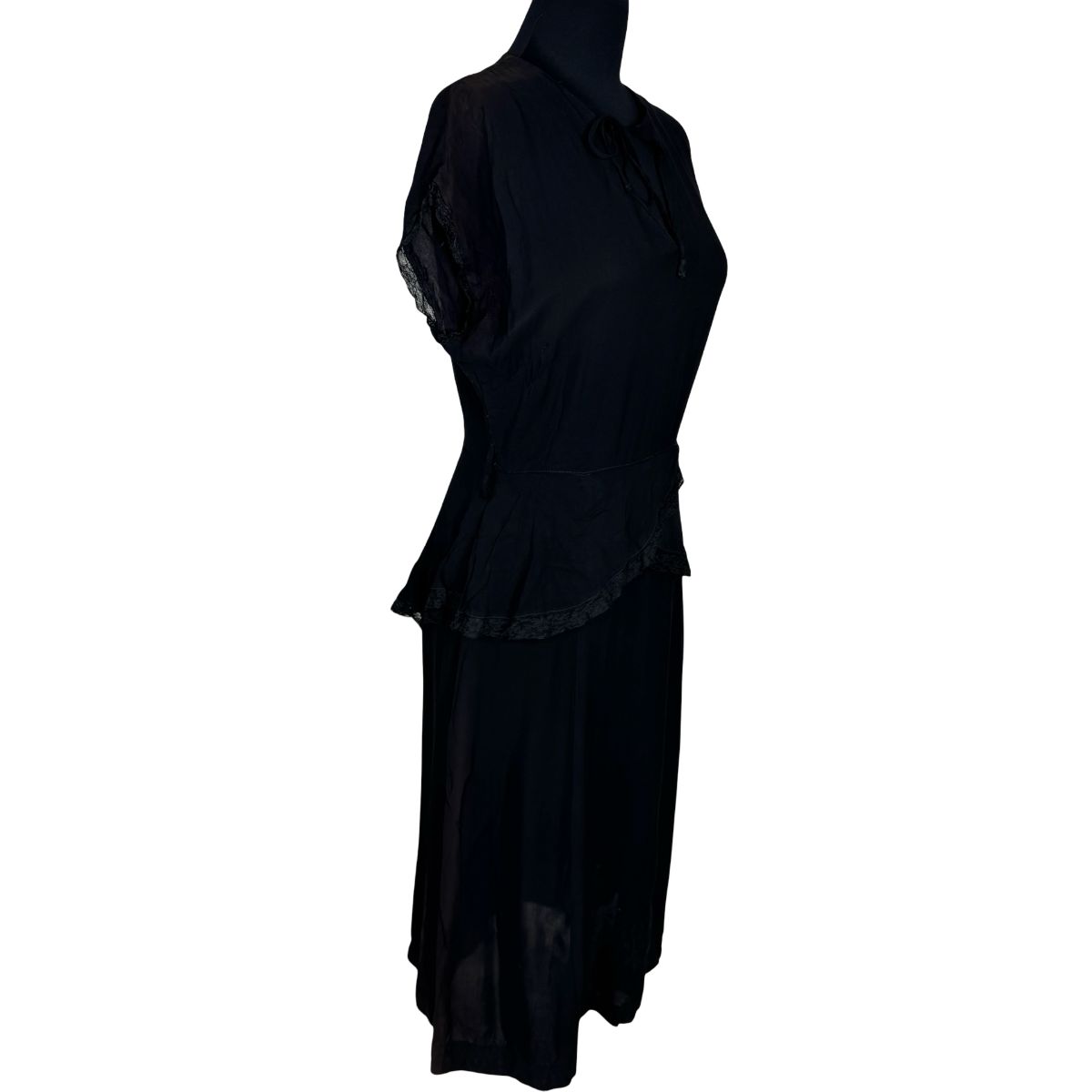

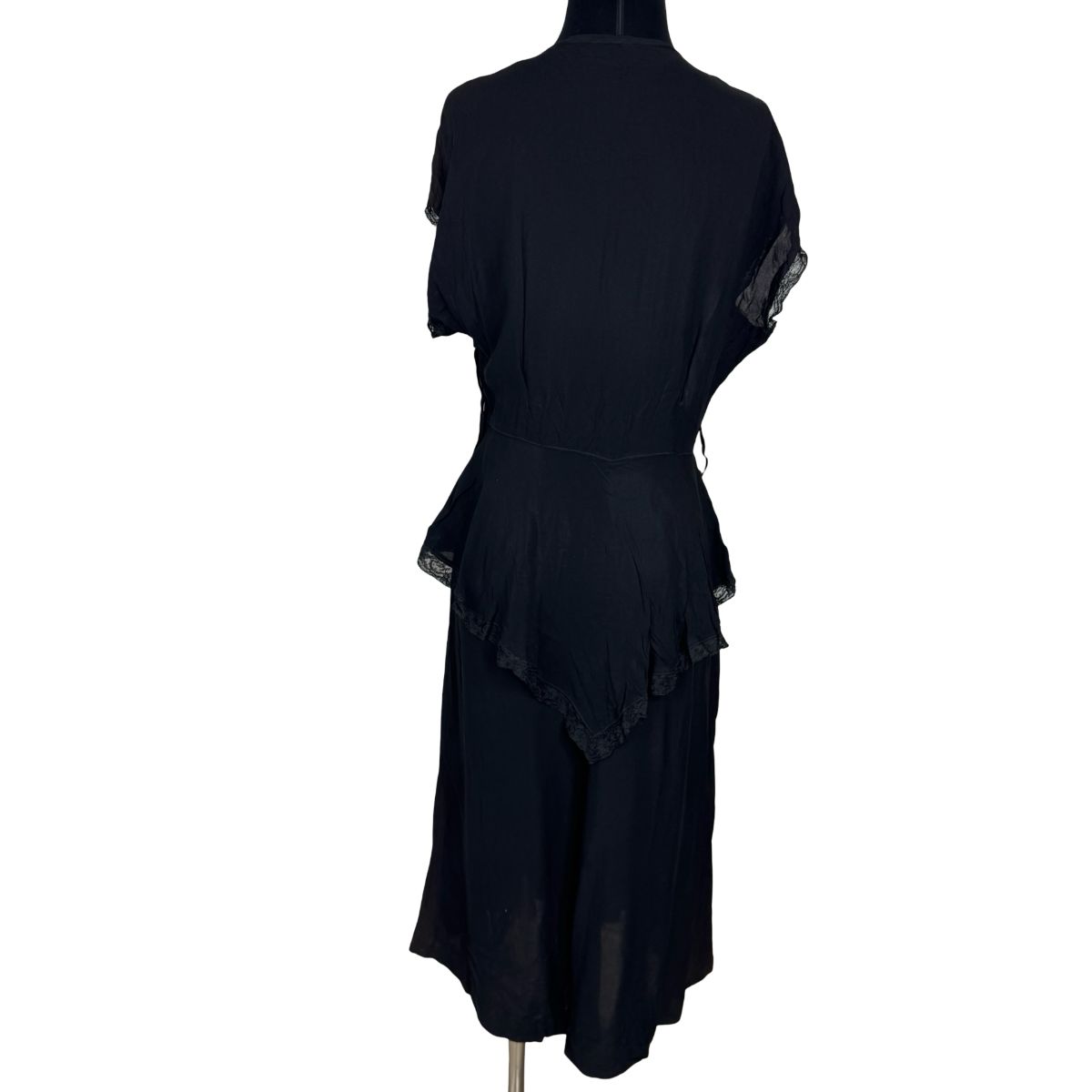






Some dresses belong behind museum glass, and others belong out in the world, living a beautifully messy second life. This exceptionally rare, late 1930s sheer black dress falls firmly into the latter category. Crafted from a feather-light, completely translucent black chiffon or rayon georgette, it is a masterclass in Depression-era romance.
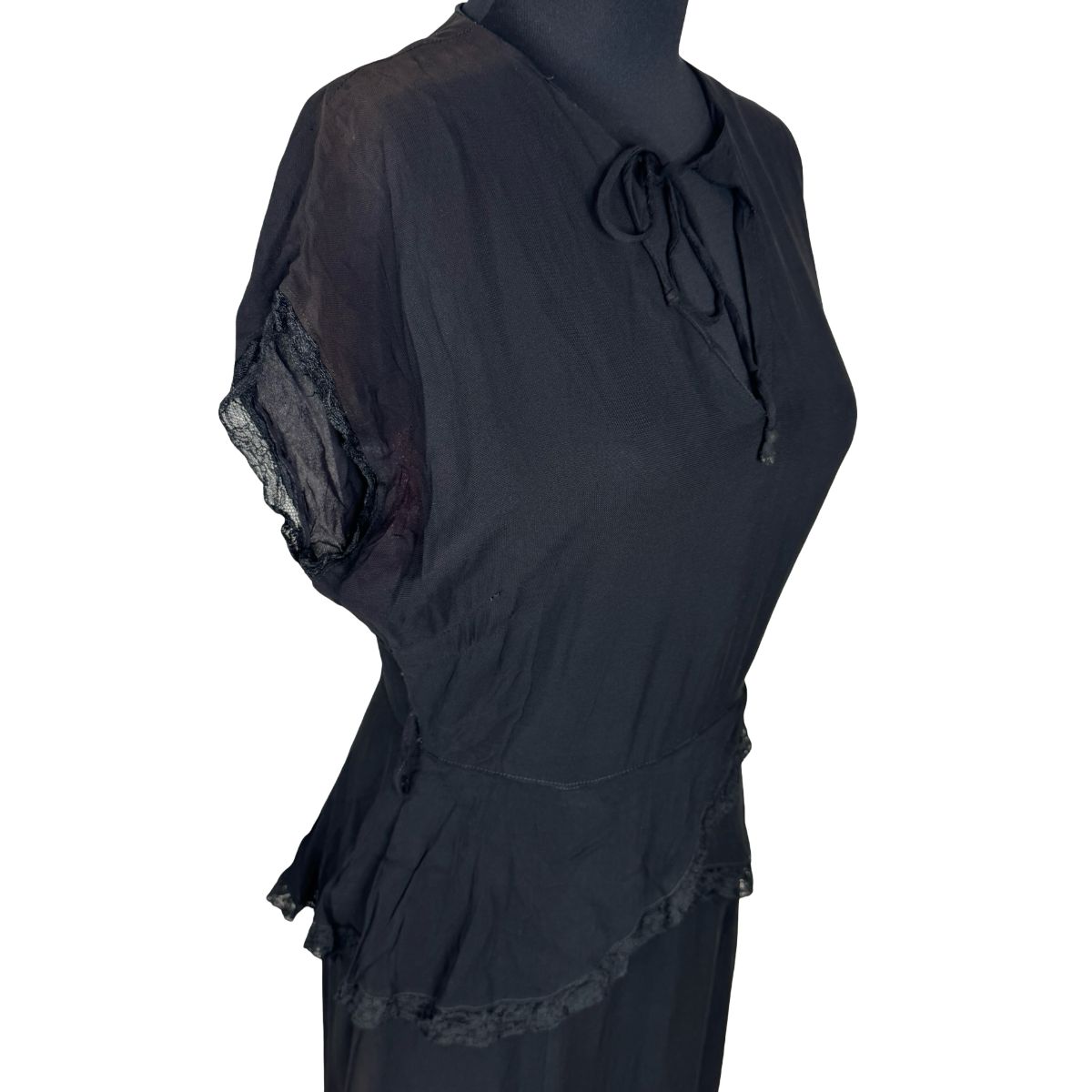
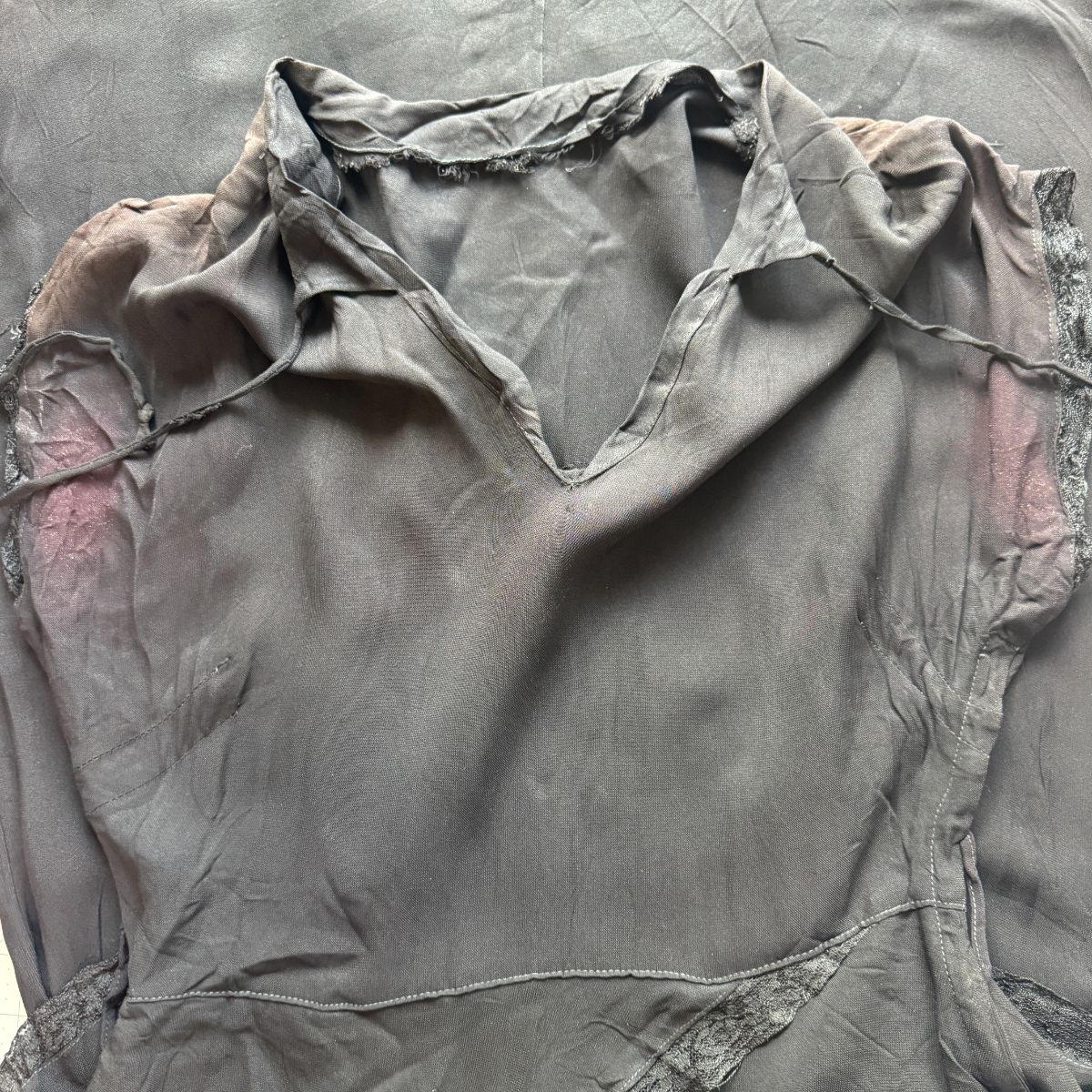
Featuring a delicate keyhole tie-neckline, lace-trimmed flutter sleeves, and a breathtaking asymmetrical peplum waist, she is pure, unadulterated gothic elegance. Because she bears the honest, visible scars of the last ninety years—including striking purplish sun-fading at the shoulders, a few old mends, and a hole in the skirt—she is completely off the hook for formal behavior. Wear her over a vintage slip, or grunge her up with a lace bralette and combat boots for an editorial, witchy aesthetic.
Measurements (Zero Stretch!):
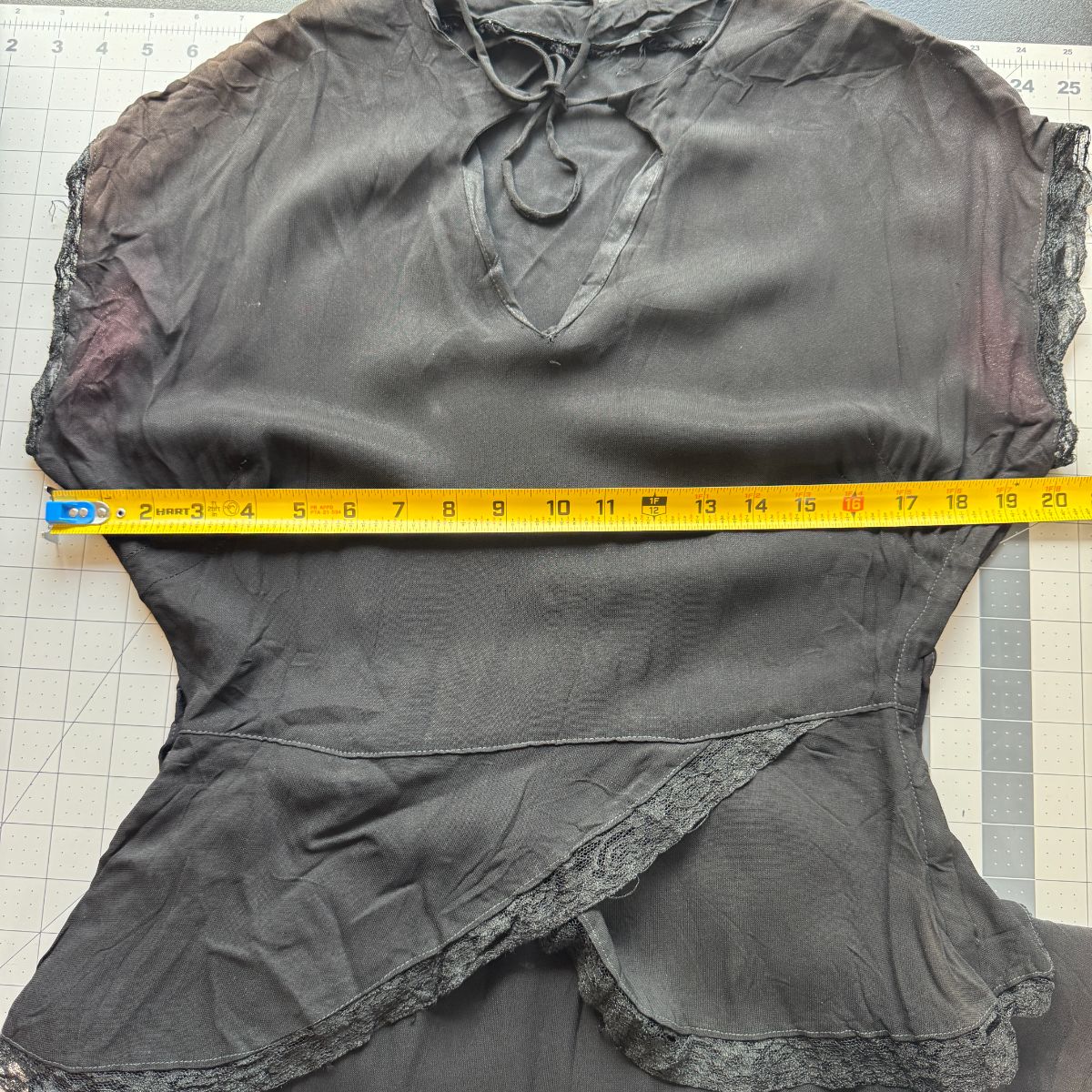
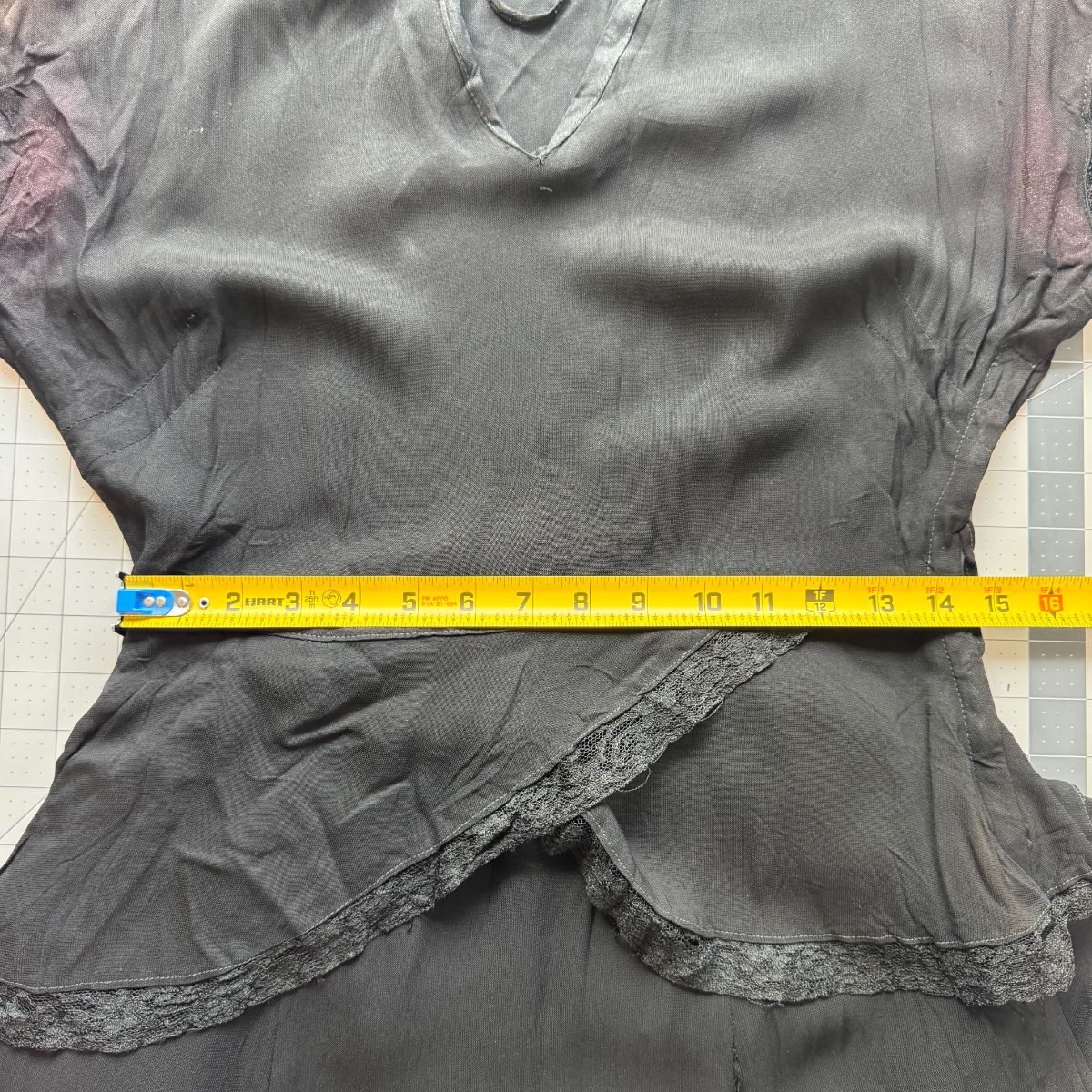
Bust: 38″
Waist: 29″
Hips: 38″ (Leave wiggle room to sit!)
Length: 45″
Fits a modern Medium (US 6/8).
Make me an offer!
(Almost) all pricing is negotiable.
More about this Item
There is a very specific, heart-fluttering magic that happens when you stumble across a genuine sheer dress from the 1930s. The fashion of the 1930s was a dramatic departure from the boxy, drop-waist silhouettes of the roaring twenties. Suddenly, women’s clothing embraced the natural waist, utilizing bias cuts and incredibly delicate, translucent fabrics to create garments that moved like liquid shadow. Finding one of these pieces today is rare; finding one in black, with this level of intricate detailing, is a true vintage treasure hunt victory.
I want to take you on a deep dive into the architecture of this dress, because she is a marvel of mid-century home sewing. The fabric itself is entirely sheer—a beautifully textured, lightweight rayon chiffon or georgette that feels like a whisper against the skin. Because modesty standards of the 1930s dictated that a lady never show her undergarments, this dress was specifically designed to be worn as an overlay, floating effortlessly over a sleek, opaque silk or rayon full-body slip.
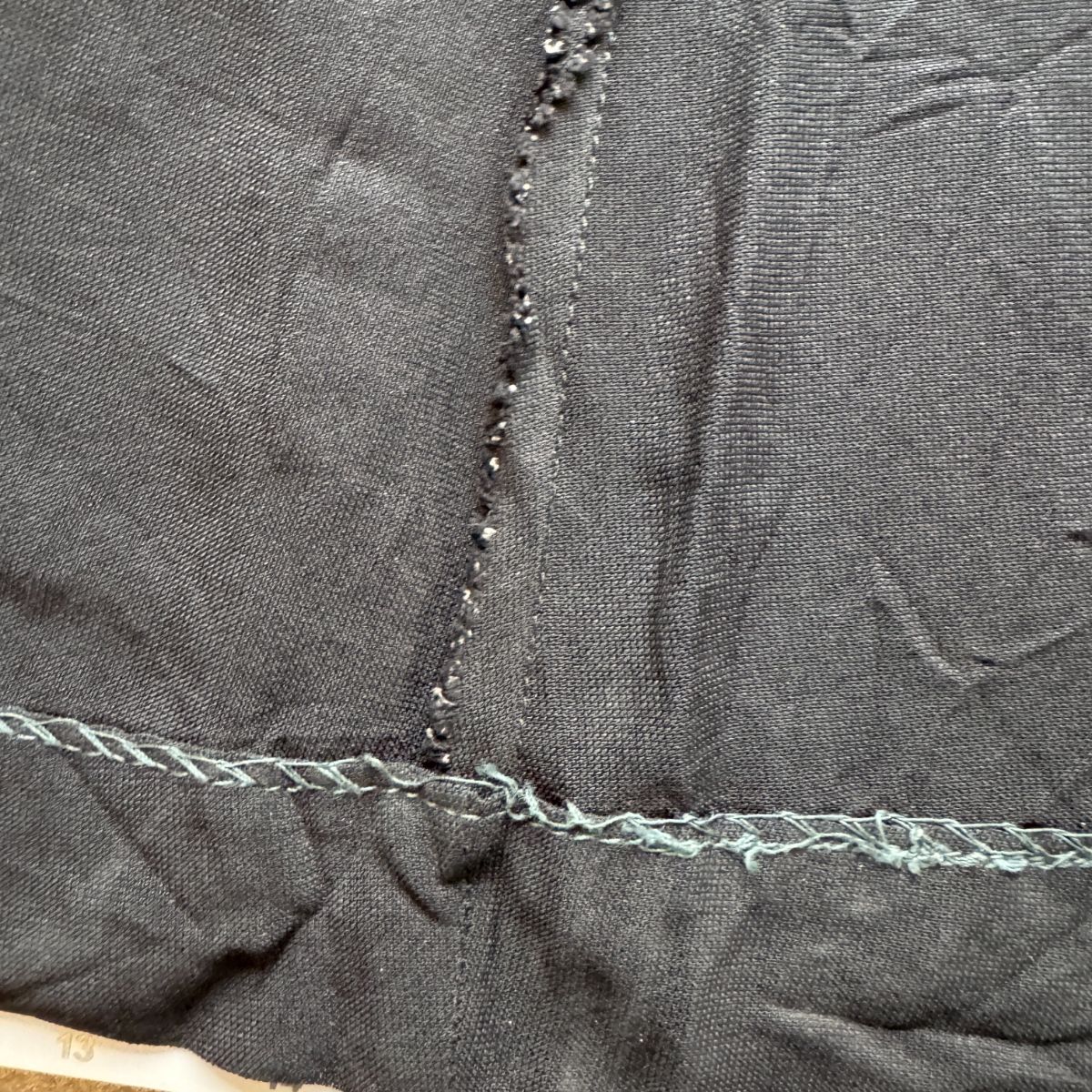
The bodice is beautifully soft, featuring a gathered keyhole neckline that secures with a delicate self-fabric tie. The shoulders cascade into sweet, fluttery cap sleeves that are meticulously edged in a scalloped black lace. But the true star of the show is the waistline. The natural waist is accentuated by an extraordinary asymmetrical peplum flounce that dips elegantly on one side. This peplum is also trimmed in that same delicate lace, creating a stunning, tiered hourglass illusion that was wildly popular in late 1930s and early 1940s afternoon dresses. To keep the silhouette sleek, the dress fastens securely at the side seam with a classic, sturdy metal zipper—a modern innovation of the era that had just begun replacing the tedious rows of hook-and-eye closures from previous decades. Inside, you can still see the raw, pinked (zigzag) seams left by the original home seamstress.
Now, we must have a very candid conversation about her condition, because this dress is a survivor, and she wears her history on her sleeves. I am selling this piece strictly as an “As-Is / Project / Editorial” garment. First and most noticeably, the black dye on the right shoulder and underarm has heavily oxidized, turning a distinct, striking shade of plum-purple. This happens when vintage black dye reacts with decades of sun exposure or the chemicals in old deodorants. Some might view this as damage; I view it as an incredible, organic patina that makes the dress look like it walked straight off a moody, gothic movie set.
Additionally, the delicate fabric has seen some stress. There is a noticeable hole in the skirt, and a few areas near the waistline where a previous owner painstakingly hand-stitched mends to keep the dress together. The original belt is missing (though the thread loops remain), and the hem is a bit uneven, a charming hallmark of its handmade origins.
Why buy a flawed dress? Because pristine 1930s gowns are terrifying to wear. You spend the entire evening petrified of catching the fabric on a chair or spilling a drop of wine. This dress, however, is what I lovingly call “guilt-free vintage.” Her flaws are what give her permission to be worn wildly. She is the ultimate base layer for a modern, dark-romantic wardrobe. You can wear her historically with a black silk slip and seamed stockings. Or, you can bring her fiercely into the 21st century by layering her over a black lace bralette, high-waisted briefs, and your most scuffed-up combat boots. She would be spectacular in a witchy photoshoot, a theater production, or worn to a dimly lit gothic rock club where her purple fading will look absolutely intentional.
Before you check out, please pay very close attention to the measurements provided below. Vintage garments from this era have absolutely zero stretch. The hips measure exactly 38 inches around, which means your actual body measurement must be at least an inch or two smaller than that so you have room to sit, breathe, and dance without popping her delicate, ninety-year-old seams!
Measurements:
Bust: 38″
Waist: 29″
Hips: 38″ (Absolute maximum!)
Length: 45″
Modern Size Estimate: Medium (US 6/8).
Fit Note: This garment has NO STRETCH. You must leave yourself 1-2 inches of “wiggle room” through the hips and waist to safely pull this on and move comfortably!
1930s Historical Context & Styling
This dress belongs to the romantic, transitional period of late 1930s and early 1940s fashion, when women’s clothing had moved away from the loose, dropped-waist shapes of the 1920s and returned to softer, more feminine silhouettes. Natural waists, flutter sleeves, delicate necklines, and graceful skirt movement were all part of the look. Even during the economic hardship of the Great Depression, fashion often emphasized elegance through clever construction rather than excess fabric or ornamentation.
Sheer black dresses like this were typically worn over a full slip. The transparency was intentional, but it was not meant to be worn bare in the way a modern sheer dress might be styled. Historically, a woman would have layered it over a black, cream, or flesh-toned rayon or silk slip, allowing the outer dress to float over the body while still maintaining the modesty expected of the era. The result would have been soft, shadowy, and beautifully dimensional, especially in evening light.
The keyhole tie neckline, flutter sleeves, lace trim, and asymmetrical peplum all speak to the late 1930s love of romantic detail. The peplum is especially wonderful because it draws attention to the natural waist and creates that elegant hourglass effect that became popular after the straight, boyish silhouettes of the 1920s. The side metal zipper is another wonderful period detail, reflecting the growing use of zippers in women’s clothing during this era.
Because this dress shows visible age, fading, mends, and wear, it has a very different kind of beauty than a pristine collector’s piece. It feels less like something locked away in a museum and more like something with a life still left in it. The purplish oxidation and worn sheer fabric give it a haunting, timeworn quality that works beautifully with gothic, dark romantic, witchy, and editorial styling.
For a historically inspired look, wear it over a simple black rayon or silk slip with seamed stockings, low heels, and understated jewelry. For a more modern look, style it over a black bralette and high-waisted briefs, a bodysuit, or a fitted slip dress. Add combat boots, layered silver jewelry, a velvet ribbon choker, or a long dramatic coat for a darker, more contemporary feel. It would also be stunning for a moody photoshoot, theater costume, dark academia outfit, or layered gothic wardrobe.
This is the kind of vintage piece that does not need to be perfect to be powerful. Its age, wear, and delicate construction are part of its story. It carries the softness of Depression-era design, the mystery of sheer black fabric, and the strange beauty of a garment that has survived nearly a century.
Vintage Product Gallery
You might also like…
Related products

Vintage 1960s Navy Polka Dot Dress with White Sailor Collar – Size M
$48.00-
Sale!

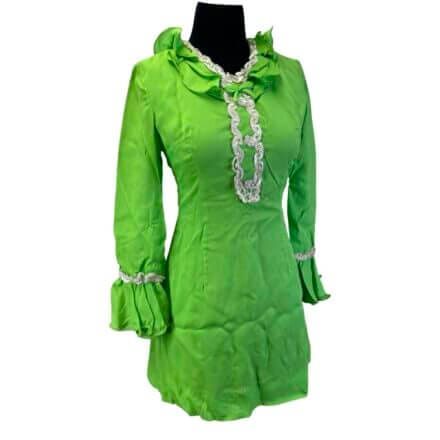
Vintage 1960s Neon Green Mini Dress with Sequin Accents – Tricel 100% Acetate
Original price was: $90.00.$65.00Current price is: $65.00. -
Sale!

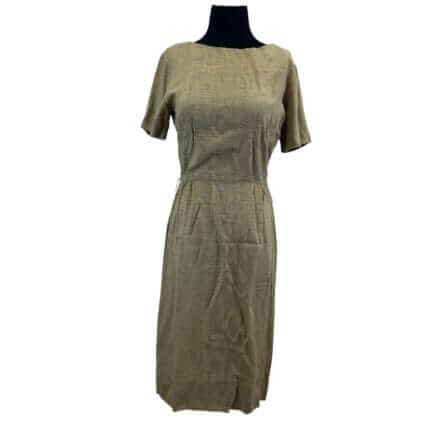
1970s Natural Linen Look Wiggle Dress – Minimalist Retro Workwear
Original price was: $50.00.$44.00Current price is: $44.00. 
1970s Grace Taylor Knit Dress – Black & Gold Chevron, Peter Pan Collar, M/L
$72.00


Get 10% Off Your First Vintage Find
Subscribe to receive a 10% off welcome coupon by email, plus early access to new vintage drops, behind-the-scenes sourcing notes, and scans of the old photos, programs, and paper ephemera I uncover and digitize.
Almost there! Please check your email inbox right now and click the link in our confirmation message to complete your subscription. (If you don't see it, check your spam folder!)