
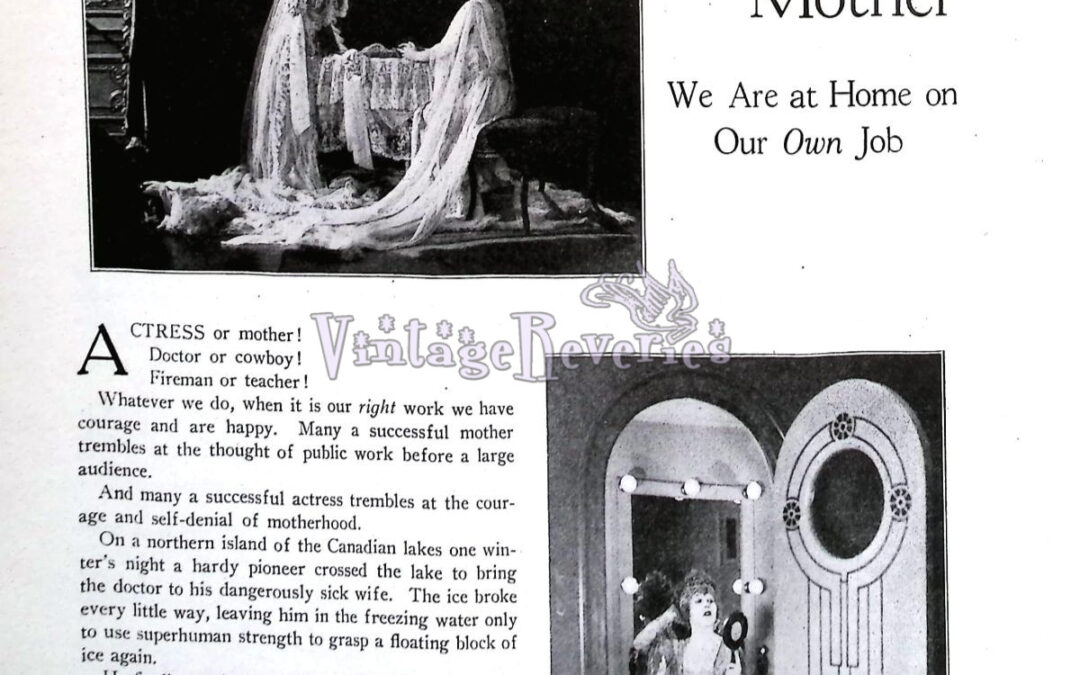
Exploring Courage, Authenticity, and the “New Woman” in Jazz Age America
In 1924, American women stood at a crossroads. Just four years after the ratification of the 19th Amendment granted them the right to vote, women were experiencing unprecedented freedom—and unprecedented confusion. The Roaring Twenties brought rising hemlines, bobbed hair, and jazz clubs, while corporate America began cautiously opening its doors to female employees. Yet the traditional role of wife and mother still held powerful cultural sway.
This tension between old and new wasn’t just a political debate—it was a deeply personal identity crisis playing out in homes across the nation. The concept of the “New Woman”—independent, educated, sexually liberated—collided daily with Victorian ideals of domesticity and self-sacrifice. Women were told they could “have it all,” but society hadn’t yet figured out what that actually meant.
It’s against this turbulent backdrop that a small but powerful article appeared on Page 12 of Character Reading magazine in the winter of 1924-25. Titled “Actress or Mother?”, it offered something rare for its time: not a prescription for what women should be, but wisdom about how to find confidence in whatever path they chose.
Beyond the Binary: A Surprisingly Modern Take on Identity
While the article’s title suggests a stark either/or choice—the glamorous stage versus the domestic sphere—the content itself reveals a more nuanced philosophy. The anonymous author (likely Edna Purdy Walsh, the magazine’s editor and a prominent voice in the New Thought movement) wasn’t interested in telling women which role to choose. Instead, she explored a radical idea: courage isn’t a fixed personality trait; it’s the natural result of being in your right place.
This was revolutionary thinking for 1924. The prevailing wisdom, influenced by phrenology and early personality psychology, treated traits like courage, timidity, and confidence as innate characteristics—things you either possessed or lacked. Character Reading magazine itself frequently featured articles on reading personality through facial features and skull measurements.
But this particular piece broke from that deterministic framework. It argued that the same woman who trembles before a crowd might be a tower of strength in the nursery—and vice versa. The article didn’t pathologize women’s anxiety or suggest they needed to “overcome” their fears through willpower. Instead, it suggested they might simply be standing on the wrong stage.
The Psychology of Being “In Your Element”
The 1920s saw the birth of modern psychology as Americans began embracing Freudian concepts and the idea that personality could be studied scientifically. Character Reading magazine sat at the intersection of this new psychology and older metaphysical traditions, blending graphology, character analysis, and vocational guidance into a self-improvement cocktail that resonated with middle-class readers.
The “Actress or Mother” article tapped into this cultural moment by reframing confidence as situational rather than dispositional:
- The Mother: “Many a successful mother trembles at the thought of public work before a large audience.”
- The Actress: “And many a successful actress trembles at the courage and self-denial of motherhood.”
This wasn’t weakness—it was wisdom. The article’s core message, “When it is our right work we have courage and are happy,” offered women permission to stop trying to be everything to everyone. In an era when women were constantly being told they were entering a man’s world and needed to prove themselves, this was a quietly radical message.
The concept resonates strongly with what we now call “flow state” or being “in the zone”—that sense of natural competence that arises when your skills align with your task. Modern research on imposter syndrome echoes the article’s central insight: sometimes you don’t have a confidence problem; you have a misalignment problem.
The Parable of the Doctor and the Pioneer: A Timeless Lesson
To illustrate this principle, the author tells a vivid, almost cinematic story set in the frozen wilderness of northern Canada—a landscape that would have felt both exotic and quintessentially North American to 1924 readers.
The Journey Across the Ice
On a winter night in the Canadian lake country, a hardy pioneer must fetch a doctor for his dangerously ill wife. The journey is harrowing: “The ice broke every little way, leaving him in the freezing water only to use superhuman strength to grasp a floating block of ice again.”
This was the stuff of frontier legend—the kind of rugged masculinity celebrated in the Western stories and Jack London novels popular at the time. The pioneer represents the ideal of self-reliant American manhood, capable of superhuman physical feats when circumstances demand.
The doctor, by contrast, is utterly out of his element. He “trembled, shivered and was fearful. He clutched the pioneer like a drowning man.” The pioneer must literally carry the fainting physician to shore. In this environment, the educated city doctor is revealed as helpless—perhaps even cowardly.
The Reversal in the Sick Room
But when they reach the house and the doctor sees the sick woman, everything changes. “He saw what was necessary. Immediate operation!“
Suddenly, “The doctor now was poise—calmness, and heroism as he went about his work.” Meanwhile, the seemingly indomitable pioneer “sat crying and shivering in a small chair in the corner.”
The reversal is complete and startling. The same man who performed superhuman physical feats becomes terrified in the face of medical crisis. The same man who seemed cowardly on the ice becomes a model of courage and competence in the operating room.
What This Meant for Women in 1924
For the article’s female readers, this parable offered profound validation. The 1920s woman was constantly being measured against contradictory standards:
- Traditional expectations valued domestic skills, maternal instinct, and self-sacrifice
- Progressive ideals championed education, career ambition, and public engagement
- Popular culture celebrated the glamorous, sexually liberated flapper
- Religious and moral authorities warned against the dangers of modern life
Many women felt they were failing at everything because they couldn’t excel at contradictory roles simultaneously. They were doctors being judged by their ice-crossing abilities, or pioneers being evaluated on their surgical skills.
The article’s message—”Hew to your own job!“—was an invitation to stop apologizing and start specializing. It suggested that women didn’t need to be universally capable; they needed to find the arena where their particular gifts could flourish.
Historical Context: The New Woman and Her Discontents
To fully appreciate this article’s significance, we need to understand the broader cultural landscape of 1924:
The Aftermath of Suffrage
The 19th Amendment was ratified on August 18, 1920, but women’s actual political participation remained limited. Many women were uncertain about how to exercise their new political power, and voting rates among women lagged behind men throughout the 1920s. The question of what women wanted—and who they were now that they had formal equality—remained deeply uncertain.
Economic Opportunities and Limitations
World War I had pulled women into the workforce in unprecedented numbers, but the postwar period saw a pushback. By 1924, women made up about 20% of the workforce, primarily in teaching, nursing, clerical work, and domestic service. The professional world remained largely closed to them, and married women who worked outside the home faced significant social stigma.
The Flapper and Feminine Archetypes
The flapper—with her short skirts, bobbed hair, and jazz-dancing ways—became the icon of the decade. But she represented only one narrow slice of female experience. Most women weren’t regularly attending speakeasies or challenging conventions; they were trying to navigate practical questions about work, marriage, and identity within much more constrained circumstances.
The Self-Improvement Industry
Character Reading magazine was part of a booming self-help industry that emerged in the 1920s. As traditional certainties crumbled and social mobility seemed possible, Americans turned to books, magazines, and courses promising to unlock the secrets of success, personality, and fulfillment. These publications blended pseudoscience (phrenology, physiognomy), emerging psychology, and New Thought philosophy into an optimistic stew of self-actualization.
Why This Message Still Resonates a Century Later
Reading this article from 2026, a century after its publication, it’s striking how contemporary its core insight feels. We still struggle with:
- Imposter syndrome and the feeling that we don’t belong in certain roles
- Work-life balance questions that pit professional ambition against family life
- Social media comparison that makes us feel inadequate in multiple domains simultaneously
- Societal pressure to be multi-talented generalists rather than focused specialists
The article’s wisdom—that courage comes from alignment, not from forcing yourself into ill-fitting roles—remains as relevant as ever. The language of “actress or mother” may feel dated, but the underlying question is eternal: How do we find the courage to be authentically ourselves in a world that constantly demands we be someone else?
The Enduring Wisdom: “Hew to Your Own Job!”
The article concludes with this imperative: “Hew to your own job!” It’s a call to stop comparing yourself to others, stop trying to excel in roles that don’t suit you, and stop apologizing for your particular form of courage.
Whether you’re called to the stage or the cradle, the boardroom or the classroom, the laboratory or the frontier—the only failure is pretending to be someone you’re not. Confidence isn’t something you develop through sheer willpower; it emerges naturally when you find yourself in the right place, doing your right work.
For the women of 1924, caught between tradition and modernity, this was a message of liberation disguised as folk wisdom. For us, a century later, it remains a powerful antidote to the pressure to be everything to everyone—a reminder that true courage comes not from being fearless everywhere, but from finding the place where your particular gifts can shine.
This article is part of an ongoing series exploring the Character Reading magazine from December 1924-January 1925, a fascinating time capsule of American self-improvement culture during the Jazz Age.
Want to explore more Jazz Age wisdom? Download the complete Character Reading Magazine (December 1924-January 1925) in high resolution—perfect for artwork, research, or study. This rare metaphysical psychology magazine has been personally scanned and is in the public domain. Get your copy here!
Original Text: Actress or Mother?
(Transcribed from the December 1924 Issue of Character Reading)

Actress or Mother
We Are at Home on Our Own Job
ACTRESS or mother! Doctor or cowboy! Fireman or teacher!
Whatever we do, when it is our right work we have courage and are happy. Many a successful mother trembles at the thought of public work before a large audience.
And many a successful actress trembles at the courage and self-denial of motherhood.
On a northern island of the Canadian lakes one winter’s night a hardy pioneer crossed the lake to bring the doctor to his dangerously sick wife. The ice broke every little way, leaving him in the freezing water only to use superhuman strength to grasp a floating block of ice again.
He finally reached the doctor and together they traveled back over the treacherous ice, falling together, helping each other, the pioneer finally lifting the fainting doctor to his feet and carrying him to the house. The doctor trembled, shivered and was fearful. He clutched the pioneer like a drowning man.
When they reached the house the doctor quickly recovered at the bedside of the sick woman. He saw what was necessary. Immediate operation!
The doctor now was poise—calmness, and heroism as he went about his work.
The pioneer sat crying and shivering in a small chair in the corner.
Hew to your own job!
Want to explore more Jazz Age wisdom? Download the complete Character Reading Magazine (December 1924-January 1925) in high resolution—perfect for artwork, research, or study. This rare metaphysical psychology magazine has been personally scanned and is in the public domain. Get your copy here!