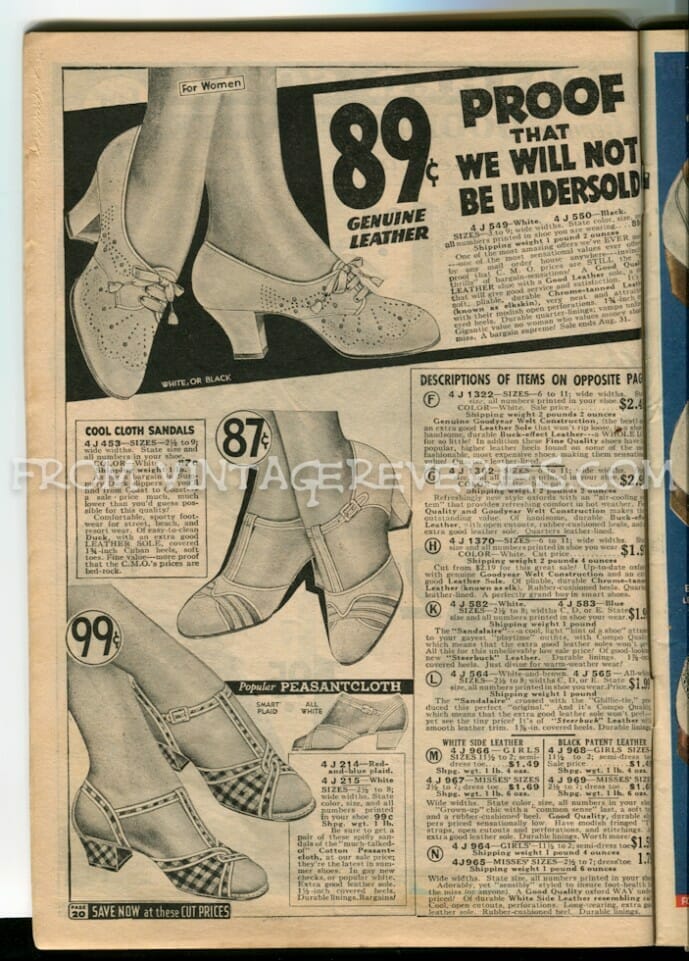
These captivating scans from the 1935 Chicago Mail Order Company catalog take us back nearly a century to explore the everyday fashion trends of the Great Depression era. The collection begins with a postage rate chart from 1935, giving us a sense of how much Americans spent on shipping their orders during a time when every penny counted. What follows are 13 mesmerizing pages of shoe advertisements, offering a detailed look into the styles, materials, and prices that were shaping the shoe industry during the decade.
It’s remarkable to see the affordability of postage back then when compared to the cost of the shoes themselves. Despite rising inflation over the years, the price difference between postage and shoes hasn’t widened as dramatically as one might expect. But beyond the economics, these pages also reflect a society striving for both practicality and style during a challenging era.
Practical Yet Stylish: Women’s Shoes in 1935
The catalog prominently features “Thrilling Styles, Priced Low,” ensuring that even women on tight budgets could afford to buy fashionable shoes—a necessity as much as a luxury during the Depression. Practical low-heeled shoes made of durable kid leather were all the rage, ideal for everyday wear but still sophisticated enough to add a touch of elegance to a woman’s wardrobe. This was a time when investment in lasting quality was essential due to limited disposable income.
Workplace demands were growing for women in the 1930s, and thus, specialized shoes gained prominence in the market. For example, comfortable yet stylish oxfords designed for nurses emphasized utility without sacrificing form. These shoes were praised for their “super comfort,” providing support for long working hours. The advertisements also reflect a growing level of inclusivity, with footwear tailored for different professions and practical daily needs.
1930s Youthful Energy: Shoes for Misses and Girls
For younger women and girls, the catalog showcased “Thrilling styles for Misses and Girls,” reflecting styles that aspired to balance maturity with youthfulness. Bright, cheerful colors and innovative designs sought to bring a bit of excitement into the daily lives of young ladies who might otherwise be facing the sobering realities of the 1930s. Shoes were described as “gay” (a common term of the era meaning cheerful or lively), reflecting efforts to bring optimism into customers’ lives.
Shoes for the Whole Family
The affordability and quality emphasized in these advertisements made shoes accessible for men, women, and children alike. Men’s shoes reflected their utilitarian needs, with work boots and dress shoes highlighted for their functionality and durability. Rugged leather boots were popular for laborers, while polished dress shoes allowed men to maintain a clean-cut appearance for special occasions.
For children, practicality and durability were the primary focus, with the catalog showcasing tough yet affordable shoes designed to keep up with the wear-and-tear of youthful activities. Growing families during the Great Depression needed reliable footwear without an overwhelming price tag, and this necessity is reflected in the materials used and the pricing.
Fashion in Context: Shoes as a Reflection of the 1930s
The styles and prices in the Chicago Mail Order Company catalog tell a greater story about life in the 1930s. The United States was grappling with the economic hardships of the Great Depression, and family budgets were tight across much of the nation. Clothing was one of the few ways people could express individuality and find happiness amidst tough times, and fashion adapted to meet the challenges of the decade. Shoes, in particular, became a symbol of both practicality and a subtle assertion of personal style.
The focus on comfort and durability in shoe advertisements mirrored prevailing societal values. People prioritized items that would last, often foregoing extravagance for the sake of necessity. However, the catalog’s lively marketing language—such as “thrilling styles” and “gay styles for women and girls”—reveals the enduring desire for fashion that could lift spirits, even in hard times.
The Rising Role of Mail-Order Shopping
The 1930s also marked an expansion of accessibility through mail-order catalogs. As rural and urban families alike sought alternatives to in-store shopping, companies like the Chicago Mail Order Company made it possible for anyone with access to a post office to browse, order, and receive up-to-date fashion. The catalog was not just a means of retail—it was a lifeline for rural America, bringing the glamour of larger cities to remote corners of the country.
Postage rates, shown prominently at the beginning of the catalog, remind us of an era when efficient mail services served as the backbone of commerce. For many families, the catalog offered an opportunity to purchase quality goods while adapting to a frugal way of life.
A Legacy in Print
These snapshots from the 1935 catalog provide more than just a glimpse into the fashion of the past—they are time capsules that preserve the spirit of an era. Shoes were more than just items of necessity; they embodied the resourcefulness, ingenuity, and resilience of individuals striving to stay hopeful during a difficult period in history. From low-heeled leather shoes for women to sturdy work boots for men, every pair tells a story about the era’s priorities and values.
In today’s world, looking back on these shoes reminds us of how far consumer trends, shipping logistics, and even marketing techniques have come. They also serve as a reminder of the timelessness of practical beauty, quality craftsmanship, and the enduring human hope for better days ahead.
So next time you slip on a pair of shoes, remember the stories behind the soles from nearly a century ago—the thrilling, practical, and optimistic styles that walked alongside the challenges and triumphs of the 1930s.