

“Hollywood Steps Out” is the first old cartoon I’m featuring in this ephemera blog, and it perfectly embodies the unique charm and humor of 1930s Hollywood. Created by Warner Bros. Animation and directed by Tex Avery, the short cartoon was released on May 24, 1941, and it serves as a dazzling showcase of the entertainment world’s golden era, lampooning the glamour and eccentricities of legendary stars. A few weeks ago, I stumbled upon an intriguing discussion about 1930s Old Hollywood celebrity caricatures on Facebook, which inspired me to dig deeper into this iconic cartoon. The result was an enjoyable exploration of its clever parody, historical significance, and nostalgic appeal.
In an era shaped by the Great Depression and World War II, people turned to movies for escape, and the larger-than-life personas of actors and their extravagant lifestyles became a topic of fascination. “Hollywood Steps Out” capitalized on this curiosity by parodying America’s growing love affair with cinema, specifically satirizing the nightclubs and lavish gatherings frequented by stars of the silver screen. The setting for the cartoon is the famed Ciro’s nightclub on Sunset Boulevard, which was the epitome of Hollywood’s nightlife in the 1930s and 1940s.
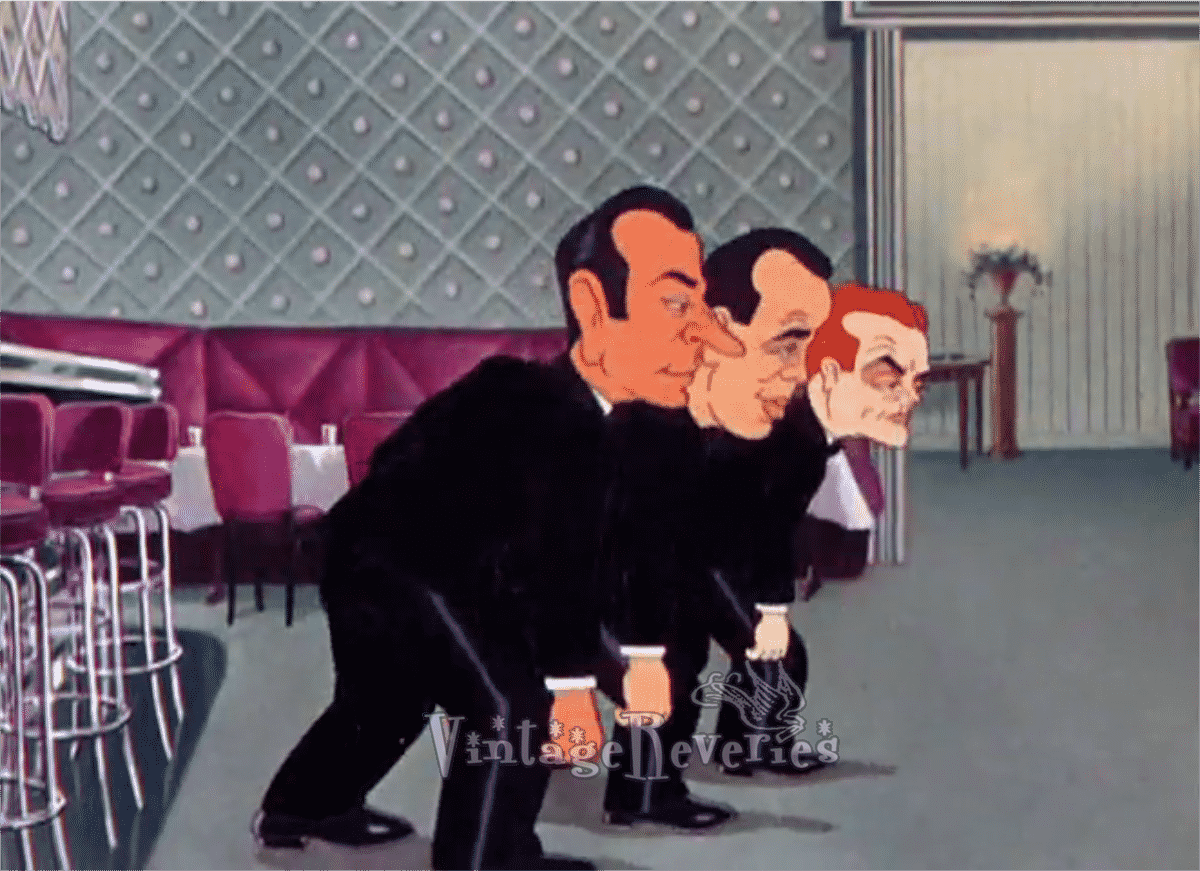
The animated short is a brilliant blend of humor, artistry, and social commentary, unmatched in its ability to capture the zeitgeist of Old Hollywood. Below are screenshots I created from the remastered digital version of the film, highlighting some of the famous personalities who appear. Each caricature is not only visually playful but also packed with in-jokes about the stars’ personas and public images during that time.
A Roll Call of 1930s Celebrities
Warner Bros. ensured the cartoon was packed with star power—using caricatures of dozens of Hollywood legends. See if you can identify them all! The notable stars spoofed include:
- Cary Grant, shown seated alongside Greta Garbo, who famously uttered “I want to be alone,” in a sly nod to her guarded persona.
- Edward G. Robinson and Ann Sheridan, observed sharing banter, while the delicate rivalry between pomp and humor adds to the fun.
- Johnny Weissmuller, donned in his Tarzan persona, alongside Paulette Goddard, both reflecting their celebrated screen roles of the era.
- James Cagney, Humphrey Bogart, and George Raft—possibly the Mount Rushmore of gangster cinema—are grouped together in a scene rich in clever details and gestural humor.
- The Marx Brothers are represented with Harpo Marx and Groucho Marx; their antics run wild as they interact with others, including Greta Garbo and Clark Gable.
The participation of many other stars such as Bing Crosby, Leopold Stokowski, Dorothy Lamour, and the ice-skating queen Sonja Henie rounds out the recognizable faces. A comical appearance by The Frankenstein Monster, juxtaposed with Hollywood’s most graceful dancers, is just one of many surreal and clever moments making this piece unforgettable.
Historical and Cultural Details
It’s important to understand the context behind this cartoon to fully appreciate its brilliance. During the early 20th century, caricature and satire were popular forms of entertainment, reflecting the public’s fascination and occasional frustration with the burgeoning movie industry. The 1930s and 1940s marked a time when stars were not just actors but symbols of aspiration during a challenging economic and political environment.
The setting of “Hollywood Steps Out,” Ciro’s nightclub, was not a random choice. Ciro’s was a hotspot for the Hollywood elite—actors, directors, and studio heads often gathered there. Situated on the Sunset Strip, the nightclub symbolized the opulence and almost mythical sophistication of Hollywood’s Golden Age. This location, with its luxurious atmosphere and exclusive guest list, made it the perfect backdrop for a cartoon satirizing the high-society lifestyles that fans adored and critiqued simultaneously.
The exaggerated portrayals of these stars served to poke fun at their mannerisms, well-documented press personas, and even some scandals. For instance, the inclusion of Boris Karloff (who played Frankenstein) was a nod to the explosion of horror films in the 1930s, while James Stewart (Mr. Smith Goes to Washington) played off his persona as an all-American everyman. Kay Kyser, the “Ol’ Professor” bandleader, symbolizes the rise of musical comedies, which were highly popular at the time.
Visual Splendor and References
The animation style is characteristic of Tex Avery’s sharp wit and zany pacing, with masterful attention to detail in the caricatures. Every movement, from Clark Gable’s flirtatious smirk to Judy Garland’s wide-eyed presence, is faithful yet artistically exaggerated. The animators clearly relished the opportunity to amplify quirks and deliver inside jokes targeted at audiences who were keenly aware of celebrity culture.
For instance, a caricature of Cesar Romero dancing with Rita Hayworth highlights the era’s obsession with romantic pairings and movie star allure. Similarly, the Three Stooges (Moe, Curly, and Larry) serve as visual punchlines, subverting the otherwise glamorous surroundings. The blend of humor was both affectionate and irreverent—a hallmark of Warner Bros. shorts.
Still Relevant Today
With its cultural significance and witty use of satire, “Hollywood Steps Out” remains an influential piece of animation history. It is a time capsule, offering viewers a glimpse into the glitz, glamor, and humorous perception of Hollywood’s elite during its golden age. The cartoon’s ability to blend escapism with a subtle critique of celebrity excess proved a hit with viewers then, and it still resonates now.
If you enjoy vintage animation or are fascinated by the interplay between caricature and cultural history, I recommend watching Hollywood Steps Out. Beyond laughs, it provides a poignant commentary on how fame shapes perception—a tale as old as Hollywood itself.
Let me know if you’ve identified other stars I may have missed!










Get 10% Off Your First Vintage Find
Subscribe to receive a 10% off welcome coupon by email, plus early access to new vintage drops, behind-the-scenes sourcing notes, and scans of the old photos, programs, and paper ephemera I uncover and digitize.
Almost there! Please check your email inbox right now and click the link in our confirmation message to complete your subscription. (If you don't see it, check your spam folder!)