Back in the summer of 1935, Illinois residents — and many Americans nationwide — eagerly flipped through mail-order catalogs to shop for the era’s most fashionable clothing, accessories, and household items. These catalogs were more than just shopping tools; they offered a glimpse into contemporary life, trends, and even the technological progress of the time. The Summer 1935 Chicago Mail Order Catalog stands as a vivid snapshot of these exciting times, showcasing elegant fashion alongside household necessities. For many households, catalogs like this were indispensable, as they provided accessibility to stylish clothing without the need to travel long distances to city department stores.
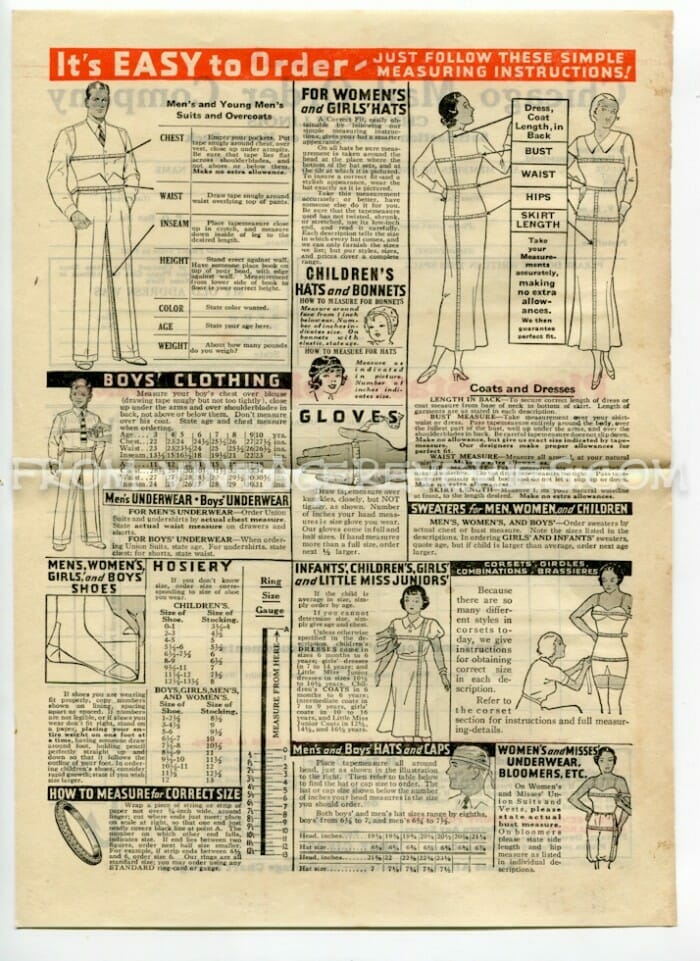
Today, one of the most fascinating aspects of this catalog lies hidden in its seemingly humble pages: the measuring guides, instruction charts, and tips on sizing each garment. Imagine flipping through these pages back then — ordering the perfectly tailored hat, dress, or glove wasn’t just a matter of selecting a size as we know it today. Standardized sizes, now ubiquitous and taken for granted, were still far from the norm in the 1930s. Instead, measuring yourself accurately was paramount to ensuring a proper fit, and the back of the catalog offered concise, practical instructions to help customers navigate this process.
These guides, found on the ordering form, aimed to educate people on the best practices for measuring themselves and their family members. From hats to stockings, gloves, and even corsets, the charts offered a comprehensive yet straightforward approach, ensuring customers could confidently pick the right size. Many of the tips are still relevant today, providing valuable insight into how previous generations approached fitting clothing in an era of bespoke tailoring and personalization.
Measuring Yourself in 1935: A Step Back in Time
In 1935, tailoring was an art closely tied to everyday life, and understanding “how” to measure for a good fit was a skill passed down through families or learned through catalogs like this one. Let’s take a closer look at what these measuring guides included, and why they were so essential.
Hats and Bonnets:
Headwear was an everyday essential, offering both practical and fashionable functions. Men commonly wore suits paired with fedoras, while women adorned themselves in stylish bonnets and ornate hats. According to the catalog instructions, ensuring the perfect hat fit required measuring the circumference of your head just above the ears and across the forehead — a detail as practical now as it was then.
Dresses and Coats:
The catalog dedicated much space to women’s clothing, guiding buyers on how to measure for dresses, coats, and even skirts. They recommended taking measurements for the bust, waist, and hips and ensuring that length measurements were taken with the person standing flat-footed. For dresses, precise instructions emphasized accounting for movement ease, so garments remained functional and comfortable. This was especially critical for the loose, flowing styles of ’30s day dresses and elegantly tailored floor-length gowns.
Suits for Men:
Men’s tailored suits were staples of 1935 fashion, and this catalog aimed to ensure a seamless fit. Advising customers to measure chest circumference, arm length, shoulders, and inseams, the guide catered to the stylized yet practical needs of men’s fashion. These specific measurements aligned with the growing popularity of fitted menswear, particularly suits designed to accentuate broad shoulders and slim waists.
Stockings and Gloves:
Accessories like stockings and gloves were more than functional — they were hallmarks of elegance. Women measured the length of their hands and finger circumferences to find the perfect leather glove fit, while stockings required careful ankle, calf, and thigh measurements to avoid sagging or stiffness.
Underwear and Lingerie (Including Corsets):
A particularly detailed section tackled how to measure for underwear, girdles, corsets, brassieres, and bloomers. Lingerie standards in the 1930s were vastly different from what we know today. Bras, for instance, were largely unstandardized — this catalog even emphasized that customers should refer to individual product descriptions for how to measure. Corsets, still popular but beginning to phase out, required measurements of the natural waist, high hips, and lower hips to ensure they shaped the body in the desired manner. While fashionable waists were coming back to more natural shapes (moving away from the extreme “wasp” waists of prior decades), figure-enhancing lingerie remained in demand.
A Glimpse Into the 1930s Era’s Fashion Landscape
The Summer 1935 catalog wasn’t just a guide to sizing; it was a reflection of a pivotal moment in fashion history. Women’s clothing during this time embraced femininity through A-line skirts, high waists, and delicate fabrics, still bearing slight influences from the flapper styles of the 1920s but noticeably softer. Men’s suits, meanwhile, reflected early modern silhouettes defined by precise tailoring, larger lapels, and straight-leg trousers. Children’s clothes, also featured in the catalog, offered a blend of comfort and whimsy, ensuring parents could easily shop for their growing little ones.
Standardization of Clothing Sizes: A Change on the Horizon
The measuring guides from the 1935 catalog highlight an interesting historical point — clothing sizes as we know them today were still years away from full standardization. The need for custom measurements came from the fact that manufacturers had not yet universally adopted consistent size scales. Each brand developed its own sizing, requiring customers to measure themselves anew for every purchase. It wasn’t until the late 1930s and 1940s that early efforts toward standardized sizes began.
Through these measuring instructions, customers lived at the crossroads of traditional tailoring (which involved custom measurements) and industrialized fashion production. The measuring charts offered a bridge, enabling people to confidently select “off-the-rack” clothing while maintaining some degree of personalization.
Artifacts of Daily Life: Why These Guides Matter Today
Fast forward nearly a century, and these vintage measuring instructions offer priceless insight into how people shopped, dressed, and lived. It wasn’t just about clothes; it was about a time of transition, resourcefulness, and creativity. Especially for modern collectors, vintage fashion enthusiasts, and historical researchers, these relics reflect the elegance and practicality of 1930s life.
Interestingly, the back of the catalog also features adorable extras, like handy customer return envelopes and “give to a friend” coupons. These charming details reflect a time when catalogs were more than just shopping tools; they were touchpoints of personal connection. Today, we can even see Photoshop art based on these scans, further immortalizing their significance.
Whether you’re buying vintage clothes, learning historical tailoring techniques, or simply fascinated by old-fashioned ingenuity, the lessons embedded in the Summer 1935 Chicago Mail Order Catalog remain timeless.
You can see the photoshop art I made from this, and learn how to measure yourself for buying vintage clothes here.