
During times of war, when soldiers faced uncertainty and danger thousands of miles from home, pinup photographs served as powerful morale boosters that connected servicemen to the beauty and hope they were fighting to protect. Two legendary actresses – Mary Pickford during World War I and Betty Grable during World War II – became the most beloved pinup icons of their respective eras, their images providing comfort and inspiration to millions of troops worldwide.
Mary Pickford: “America’s Sweetheart” Goes to War (1914-1918)
Mary Pickford, already established as “America’s Sweetheart” through her pioneering work in silent films, transformed herself into the quintessential World War I pinup when the United States entered the conflict in 1917. Born Gladys Louise Smith in Toronto, Canada, Pickford had become Hollywood’s first major female star and one of the most powerful figures in the early film industry.
When America joined the Great War, Pickford didn’t just pose for photographs – she actively participated in the war effort. She dressed in military uniform and embarked on extensive Liberty Bond tours across the nation, using her star power to raise funds for the war effort. These tours were incredibly successful, raising millions of dollars while simultaneously creating some of the most iconic pinup images of WWI.
Pickford’s appeal as a wartime pinup stemmed from her unique combination of innocence and strength. Her golden curls and youthful appearance represented the purity and wholesome values that soldiers believed they were defending, while her active involvement in the war effort demonstrated the kind of spirited American woman worth fighting for. Soldiers carried her photographs in their pockets, and her image became synonymous with home and hope during the brutal trench warfare of the Western Front.
The cultural impact of Pickford’s wartime pinups extended beyond mere morale boosting. She helped establish the template for how female celebrities could support military efforts while maintaining their appeal to both soldiers and the home front. Her success paved the way for future generations of wartime pinup stars.
Betty Grable: The WWII Pin-Up Queen (1941-1945)
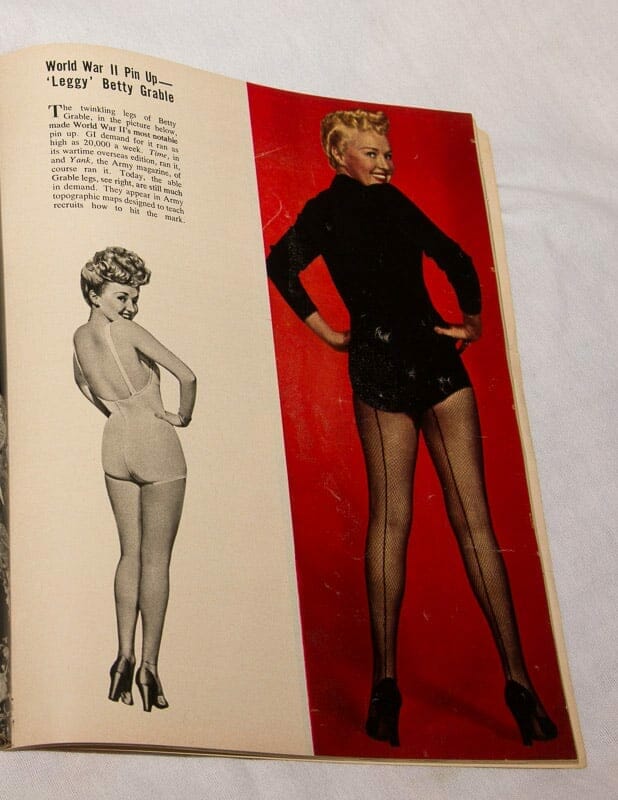
Twenty-three years later, as America entered World War II, Betty Grable would eclipse even Mary Pickford’s wartime popularity to become the most famous pinup of all time. Born Elizabeth Ruth Grable in St. Louis, Missouri, she had already established herself as a major Hollywood star known for her musical films and, most famously, her million-dollar legs.
The demand for Betty Grable’s pinup photographs during WWII was unprecedented – reaching as high as 20,000 requests per week from servicemen stationed around the globe. Her most famous pinup pose, taken in 1943, showed her in a white bathing suit looking over her shoulder with a radiant smile. This single photograph became the most requested pinup image of the entire war.
The military’s embrace of Grable went far beyond simple photography. In a remarkable testament to her popularity, “Able Grable’s” legs appeared in Army topographic maps specifically designed to teach recruits how to hit their mark. This innovative training method combined the practical need for marksmanship instruction with the motivational power of America’s favorite pinup star, creating a uniquely effective military training tool.
Grable’s appeal during WWII represented a shift from the innocent sweetness of WWI pinups to a more sophisticated, glamorous ideal that matched the global scope and complexity of the Second World War. Her platinum blonde hair, confident smile, and famous legs embodied the American dream that millions of soldiers from diverse backgrounds were fighting to preserve and return to.
The Psychology and Cultural Impact of Wartime Pinups
The phenomenon of wartime pinups like Pickford and Grable served crucial psychological functions during both conflicts. These images provided soldiers with tangible connections to home, beauty, and normalcy during the horror and chaos of war. Military psychologists recognized that pinup photographs helped maintain morale and fighting spirit, particularly during extended deployments far from American soil.
The evolution from Mary Pickford’s wholesome, girl-next-door appeal to Betty Grable’s more glamorous and sophisticated image reflected broader changes in American society between the two wars. The 1940s brought greater female participation in the workforce, changing beauty standards, and a more cosmopolitan American culture influenced by Hollywood’s golden age.
Both women actively supported their roles as pinup icons, understanding the importance of their images to military morale. They regularly responded to fan mail from servicemen, participated in USO events, and made personal appearances at military installations when possible. This direct engagement with troops helped create genuine emotional connections that went beyond mere physical attraction.
Legacy of the Great Pinup Era
The wartime pinup tradition established by Mary Pickford and perfected by Betty Grable created a lasting cultural phenomenon that influenced decades of popular culture. Their success demonstrated how celebrity culture could be mobilized for national purposes, setting precedents for how entertainment figures could support military efforts while building their own careers.
The technical quality and artistic composition of these pinup photographs also advanced the field of photography itself. Professional photographers developed new lighting techniques and poses specifically for creating appealing pinup images, innovations that influenced portrait and fashion photography for generations.
Today, vintage pinup photographs from both world wars remain highly collectible, with original Betty Grable and Mary Pickford wartime images commanding significant prices at auctions. Modern patriotic pinup photography continues to draw inspiration from these wartime classics, celebrating both the artistic legacy and the historical significance of these iconic images.
The stories of Mary Pickford and Betty Grable remind us that during humanity’s darkest hours, images of beauty, hope, and home can provide crucial emotional support to those who serve. Their contributions to military morale represent a unique chapter in both entertainment history and military culture, demonstrating how popular culture and patriotic duty can successfully intersect during times of national crisis.




Get 10% Off Your First Vintage Find
Subscribe to receive a 10% off welcome coupon by email, plus early access to new vintage drops, behind-the-scenes sourcing notes, and scans of the old photos, programs, and paper ephemera I uncover and digitize.
Almost there! Please check your email inbox right now and click the link in our confirmation message to complete your subscription. (If you don't see it, check your spam folder!)